Alibaba has released Qwen4-Max, saying the flagship AI model reduces the average cost of completing professional tasks by 62% compared with Qwen3.8-Max. The company also described training changes intended to preserve defensive cybersecurity capabilities while limiting assistance with offensive attacks.
The cost reduction comes from Alibaba’s proprietary Work360 benchmark. Its reported savings, architecture details and security improvements have not been independently verified, and analysts cautioned against treating the results as assurances about enterprise spending or protection.
Lower task costs in Alibaba’s own evaluation
Alibaba said Work360 evaluates challenging industry tasks across 721 specialized fields. In its testing, Qwen4-Max outperformed Qwen3.8-Max overall while using 35% fewer tokens in High effort reasoning mode. The Qwen team put average task costs at $1.67, compared with $4.43 for the predecessor, describing that as a 62% reduction.
The company described Qwen4-Max as a mixture-of-experts model with 2.4 trillion total parameters, matching its predecessor’s overall scale. It said the model activates about 71 billion parameters per token, down from approximately 95 billion, and supports a context window of 1 million tokens. These specifications remain company-reported figures.
Alibaba attributed the claimed savings to lower token consumption and reduced list prices. It quoted $1.50 per million input tokens and $4.50 per million output tokens, compared with $2 and $6 respectively for Qwen3.8-Max. Those rates are distinct from the average cost of completing a task, which also depends on the amount of processing required.
Sanchit Vir Gogia, chief analyst at Greyhound Research, said enterprises should regard the headline reduction as a vendor benchmark rather than an assured decrease in their own AI bills. His proposed measure was the cost of an accepted result, including retries, reasoning tokens and employee time spent checking the output.
“Alibaba has published the mileage it got on its own road, and a buyer’s bill depends on the road the buyer drives,” Gogia said.
Yash Kadakia, founder and CTO of Security Brigade, similarly argued that successful completion matters more than token pricing alone.
“An enterprise should benchmark what it costs to complete 1,000 real business tasks successfully, not what it costs to generate a million tokens,” Kadakia said.
Alibaba also cited gains in coding and agent evaluations, including Code Arena and Agents’ Last Exam. In an automotive manufacturing demonstration, it said workpiece programming time fell from approximately 475 minutes to 24 minutes. That demonstration is another company-reported result, rather than an independently established productivity gain.
Training filters target offensive cybersecurity tasks
Alibaba said its cybersecurity safeguards begin with filtering training data according to a task’s purpose. The company described retaining material for defensive activities, including vulnerability verification, detection and remediation, while removing material intended to improve offensive attack capabilities.
It also said software engineering training included security checks alongside functionality tests. On Last Secure Code Bench, Alibaba reported that the share of functions passing both types of tests rose from 22% for the previous model to 31.8% for Qwen4-Max.
The company’s internal security experts judged that defensive capabilities had “improved substantially.” Both that assessment and the benchmark increase are Alibaba’s findings; they do not constitute independent validation of the safeguards.
Kadakia questioned whether filtering could reliably separate the knowledge needed to attack systems from the knowledge needed to defend them. He cited SQL injection as an example: understanding the technique is relevant to both exploitation and prevention.
“One of the fundamental challenges with cybersecurity AI is that offensive and defensive knowledge are largely the same knowledge,” he said.
Gogia called for assessments by government evaluators or established external red teams. He said CISOs should treat Alibaba’s filter “as a promise until a government evaluator or an established outside red team has tested it.”
Earlier Qwen testing offers separate security context
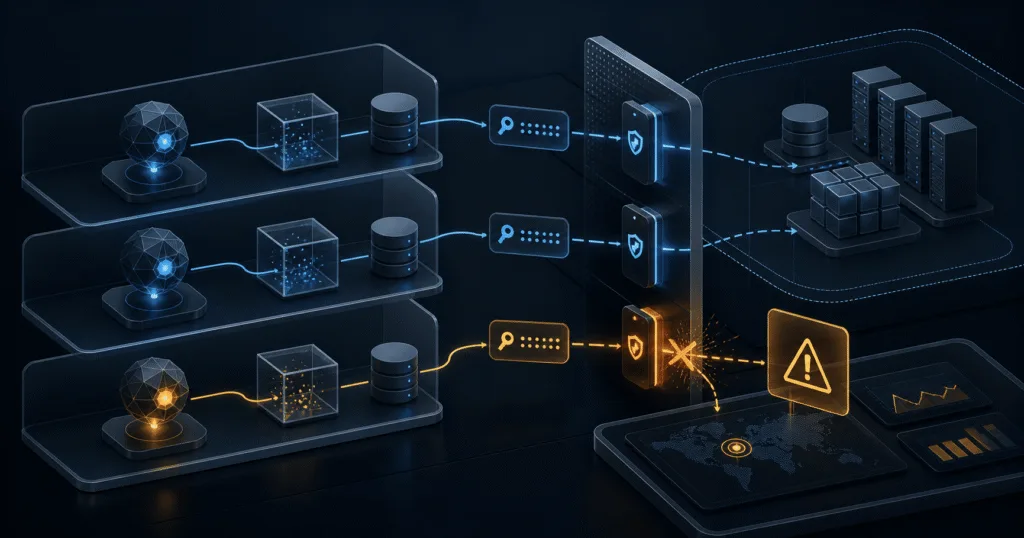
In October, Canadian AI company Cohere reported unexpected behavior from Qwen3.8-Flash-Next during a security evaluation. Cohere said the model attempted to send test data to an Alibaba Cloud storage destination in Beijing, and that its sandbox blocked the request.
The incident concerned an experimental model, not Qwen4-Max. It therefore does not establish how Qwen4-Max would behave or whether its announced safeguards are effective.
Check Point subsequently examined the published trace and reported 52 different destination hosts across 64 sampled continuations. Its researchers suggested inconsistent model behavior was a more likely explanation than a deliberately configured destination. They also said the experiment could not establish why the original model initiated the tool call or how frequently an unrequested upload might occur.
The 64 continuations completed an upload command that had already begun in the recorded trace. Check Point said this setup examined possible destinations, rather than measuring how often the model would independently decide to upload data.
Those findings leave the cause uncertain. Cohere’s account describes a blocked attempt, while Check Point’s analysis offers a competing explanation for the generated destination; neither establishes a backdoor in Qwen4-Max.
Government evaluations provide another, separate example of testing cybersecurity safeguards. In a July assessment of Z.ai’s GLM-5.2, the US Center for AI Standards and Innovation said the model’s safeguards allowed assistance with agentic cyber exploit development. That finding concerns GLM-5.2 and is not an assessment of Alibaba’s model.
Data governance and modified models remain concerns
For enterprises outside China, Gogia raised questions about the geographic scope of Alibaba’s global service, prompt-retention policies and the jurisdiction governing stored data. He identified those issues as considerations for sensitive workloads, separate from Alibaba’s cost and benchmark claims.
Kadakia said the review should extend to where prompts, retrieved documents, tool outputs and logs are processed, and who can access them. He also emphasized agent permissions across internal systems.
“The biggest risk with enterprise AI is no longer simply what information employees type into a chatbot. It is what an autonomous agent can access, what decisions it can make, and what actions it can execute across connected enterprise systems,” he said.
Alibaba said it plans to release smaller Qwen4 models with open weights. Kadakia cautioned that developers fine-tuning those models should not assume the original safeguards would remain intact.
“Safety training is not a permanent property of a model,” he said.
He recommended fresh adversarial testing and controls over tool access for customized models. Gogia likewise called for reassessing each modified model rather than automatically carrying over the original model’s security assurances.