

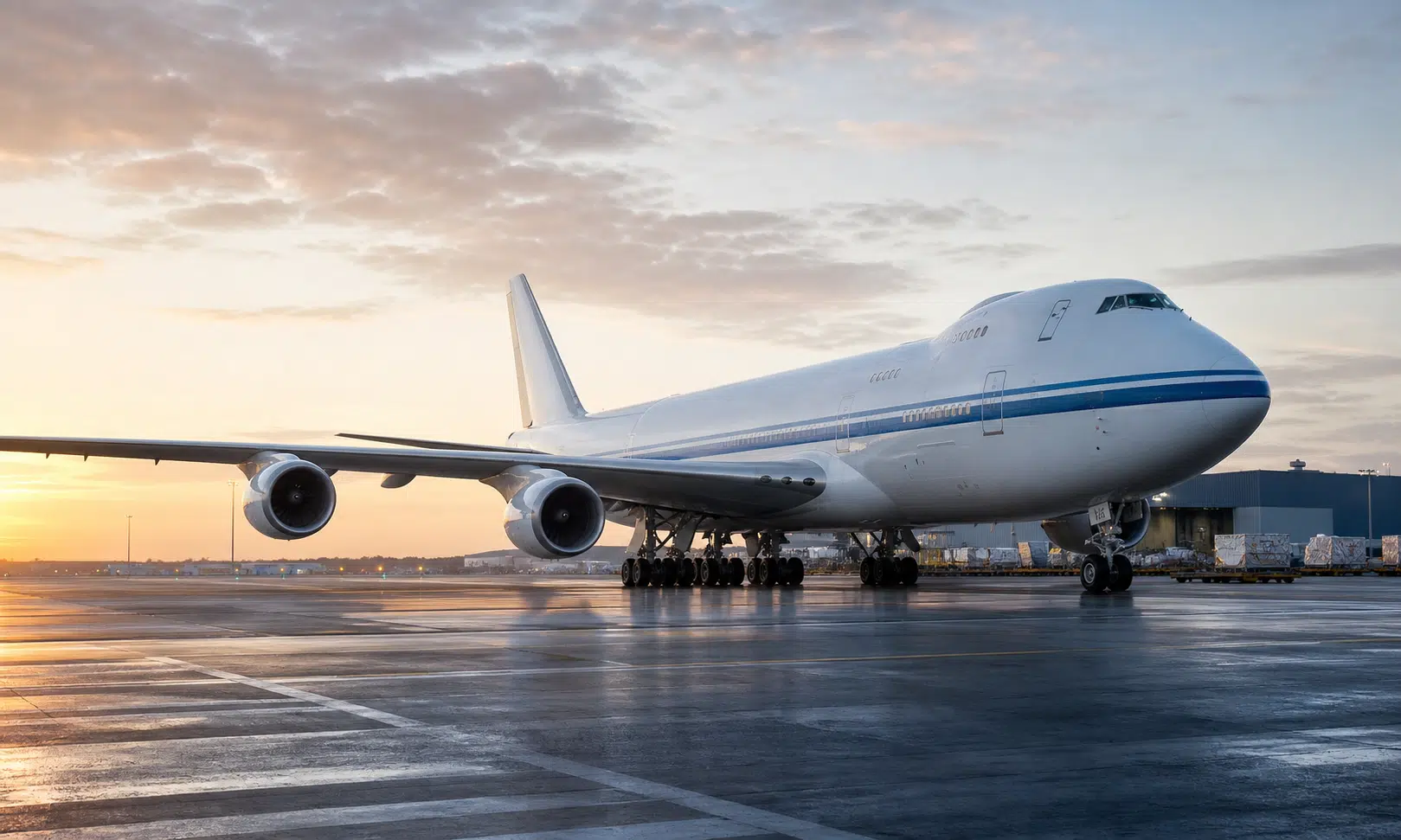

The US Air Force’s reported delivery of a Qatari-donated Boeing 747-8 for interim Air Force One use has not been independently verified. But the broader aircraft story is easier to see: the Boeing 747 passenger fleet has been shrinking, while the freighter side of the family remains far more resilient.
That split matters because the 747 is no longer just an icon of long-haul passenger travel. It is increasingly a specialist aircraft, useful to governments, cargo carriers, and operators that still need its size, range, and upper-deck layout. For passengers, though, the chance to fly on one keeps narrowing.
Passenger 747s keep fading
Fleet-tracking figures for January through May across recent years point to a steep retreat in passenger 747 activity. In May 2019, the combined passenger 747 fleet was described as more than 160 aircraft, with the 747-400 making up most of that group. More recent counts put the passenger fleet below 50 aircraft, though those figures have not been independently verified.
The main reason is the retirement of the passenger 747-400. More than 100 passenger 747-400s are described as having left service since 2019, with many becoming sources of used serviceable material for the aircraft still flying. That is a practical endgame for aging widebodies: once passenger economics stop working, the parts can become more valuable for keeping the remaining fleet in the air.
Freighters are holding up better
The 747-400 story looks very different on the cargo side. Passenger use is described as down by more than a third from 2019 levels, while freighter variants remain in demand. The in-service 747-400 freighter fleet is described as roughly 200 aircraft, close to 2019 levels, though that figure is also not independently verified.
| 747 segment | Reported trend | What it means |
|---|---|---|
| Passenger 747-400 | Sharp decline from 2019 levels | Fewer routes and fewer chances for passengers to fly the type |
| 747-400 freighter | Broadly steady fleet size | Cargo demand continues to support the aircraft |
| 747 classics | Very limited remaining service | Airport sightings are becoming increasingly uncommon |
| 747-8 | More stable recent utilization profile | The newest 747 generation remains relevant in specialized roles |
The 747 is becoming a specialist aircraft
The older 747 classics, including the 747-100 through -300 and SP, were already rare in 2019. Fewer than 20 are described as remaining in service, including the current Air Force One pair, but that count has not been independently verified.
The 747-8 has had a steadier profile. First deliveries began about 15 years ago with a freighter for Cargolux, and recent utilization is described as reasonably consistent. Still, the passenger side is being squeezed by government and special-mission demand. The USAF is described as buying five former Korean Air 747s for conversion into E-4 “Doomsday” aircraft, with two former Lufthansa examples also described as being sold for crew training. Those details have not been independently verified, but they fit the broader direction of travel: fewer 747s are being used as ordinary passenger aircraft, and more are being absorbed into cargo, training, or government roles.
For buyers and operators, the comparison is blunt. A passenger 747 is becoming a scarcity play. A freighter 747 is still a working asset. And a 747-8 tied to presidential, military, or training use is less a symbol of airline glamour than a reminder that the aircraft’s second life is being shaped by missions most travelers will never book.