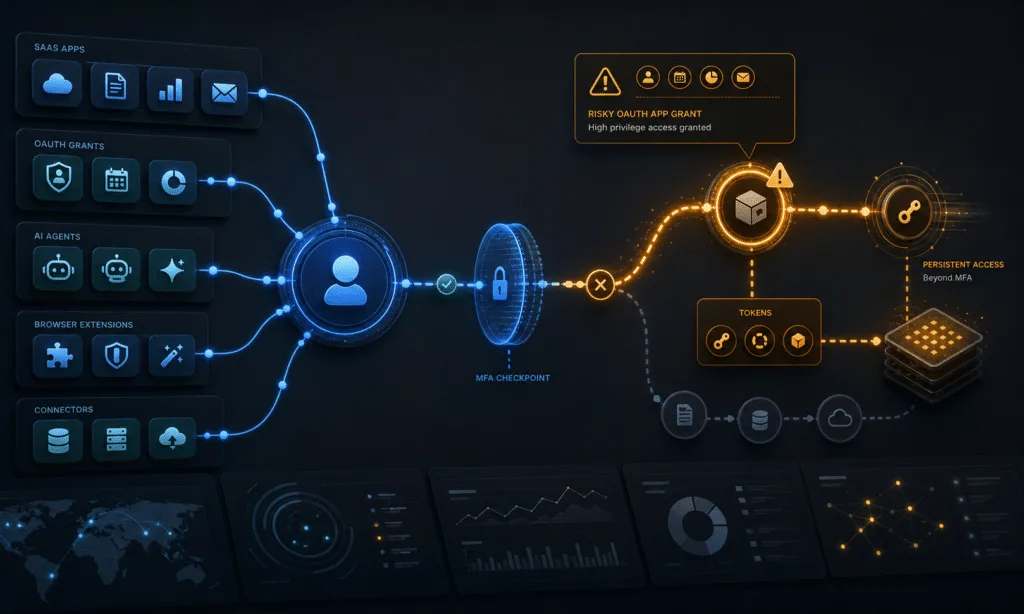
The FBI warned on May 21, 2026, that Kali365, a phishing-as-a-service platform, is being used to obtain Microsoft 365 access tokens by abusing Microsoft’s legitimate device code authentication process.
The agency said Kali365 was first seen in April 2026 and has primarily been distributed through Telegram. The service enables attackers to capture authentication tokens without intercepting users’ passwords. Those tokens can provide access to Microsoft 365 services without an additional multi-factor authentication challenge, the FBI said.
How device code phishing works
Microsoft’s device authorization flow allows people to sign in to devices with limited input capabilities, such as smart TVs, printers and IoT equipment. A short code is displayed for the user to enter on a Microsoft webpage through a browser on another device.
In a phishing attack, the operator initiates the authorization request and persuades the victim to enter the resulting code on Microsoft’s genuine verification page. The FBI described emails impersonating cloud productivity and document-sharing services that supply a code and instructions for completing the process.
Arctic Wolf’s researchers said victims complete authentication, including MFA, on Microsoft’s infrastructure. Kali365 then captures the resulting OAuth access and refresh tokens. The FBI identified Outlook, Teams and OneDrive among the services attackers can subsequently access.
This process authorizes an attacker-controlled session rather than requiring the attacker to intercept the victim’s password or MFA code. The scope and duration of access depend on the tokens’ permissions and validity, the account’s privileges and the organization’s access policies. Refresh tokens can be used to request new access tokens.
Campaign activity and platform capabilities
Arctic Wolf said it began tracking a Kali365-linked campaign in early April that affected organizations across multiple regions and sectors. Its researchers observed mailbox access and, in some cases, malicious inbox rules that moved messages containing security-related keywords to another folder and marked them as read.
In some compromised environments, attackers also registered an additional device after acquiring tokens, Arctic Wolf said. The researchers described this as a separate step that extended access beyond the initial token.
The FBI said Kali365 provides AI-generated phishing lures, automated campaign templates, real-time victim-tracking dashboards and token-capture functions, making those capabilities available to less technically skilled operators.
Arctic Wolf’s analysis identified administrator, reseller and paying-affiliate tiers. The researchers also described a separate adversary-in-the-middle mode called “Cookie Link,” which routes sign-ins through attacker-controlled infrastructure to capture authenticated browser sessions.
Kali365 is among several services offering device code phishing. Proofpoint described device code campaigns involving EvilTokens and Tycoon 2FA.
FBI recommendations and incident reporting
The FBI recommended using Conditional Access policies to block device code authentication, with limited exceptions for required business processes. It also called for an audit of existing usage before restrictions are introduced, to identify legitimate dependencies.
Microsoft’s guidance likewise recommends blocking the flow wherever possible and limiting exceptions to documented, secured uses. Its policy instructions include excluding emergency access accounts to prevent administrative lockouts and checking a policy’s impact before enforcement.
The FBI also recommended blocking authentication transfer, a separate flow that allows authenticated sessions to move from computers to mobile devices.
Microsoft’s guidance for suspected device code phishing calls for revoking affected users’ refresh tokens. The FBI asked affected organizations to file complaints with the Internet Crime Complaint Center and include phishing emails, suspicious login details, and records of unauthorized devices or active sessions.