

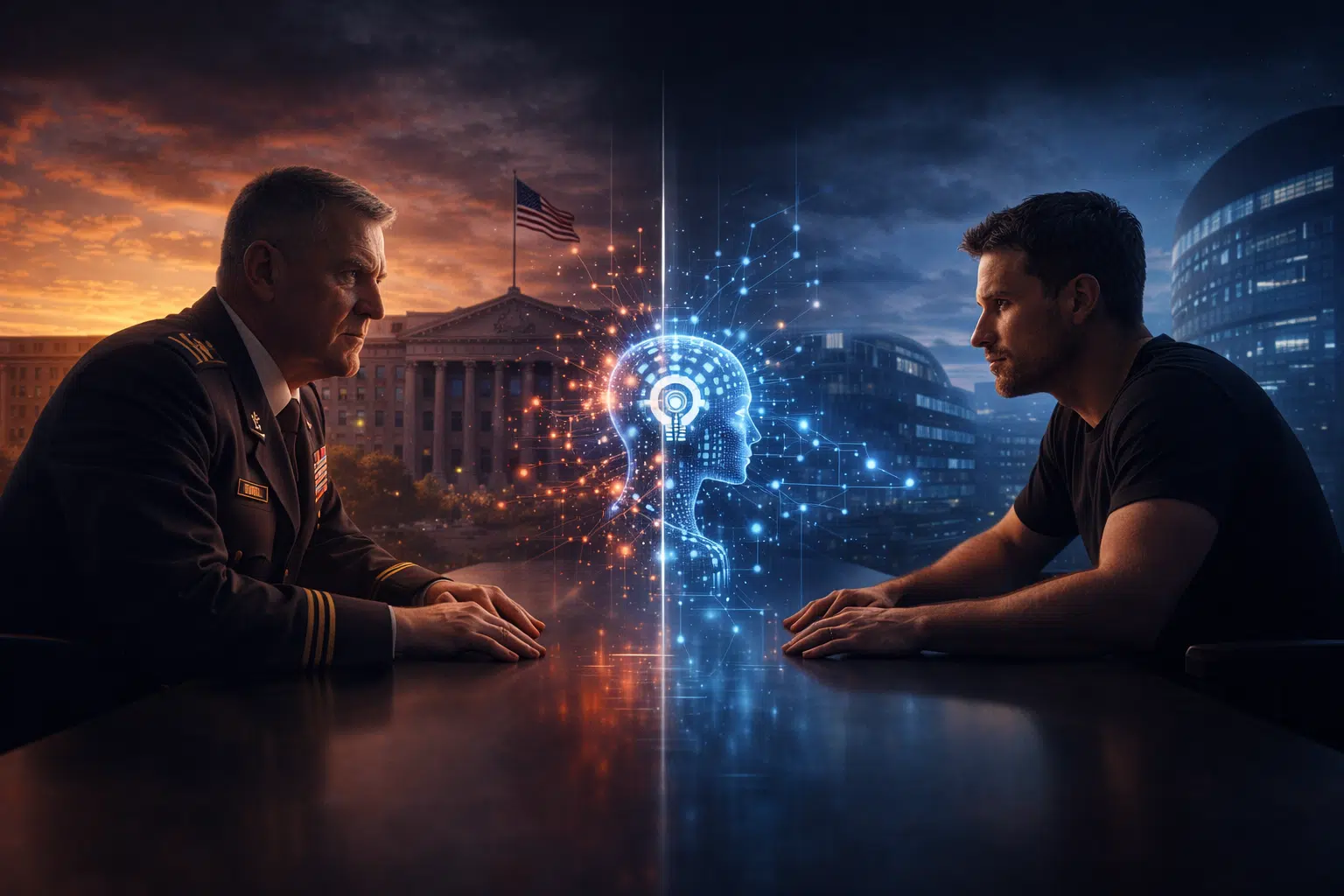

Anthropic and the U.S. Department of Defense are in a rare kind of standoff: not over price, not over performance—but over terms. At issue is whether the Pentagon can demand unrestricted access to frontier AI tools for “all lawful uses,” or whether a private AI lab can keep guardrails that block specific categories like mass domestic surveillance and fully autonomous weapons without human oversight.
The dispute escalated into public view in late February 2026 after months of tense negotiations, according to reporting from multiple outlets. The stakes aren’t just about Claude—Anthropic’s flagship AI model—but about the precedent set for how government customers treat usage policies, safety restrictions, and contractual limits in a world where AI is increasingly dual-use.

Weapons of Math Destruction (Cathy O’Neil)
A readable look at how large-scale models and scoring systems can become opaque, high-impact tools—useful context for debates about AI oversight and surveillance.
Check Price on AmazonWhat the Pentagon reportedly wants—and what Anthropic won’t sign
According to Axios, the Pentagon has pushed for language that would let the military use Claude for “all lawful uses.” Anthropic, meanwhile, has reportedly been willing to loosen parts of its restrictions but still wants to preserve carve-outs that prevent Claude from being used for mass surveillance of Americans or to build weapons that can select and fire on targets without human involvement.
The argument isn’t theoretical. Reporting tied the conflict to disclosures that Claude had been used in sensitive operational planning, which intensified scrutiny around what “lawful use” means in practice—and who gets to decide when the user is the U.S. government.
The escalation: “supply chain risk” and talk of the Defense Production Act
The most consequential twist is the retaliation now reportedly on the table. In late February, Defense Secretary Pete Hegseth threatened moves that go far beyond a normal contract dispute—including designating Anthropic a “supply chain risk,” a label that can ripple through the defense industrial base.
That designation matters because it’s not just about whether the Pentagon buys Claude. It can pressure contractors and suppliers to avoid the product entirely, since certification requirements and compliance concerns tend to push companies toward the safest procurement path: don’t touch the tool.
Separately, some reporting says the administration has discussed using the Defense Production Act (DPA)—a tool typically associated with mobilizing industrial capacity—to compel access to AI capabilities or force changes that strip contractual restrictions. Even if contested in court, the threat alone introduces a new kind of risk premium around selling frontier AI into government environments.

Army of None (Paul Scharre)
A defense-focused overview of autonomous weapons, the policy debate around “human-in-the-loop,” and why these systems create unique escalation risks.
Check Price on AmazonWhy this fight is bigger than one company
Anthropic has positioned itself as an “AI safety” lab, with public policies designed to limit certain high-risk uses. It also sells heavily into enterprise workflows—especially developer tooling—where Claude has been gaining momentum. If the U.S. government can pressure a lab into dropping guardrails as a condition of doing business, other labs may face the same choice: accept unrestricted use, or accept the risk of being frozen out.
And if “supply chain risk” becomes a negotiation lever against domestic companies—not just a national security tool aimed at foreign adversaries—that shift could reshape how American startups think about government partnerships at the frontier.
What happens next
It’s still possible this ends with a narrower detente: limited use authorizations, contract carve-outs, or a revised policy framework that gives the Pentagon what it wants without forcing a full surrender of restrictions. But the broader signal is already out: as AI becomes more central to defense planning, the fight isn’t only about models and capability—it’s about control.
For readers following Anthropic’s product momentum, it’s worth tracking how this impacts Claude’s enterprise adoption as well. The company has been expanding developer-facing integrations—like pushing Claude Code deeper into collaboration tools—just as Washington is testing how much leverage it can exert over the lab’s rulebook.
Anthropic’s developer tooling momentum: Claude Code lands in Slack for dev workflows Related policy backdrop: Trump plans “One Rule” AI executive order