



Europe is taking a harder look at Arctic subsea cables as a way to reduce dependence on crowded and politically exposed internet routes between Europe and Asia. The most ambitious idea is Polar Connect, a proposed fiber system that would run through the central Arctic, near the North Pole, to connect Europe, North America, and East Asia.
The appeal is easy to understand. Subsea cables carry the overwhelming majority of international internet traffic, and the Europe-Asia corridor currently depends heavily on routes through the Red Sea, the Middle East, and other narrow maritime passages. Recent cable cuts in the Red Sea have shown how a single regional crisis can spill into global connectivity, even when the damage appears to come from anchors or shipping incidents rather than a direct attack on the cables themselves.
Polar Connect is not a simple replacement for today’s routes. It is better understood as a resilience play: a way to add another path for traffic when existing corridors are congested, damaged, politically sensitive, or slow to repair. For telecom operators, cloud providers, governments, and large enterprises, the question is not whether the Arctic route is elegant on a map. It is whether the added resilience is worth the cost, engineering risk, and maintenance burden.
Why the Arctic route is being considered
The business case starts with route diversity. Europe-Asia traffic can be routed through several corridors, but many of the practical options still rely on chokepoints, third-country permissions, or regions where conflict can delay repairs. The Arctic offers a geographically shorter path and, in theory, fewer exposed political bottlenecks.
That does not mean it is outside government control or operational limits. Arctic waters still involve national jurisdictions, environmental rules, permitting, landing rights, and seasonal constraints. The stronger claim is that a central Arctic cable could reduce reliance on some of the most stressed southern passages.
For buyers of enterprise connectivity, cloud regions, or international backbone capacity, the relevant question is not just latency. It is route independence. A slightly faster path is useful; a physically separate path that remains available during a Red Sea, Persian Gulf, or Baltic disruption may be more valuable.

Peplink Balance 20X Multi-WAN Router
A multi-WAN router such as the Peplink Balance 20X can help smaller sites keep more than one internet path available, including wired broadband and cellular backup. It is most relevant for branch offices, retail sites, and operational networks that need automatic failover rather than a single primary circuit.
As an Amazon Associate I earn from qualifying purchases.
| Route option | Main appeal | Main risk | Best fit |
|---|---|---|---|
| Traditional southern routes | Established capacity and repair ecosystem | Chokepoints, regional conflict, anchor damage | General internet backbone traffic |
| Routes through North America | Political familiarity for many Western operators | Longer path for some Europe-Asia traffic | Redundant enterprise and cloud routing |
| Routes involving Russia | Geographic directness in some designs | Current geopolitical and sanctions concerns | Less attractive for many European planners |
| Polar Connect / central Arctic | Shorter, physically distinct northern path | Ice, survey complexity, repair access, cost | High-resilience strategic connectivity |
The hard part is not the cable. It is keeping it working.
Laying fiber under the Arctic is a different operating problem from laying fiber across well-traveled ocean routes. Ice, moving seabeds, harsh weather, limited port access, and short work windows all raise the cost of both construction and repair.
Sea ice can scrape or disturb sections of cable in shallow or vulnerable areas. Icebergs can also affect seabed infrastructure where they ground or drag. The central Arctic route may avoid some coastal hazards, but it introduces its own survey and deployment challenges. Planners would need unusually detailed seabed mapping, specialized vessels, and a maintenance plan that does not assume quick access after a fault.
That maintenance issue matters because cable faults are normal. Around the world, subsea cables are damaged by anchors, fishing activity, earthquakes, abrasion, and other causes. On mature routes, repair ships can often mobilize quickly. In the Arctic, access may depend on season, ice conditions, vessel availability, and whether an icebreaker or specialized support ship can reach the fault.
Alaska’s Quintillion system is a useful cautionary example. Its Arctic cable has already dealt with ice-related disruption, including a 2023 break that required waiting for workable conditions before repair could be completed. A later outage has also been reported, though some details around timing and repair duration are less consistently documented. The lesson is clear enough without overstating it: Arctic fiber can work, but repair windows can be much less forgiving than on conventional routes.
What buyers should watch before treating Polar Connect as a real option
Polar Connect’s backers have described a 2030-or-so vision, but a firm operational date should be treated cautiously until surveys, financing, permitting, vessel plans, and landing arrangements are locked down. For network buyers, that means it belongs in long-range planning, not near-term procurement assumptions.
The most important decision criteria are practical:
- Route diversity: Does the cable add a physically separate path from existing Europe-Asia routes?
- Repair model: Who owns maintenance, what vessels are available, and how long could a winter fault remain unresolved?
- Landing points: Which data centers, cloud regions, and carrier-neutral hubs can actually use the capacity?
- Latency: Does the shorter geography translate into a meaningful application advantage?
- Cost: Will the added resilience justify higher wholesale or enterprise pricing?
- Political exposure: Does the route reduce dependence on unstable chokepoints without creating new permitting or sovereignty complications?

Ubiquiti UniFi Cloud Gateway Ultra
The UniFi Cloud Gateway Ultra is a compact option for small offices already using UniFi networking gear. Its multi-WAN support can help route traffic across more than one internet connection when a site has redundant service available.
As an Amazon Associate I earn from qualifying purchases.
For enterprises, Polar Connect is unlikely to be something bought directly in the way a company buys a router, firewall, or backup circuit. Its impact would show up through carriers, cloud networking products, content delivery networks, financial trading networks, research networks, and government connectivity contracts. The buyer-facing value would be more redundant routing, not a branded Arctic cable line item on an invoice.
Verdict: promising for resilience, risky as a deadline-driven project
Polar Connect is compelling because it addresses a real weakness in global connectivity: too much critical traffic still depends on narrow, politically sensitive, and hard-to-repair corridors. A northern route could give Europe and Asia a valuable additional path, especially for governments, research networks, cloud providers, and carriers that care about strategic resilience.
The risk is that the Arctic makes every normal subsea-cable problem more expensive. Surveying is harder, construction is more specialized, and repairs could be slow when ice or weather blocks access. Those issues do not make the project unrealistic, but they do make it different from a standard capacity build.
For buyers and planners, the best stance is cautious interest. Polar Connect is worth watching as a strategic route-diversity project, particularly if southern chokepoints remain unstable. But until the route, funding, landing points, service partners, and repair arrangements are clearer, it should be treated as a future resilience option rather than a guaranteed 2030 fix.
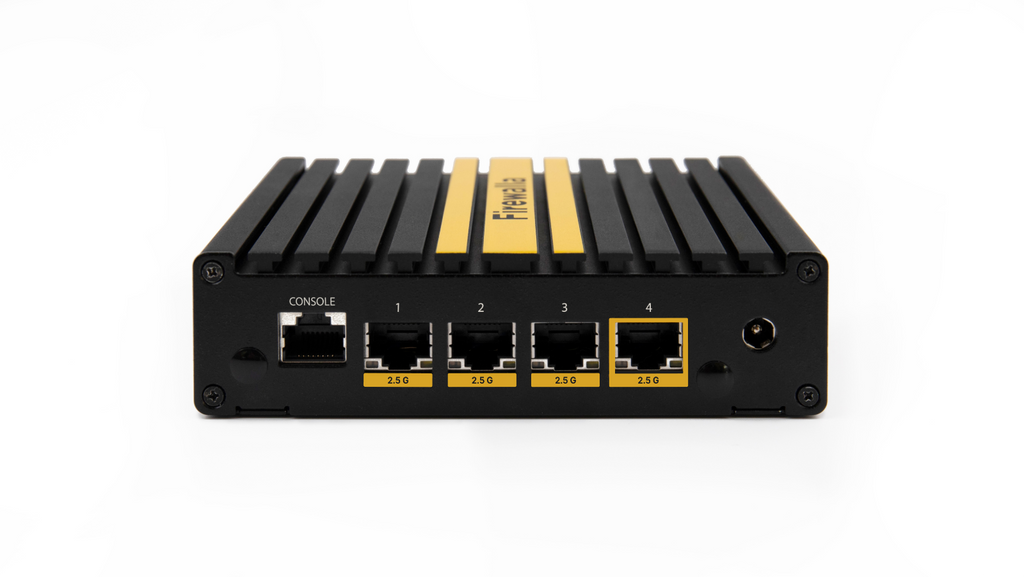
Firewalla Gold Plus Network Security and Monitoring Appliance
A network appliance such as Firewalla Gold Plus can help teams watch WAN performance, segment traffic, and manage failover policies at smaller sites. It is useful when resilience planning depends on knowing which link is healthy, congested, or behaving unexpectedly.
As an Amazon Associate I earn from qualifying purchases.