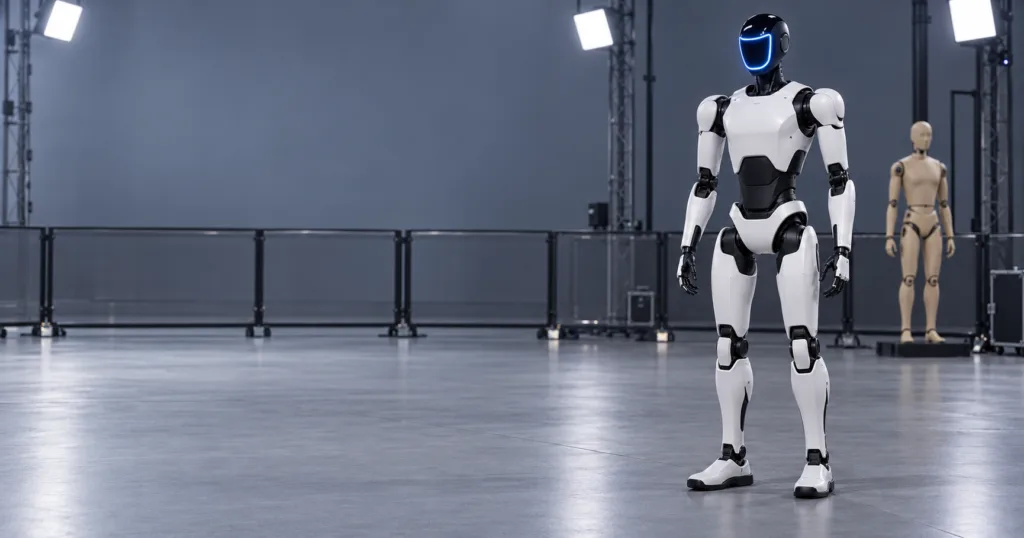
Tesla needs to build between 10,000 and 20,000 Optimus humanoid robots to generate the data required to train them, Elon Musk said during the company’s third-quarter earnings call on 21 October 2026. He outlined plans for an Optimus Academy where the machines would practise a wide range of tasks.
Musk compared the proposed training process to a toddler learning through play. His argument was that Optimus needs experience performing tasks to become useful in the real world, with repeated practice providing data to improve the artificial intelligence controlling the robot.
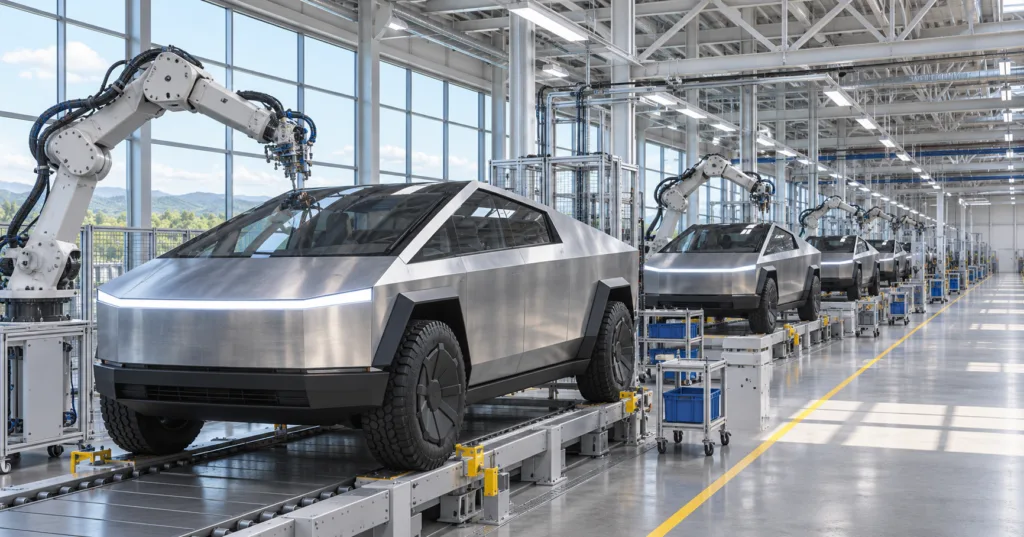
Tesla said in its quarterly update that Optimus production had begun on its high-volume lines in Fremont, California. The company described the operation as being in an early ramp, while Musk said further work on the design and AI remained necessary.
Learning through observation and practice
The academy is intended to provide a setting for robots to attempt different tasks and generate training data through what Musk called self-play. Under the approach he described, Tesla would use that experience to improve the robots’ ability to perform those tasks. Musk said Tesla was still working through issues with the underlying AI architecture, alongside the effort to gather more training data.
“In order for Optimus to get the training data we need, we actually need to make a lot of Optimi,” Musk said.
He drew a distinction between Optimus and Tesla’s vehicles. Tesla can gather driving data from a large fleet of cars, he said, but lacks a comparable fleet of humanoid robots from which to collect experience. Building robots for training is his proposed way to address that gap.
Ashok Elluswamy, who leads Tesla’s AI software team, said Optimus would initially learn by watching people carry out tasks, then practise those activities itself. He described a training cycle that would combine human demonstrations with robot practice in simulation and in the real world.
Elluswamy compared the process to learning football: watching a game alone does not make someone a capable player, and practical experience is also necessary. His explanation placed human demonstrations at the beginning of the training process, followed by learning from the robot’s own attempts.
Production scale depends on design changes
Musk said Tesla had installed most of a production line intended eventually to manufacture one million robots annually. That figure describes the line’s planned capacity. Tesla’s quarterly update cautioned that installed capacity is different from the production rate a factory actually achieves.
Tesla’s capacity table left the annual capacity figure for California’s Optimus operation unspecified. The company listed equipment uptime, component supply and downtime for factory upgrades among the factors that can affect production rates.
Reaching roughly 20,000 robots a week would probably take at least a year, and possibly longer, Musk estimated. He linked that outlook to continuing changes in the robot’s design. The weekly output figure remains a target, with the timing dependent on progress in manufacturing and development.
Musk described robot production as requiring thousands of elements to work together, with the slowest or most difficult part limiting the overall pace. He also said Tesla needed to build out its supply chain and ensure the robots could operate safely and reliably for extended periods.
The hand remains a particularly difficult engineering problem, Musk said. He described the challenge as combining durability under repeated use with the sensitivity needed to pick up delicate objects. The fingers and their sensors must withstand repeated actions while retaining the flexibility needed for handling fragile items.
Musk contrasted those demands with the human hand’s ability to repair itself. For the robot, he identified repeated wear and the risk of damaging sensors as problems the design needed to address.
Chip and delivery targets remain conditional
Musk said Tesla hoped to integrate its AI5 chip into Optimus around April 2027 if development proceeded according to plan. He estimated that AI5 would provide roughly 10 times the computing power of AI4. The computing estimate has not been independently verified. Musk linked the upgrade to the computing demands of handling a humanoid robot’s many movements and tasks.
He also said Tesla might release a video within a month or two of the call showing Optimus carrying out tasks that had not been pre-programmed.
Musk’s expectation was that deliveries to companies outside Tesla could begin towards the end of 2027. He linked that outlook to progress on AI software, mechanical design, operating life and the chip upgrade. The date was a conditional forecast, with further development required before customer shipments.
He also claimed Tesla was ahead of other developers of general-purpose humanoid robots, without providing evidence to substantiate the comparison. For initial customer applications, Musk pointed to industrial work involving dangerous or repetitive tasks and operations that need to run around the clock.