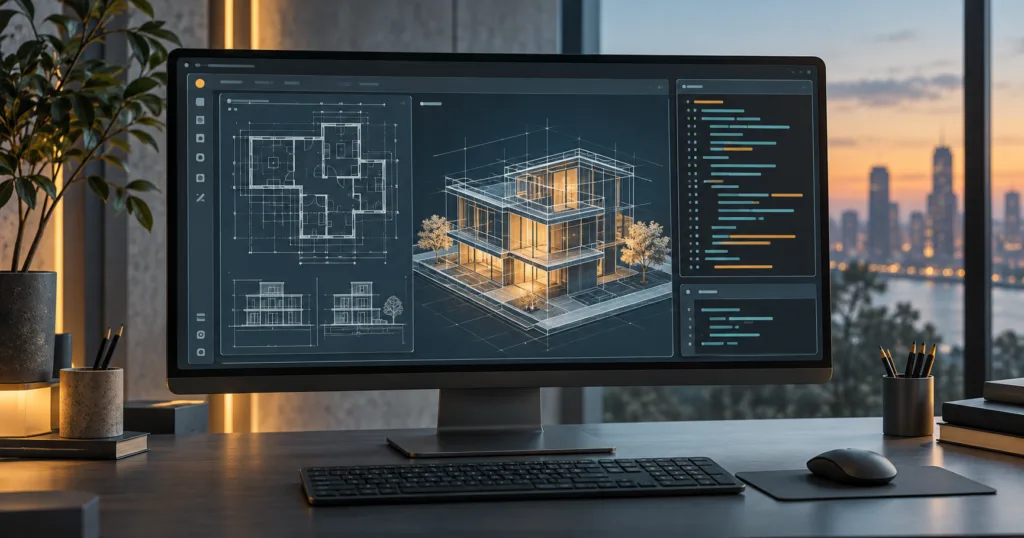
OpenAI said on November 3, 2026, that GPT-6 Astra designed a prototype device for talking to Codex, including its enclosure, circuit board and firmware. The company said two team members developed the design as a side project in under a week, and a contract manufacturer built a small batch in under a month.
Preparing the device for manufacturing still took several rounds of review and iteration, OpenAI said. Astra did not consistently account for the manufacturer’s production limits, tolerances or assembly details, according to the company.
A small companion for coding agents
OpenAI researcher Justin Lin described his concept as “a Codex pet” with a small display and a push-to-talk button. He said he wanted a way to speak to his coding agents without opening his laptop, while demonstrating Astra’s computer-use and physical engineering capabilities.
Lin said this was his first time taking a circuit board from bare to assembled, a process he called “super daunting.” He said he gave Chat plans and a description of what he wanted, and it designed the board.
OpenAI said Astra defined the device’s functional requirements and designed its enclosure and the internal structures that hold the components. The company also credited the model with selecting electrical components and arranging and connecting them on a printed circuit board sized to fit the case.
The model designed the user interface and generated firmware and software integrations linking the device to Codex, OpenAI said. The company said the visual references included its Work Louder collaboration, games and toys. OpenAI described the result as a test device and framed the project as an experiment in producing designs without direct human edits.
A separate test highlights the role of specialist tools
In a separate September 2026 experiment, circuit-board manufacturer NextPCB said its head of technology, Hubert Hu, tested Astra on a board with components already placed but no routing completed.
NextPCB said Astra produced a routing result in about 12 minutes by exporting the design from KiCad to Freerouting, an open-source autorouter, and importing the result back into KiCad. “Freerouting performed the core routing computation. Astra orchestrated the workflow,” the company wrote.
When restricted to KiCad’s graphical interface without external tools, Astra drew three short trace segments in an hour before Hu stopped the run, NextPCB said.
The manufacturer cautioned that two runs on one board were not a comprehensive benchmark. It said the results did not establish how OpenAI’s earlier PCB demonstration worked, and a routing result alone did not show that a board was fully validated or ready for production.