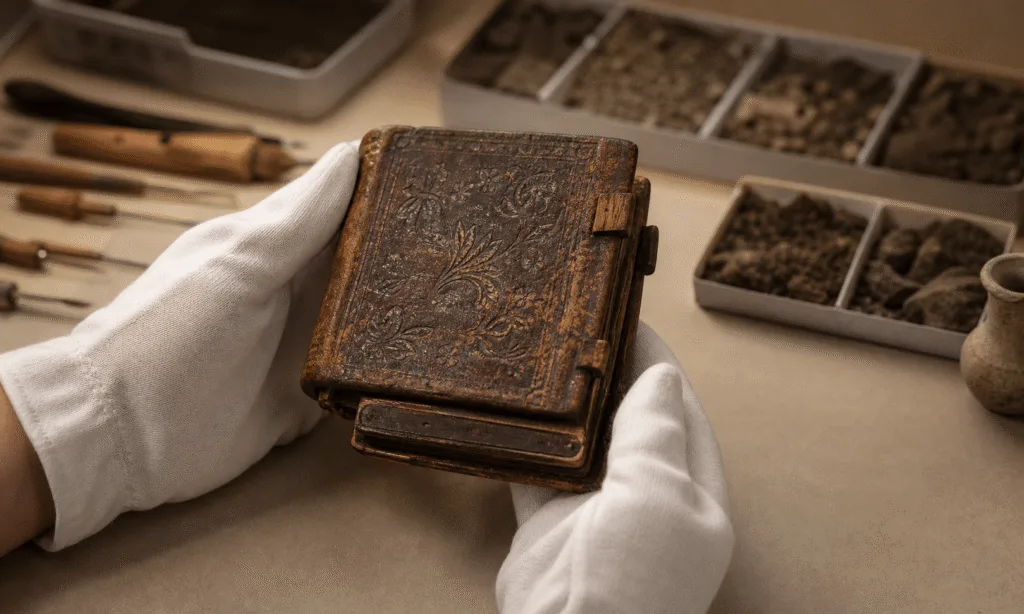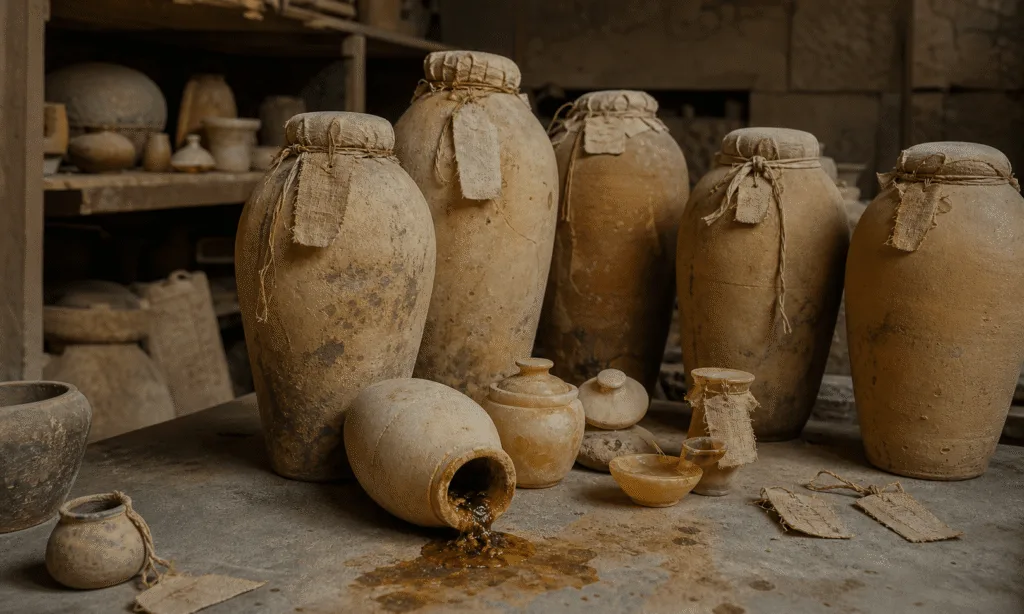
After Howard Carter uncovered Tutankhamun’s tomb in November 1922, his excavation team cataloged a pottery vessel with a clay seal. The object card described its contents as “apparently some kind of liquid like (?) honey” and left the identification open. Studies of modern honey help explain why a dry, sealed vessel could slow spoilage.
The tomb also contained food offerings, including grain, bread and fruit. The claim that archaeologists tasted honey from the tomb and found it sweet remains unverified.
How moisture affects honey
Honey typically has low water activity, a measure of how much water is available for processes such as microbial growth. In experiments with pine and citrus honeys, researchers observed visible yeast growth at water activity of 0.72 or higher. They saw none at 0.69 or lower under the conditions tested.
Honey can absorb moisture from humid air. As more water becomes available, yeasts can grow and fermentation can begin. An intact seal could limit moisture uptake in a dry burial chamber.
What changes during storage
A 2023 study of Western Australian jarrah and marri honeys found that all 17 samples stored at room temperature for five years darkened. The researchers reported a nearly complete loss of hydrogen peroxide in that group, while changes in antibacterial activity varied among samples.