

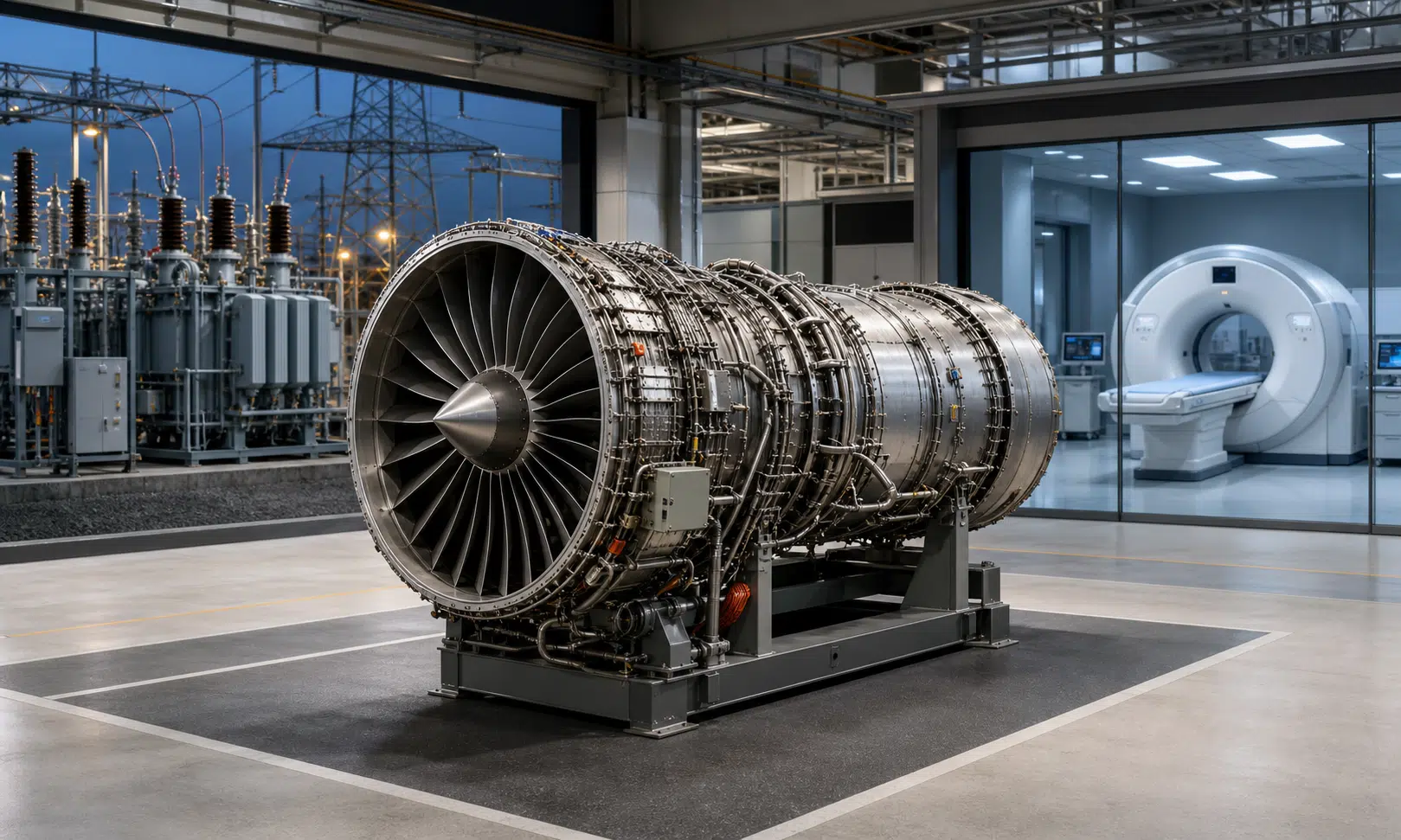

General Electric spent much of the 20th century as shorthand for American industrial reach. Its name sat on appliances, power systems, aircraft engines, medical equipment, financial products, and even television networks. That breadth once looked like strength. Later, it became harder for investors, customers, and executives to understand what the company was really built to do best.
The old GE story did not end with a single collapse. It ended through years of divestitures, debt reduction, leadership changes, and a final separation into three public companies. By April 2, 2024, the company that many people still thought of as one conglomerate had effectively become GE Aerospace, GE HealthCare, and GE Vernova.
For readers trying to understand the business lesson, the important point is not simply that GE got smaller. It is that a company once admired for managing many unrelated lines of business eventually decided that focus was worth more than scale.
Verdict: GE’s breakup was a focus decision, not just a failure story
Calling General Electric a fallen giant is tempting, but it is too simple. GE lost much of the market confidence and conglomerate prestige it had built over decades, yet major parts of the business survived as large public companies with clearer missions.
The buyer-aware takeaway depends on who is reading the history. Investors looking at industrial companies should treat GE as a case study in balance-sheet risk, succession planning, and conglomerate complexity. Enterprise buyers and suppliers should see it as a reminder that a familiar corporate logo does not always mean a stable operating structure. Employees and job seekers should notice how long strategic pivots can take after a company becomes too broad to manage cleanly.
The 2024 split left three more focused businesses:
- GE Aerospace, centered on aviation and aircraft engines.
- GE HealthCare, focused on medical technology and related software.
- GE Vernova, built around energy, power, electrification, and related industrial systems.
That structure is easier to evaluate than the old conglomerate. It also makes GE’s history more useful as a practical business review: size can create options, but it can also hide weak spots until they are expensive to fix.
1889 to 1892: The Edison roots and the birth of GE
GE’s origin is tied to the early commercial electricity industry and to Thomas Edison, though the company that became General Electric was not simply a one-person invention. Edison General Electric emerged from Edison’s electrical businesses, and in 1892 it combined with Thomson-Houston Electric Company to form General Electric.
That merger gave the new company a strong position in electrical equipment at a time when electricity was becoming central to factories, cities, and homes. The early GE brand was built around infrastructure as much as consumer products. It was selling into a world that was being rewired.
By 1896, GE was one of the original companies in the Dow Jones Industrial Average. Its long association with the index became part of its identity: GE was not just a manufacturer, but a symbol of old-line American industry. That symbolism lasted for more than a century, even though GE moved in and out of the index over time and was ultimately removed in June 2018.
The 1920s through the 1950s: From electricity to household and industrial reach
During the first half of the 20th century, GE widened its role well beyond electrical infrastructure. The company became associated with home appliances, power generation, aviation technology, and other industrial systems. Some specific claims about firsts in early consumer electronics and power generation are often repeated in summaries of GE’s history, but the larger point is easier to support: GE became a company that reached both the household and the factory floor.
That dual identity mattered. Consumers knew GE from products inside the home. Business and government customers knew it from power, aviation, and industrial equipment. Few companies managed to be that visible in both everyday life and heavy industry.
The strength of that model was diversification. GE could participate in several major economic shifts at once: electrification, aviation, broadcasting, health technology, and industrial automation. The weakness was the same thing in reverse. As the company grew broader, judging its true performance became more complicated.
1981 to 2001: Jack Welch and the conglomerate model at full speed
Jack Welch became GE’s chief executive in 1981 and turned the company into one of the most closely watched corporations in the world. His tenure was defined by dealmaking, management discipline, cost cutting, and a willingness to move GE beyond its manufacturing base.
One of the most important moves was GE’s 1986 acquisition of RCA, which brought NBC into the company. That deal showed how far GE had moved from a conventional industrial manufacturer. Under Welch, GE was not only making equipment; it was also operating in media, finance, and services.
By the time Welch left in 2001, GE was widely viewed as a corporate powerhouse. Its market value had climbed dramatically during his tenure, and its management system was studied across business schools and boardrooms. But the model also depended on confidence: confidence that GE could allocate capital better than the market, manage unlike businesses under one roof, and keep financial risks under control.
That confidence would be tested in the next era.
2001 to 2017: The Immelt years and the limits of complexity
Jeffrey Immelt took over after Welch at a difficult moment for the market and for GE’s own valuation. Over the next 16 years, the company faced pressure from economic shocks, portfolio decisions, and the risks attached to its financial operations.
The 2008 financial crisis was a major turning point. GE’s finance arm made the company more exposed than many people expected from a business still commonly thought of as an industrial manufacturer. The crisis forced GE to rethink the size and role of its financial services operations and pushed the company toward a long period of selling assets.
GE eventually moved away from several major businesses, including media, plastics, water, financial services, home appliances, and oil and gas interests. These sales were not one tidy reset. They were part of a long effort to simplify a company that had become difficult to value and difficult to explain.
For investors, this is one of the clearest lessons in GE’s history. A diversified company can look safer because it has many revenue streams. But if the structure makes risk harder to see, diversification can become a liability instead of protection.
2017 to 2018: A short Flannery era and more pressure to simplify
John Flannery, who had led GE’s healthcare business, became chief executive in 2017. His time in the role was brief, ending in 2018 after roughly 14 months. The company was still under pressure, and the market value of GE continued to fall during that period.
The short tenure signaled how little patience the board and market had left for gradual repair. GE needed a clearer structure, a stronger balance sheet, and a plan that investors could understand. The old conglomerate premium had become a discount.
2018 to 2021: Larry Culp and the path toward separation
Larry Culp became CEO in 2018 and pushed GE further toward debt reduction, asset sales, and operational focus. The company still faced scrutiny, including public accusations in 2019 about its accounting. Those accusations did not ultimately define the restructuring story, but they added to the atmosphere of distrust around the company at the time.
By November 2021, GE announced the decision that would finish the transformation: it planned to split its remaining major businesses into three public companies focused on aviation, healthcare, and energy.
That plan made strategic sense because the three businesses had different customers, capital needs, and investor profiles. Aircraft engines, hospital equipment, and power infrastructure may all be advanced industrial markets, but they are not the same business. Separating them gave each company a cleaner story and allowed investors to choose the exposure they actually wanted.
2023 to 2024: The final split into GE HealthCare, GE Vernova, and GE Aerospace
GE HealthCare began trading separately in January 2023. That was the first major step in the breakup plan and gave the medical technology business its own public market identity.
The final step came on April 2, 2024, when GE Vernova began trading as an independent energy company and the remaining GE business continued as GE Aerospace. At that point, the old General Electric conglomerate was no longer the structure investors were buying.
The simplified post-breakup map looks like this:
| Company | Main focus | Role in the GE breakup |
|---|---|---|
| GE Aerospace | Aviation and aircraft engines | Successor to the remaining GE business after the separations |
| GE HealthCare | Medical equipment, imaging, diagnostics, and healthcare software | Spun off before the final 2024 separation |
| GE Vernova | Energy, power, wind, electrification, and grid-related systems | Completed the breakup when it began trading independently in 2024 |
What GE’s history means for business readers
GE’s 132-year arc is useful because it contains both sides of corporate scale. The company helped define the modern industrial conglomerate, then became one of the clearest examples of why that model can become hard to sustain.
For investors, the lesson is to look past brand familiarity and ask how a company makes money, how much financial risk sits behind the operating story, and whether management can explain the portfolio without relying on reputation. For buyers and suppliers, the lesson is to watch corporate structure, not just product history. A breakup can change decision-makers, contracts, service models, and long-term commitments even when the technology remains familiar.
For executives, GE is a warning about success that becomes too broad to govern. The company did not disappear. It became three more focused companies. That may be less dramatic than a rise-and-fall story, but it is more useful: GE’s ending as a conglomerate shows how long it can take to unwind complexity once the market stops rewarding it.