

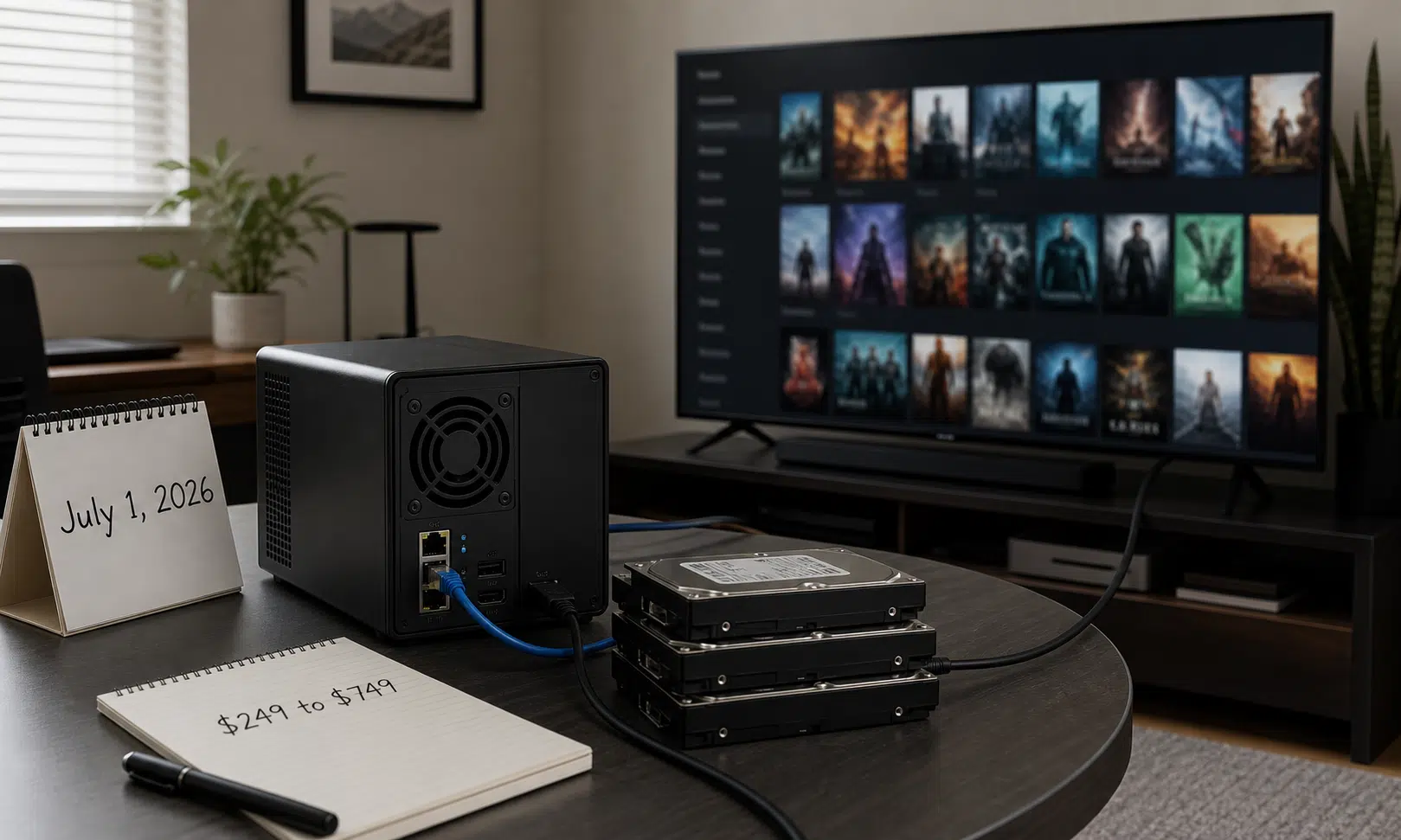

Plex is keeping its Lifetime Plex Pass, but the one-time purchase is about to become much harder to justify for most new buyers.
Starting July 1, 2026, at 12:01 AM UTC, Plex says the price of a new Lifetime Plex Pass will increase to $749.99. Plex is giving buyers until that deadline to purchase at the current $249.99 price. Existing Lifetime Plex Pass holders are not supposed to be affected by the increase.
That changes the decision for anyone who has been waiting to buy into Plex’s paid media-server features. A lifetime pass has long appealed to people who run a Plex Media Server every day and prefer to pay once instead of managing another recurring subscription. At nearly $750, the math starts to look very different.
Plex did not announce matching increases to its monthly or annual Plex Pass plans in the same notice. The company’s current annual plan is listed at $69.99, which means the new lifetime price is roughly equivalent to more than ten years of annual service before discounts, taxes, currency differences, or future price changes enter the picture.
What Plex Is Changing
The core change is narrow but significant: Plex is raising the price of the Lifetime Plex Pass for new purchasers. The company is not ending the lifetime option, and it is not applying the new price to people who already own one.
For buyers comparing Plex Pass options, the current picture looks like this:
| Plan | Current status | Buyer impact |
|---|---|---|
| Monthly Plex Pass | No increase announced in this update | Lowest upfront cost, but ongoing billing |
| Annual Plex Pass | No increase announced in this update | Better for users who want paid features but are not ready to commit for a decade |
| Lifetime Plex Pass | Rises from $249.99 to $749.99 on July 1, 2026 | Only makes clear financial sense for very long-term Plex users or buyers avoiding future renewal risk |
The timing matters. The new price takes effect at 12:01 AM UTC on July 1, which is the evening of June 30 for buyers in many US time zones. Anyone trying to buy before the change should treat the UTC deadline as the real cutoff, not a vague end-of-day window.
A Lifetime Plex Pass is mainly relevant to people using Plex as a personal media server. Plex Pass features have historically included benefits tied to streaming from a user’s own server, remote access, hardware transcoding, downloads, and other advanced tools. The exact feature list can vary by app and platform, so buyers should check what they actually use before treating the lifetime option as automatic insurance.
Why Plex Says It Is Raising the Lifetime Price
Plex’s explanation is that the lifetime option creates a long-term support obligation for a one-time payment. The company says it has considered removing the lifetime plan in the past, but is instead keeping it at a higher price that it believes better reflects the ongoing value of the software.
That framing makes the commercial direction clear. Plex would rather have more users on recurring plans, where revenue continues as the product requires updates, device support, infrastructure work, and new feature development. A lifetime pass gives Plex cash up front, but it also creates a customer who may use the product for years without paying again.
Plex also pointed to an expanding Plex Pass feature set. The company says it is working on improvements across server management, mobile and TV apps, audio handling, transcoding, IPv6 support, downloads, and playlist editing. Recent additions cited by Plex include custom metadata agents and an open API for server integrations.
For users, the important question is not whether Plex has costs. It clearly does. The practical question is whether the new lifetime price lines up with how they use the service.
If Plex is central to your home setup, you run a server for family members, and you expect to keep using it for many years, the lifetime option may still be worth considering before the July price change. If you are still experimenting, use Plex occasionally, or mainly want remote streaming for a few devices, the annual plan becomes the more sensible default.
Quick Comparison
| Image | Product | Best fit | Link |
|---|---|---|---|
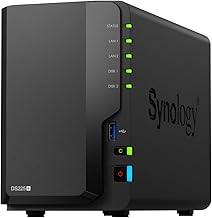 |
Synology DiskStation DS225+ 2-Bay NAS | A two-bay NAS can keep a personal media library available without leaving a full desktop PC running. Check current Plex, Jellyfin, drive compatibility, and transcoding needs before choosing a NAS enclosure. | Check Price on Amazon |
 |
Beelink Mini S12 Pro Mini PC | A compact Intel mini PC can run Plex or Jellyfin while letting storage live on USB drives, a NAS, or another network share. It is a better fit for users who are comfortable managing the server software themselves. | Check Price on Amazon |
 |
Seagate IronWolf 8TB NAS HDD | A NAS-rated hard drive is designed for systems that stay online and serve files regularly. Match capacity, bay count, and RAID plan before buying drives for a Plex or Jellyfin server. | Check Price on Amazon |
 |
TP-Link 5-Port 2.5G Ethernet Switch | A 2.5G Ethernet switch can help when a NAS, mini PC, and main desktop all support faster wired connections. It will not improve internet upload speed, but it can make local transfers and server maintenance smoother. | Check Price on Amazon |
As an Amazon Associate I earn from qualifying purchases.
The Break-Even Math Is No Longer Simple
At the current $249.99 lifetime price, a buyer can make a fairly straightforward argument: pay once, use Plex long enough, and eventually come out ahead compared with annual renewals.
At $749.99, the calculation becomes much more demanding. Compared with the current $69.99 annual plan, the new lifetime price takes a little over ten years to beat the annual plan on simple price alone. That is before accounting for sales, regional pricing, taxes, changes to Plex’s subscription prices, or the possibility that a user may switch platforms.
That long horizon changes the type of buyer the Lifetime Plex Pass serves. It is no longer just a convenient upgrade for a committed home-media user. It becomes a bet that Plex will remain your preferred media-server platform for roughly a decade or more.
That may be a reasonable bet for some households. Plex is mature, widely supported, and familiar to many users who have already built their libraries and remote access around it. Moving a media setup can take time, especially when multiple users, devices, metadata settings, and server hardware are involved.
But a decade is a long time in consumer software. Plex has changed its business over the years, adding free ad-supported streaming channels, movie rentals, social features, and other services beyond the original personal media-server experience. Some longtime users like the broader ecosystem. Others see those additions as a sign that Plex’s priorities are moving away from the self-hosted media crowd that made the service popular.
Who Should Still Consider Buying Before July 1
The existing $249.99 lifetime price may still be attractive for a certain kind of user. If you already know Plex is the center of your home-media setup, waiting until after July 1 gives you a much weaker deal.
The strongest candidates are users who:
- Already run a Plex Media Server regularly
- Use Plex Pass features often enough to miss them
- Stream remotely from their own server
- Share server access with family or trusted users
- Expect to keep Plex for several years
- Prefer a one-time payment over another renewal
For that group, the current lifetime price can still be a clean way to avoid future subscription decisions. It also reduces exposure to later annual-plan increases, although it does not protect against every possible product change Plex could make in the future.
The weaker case is for buyers who are reacting to the price hike without a clear need for Plex Pass features. A lifetime license is not a bargain if it buys features you rarely use. If your Plex setup is local-only, simple, or occasional, the free tier or an annual subscription may be enough.
There is also a difference between buying Plex Pass because you value Plex and buying it because you fear missing the current price. The first reason can be sound. The second can lead to paying for software you do not actually need.
Why Some Users Are Looking at Alternatives
Plex’s price change will likely push some users to reconsider the broader home-media landscape. Alternatives such as Jellyfin, Emby, and Kodi are common names in that discussion, though they are not identical replacements.
Jellyfin is often attractive to users who want an open-source media server and are comfortable doing more setup work themselves. Emby has a paid model of its own and overlaps with Plex in some home-server use cases. Kodi is a powerful local media-center application, but it does not fill the exact same role as a polished remote server platform for every household.
The tradeoff is not just price. It is also convenience, app support, remote access, metadata handling, transcoding, user management, and how much time someone wants to spend maintaining the setup.
| Option | Best fit | Main tradeoff |
|---|---|---|
| Plex | Users who want a mature media server with broad app support | Paid features and a business model moving further into subscriptions and streaming services |
| Jellyfin | Users who prioritize open-source software and control | May require more hands-on setup and troubleshooting |
| Emby | Users who want a Plex-like server with a different paid ecosystem | Still involves paid tiers for some features |
| Kodi | Users focused on local playback and media-center customization | Not a direct substitute for every remote media-server workflow |
For buyers making a decision before July 1, this is the useful question: are you choosing Plex because it is clearly the best fit for your household, or because migrating would be annoying?
Both reasons are real, but only one supports spending hundreds of dollars on a lifetime plan.
The Bigger Signal From Plex
The lifetime price hike is not just a pricing update. It is another sign that Plex is trying to balance two different identities.
One identity is the product many longtime users signed up for: a personal media-server platform for people who own, organize, and stream their own libraries. The other is a broader streaming company with free ad-supported channels, rentals, discovery features, and social layers.
Those businesses can coexist, but they do not always serve the same audience. A user who built a Plex server around a large personal library may not care about ad-supported channels. A user who opens Plex for free streaming may never run a server. Plex has to fund and maintain both sides of the product while convincing its most technical users that the personal media tools remain worth paying for.
The new lifetime price makes recurring revenue the more obvious path for Plex and the more practical path for many customers. It does not force users onto monthly or annual billing, but it does make the one-time route expensive enough that many buyers will effectively treat it as off the table after the deadline.
That is the real buyer impact. Plex can say the lifetime option still exists, and technically it does. But at $749.99, it becomes a niche commitment rather than the obvious long-term deal it once was.
What Buyers Should Do Now
Anyone considering Plex Pass should make the decision based on actual usage, not the size of the price jump alone.
If you already rely on Plex Pass features and expect Plex to stay in your home-media setup for years, buying before July 1 may be the last chance to get the lifetime plan at a price that many users can still rationalize. If you are unsure, the annual plan keeps your commitment smaller while you learn whether Plex is worth keeping.
If the price increase makes you uneasy because you are already frustrated with Plex’s direction, this is also a good moment to test alternatives before spending more. Running Jellyfin or another option alongside Plex for a short trial can reveal whether switching is realistic or whether Plex’s polish and device support are still worth the cost.
The deadline creates pressure, but it does not change the fundamentals. A lifetime subscription only works when the product is something you expect to use for a long time. Plex just raised the bar for how certain new buyers need to be.