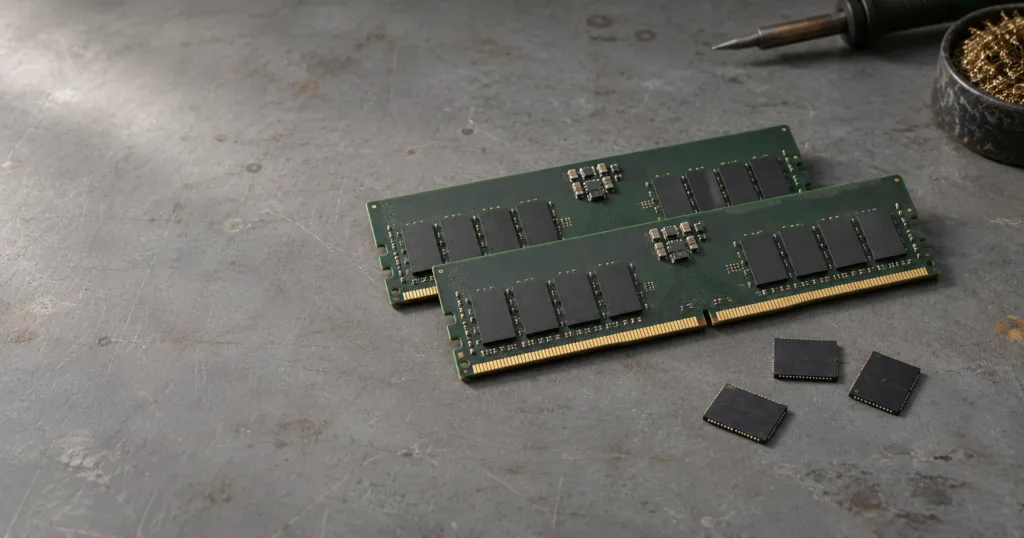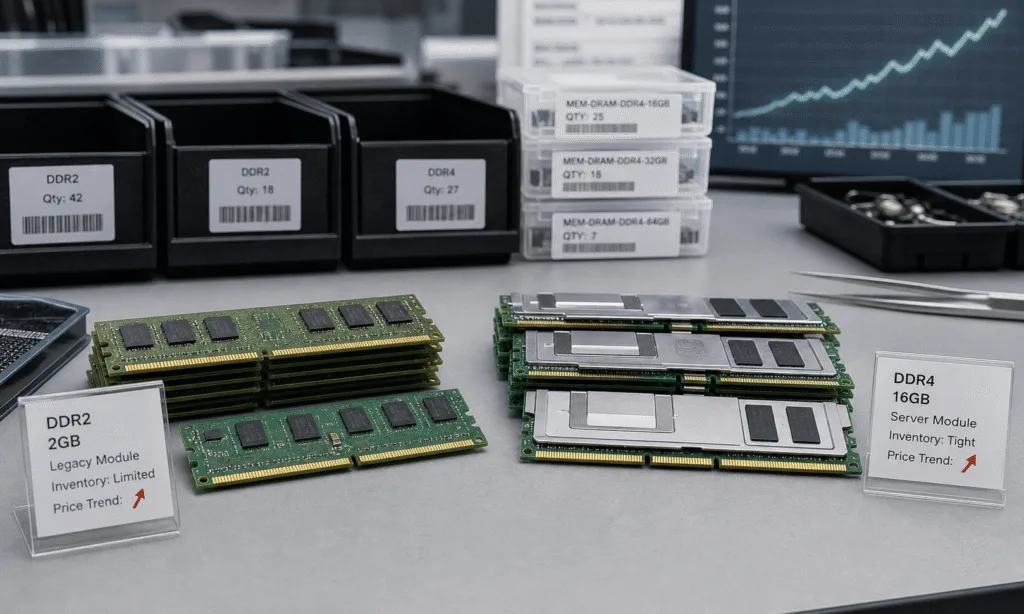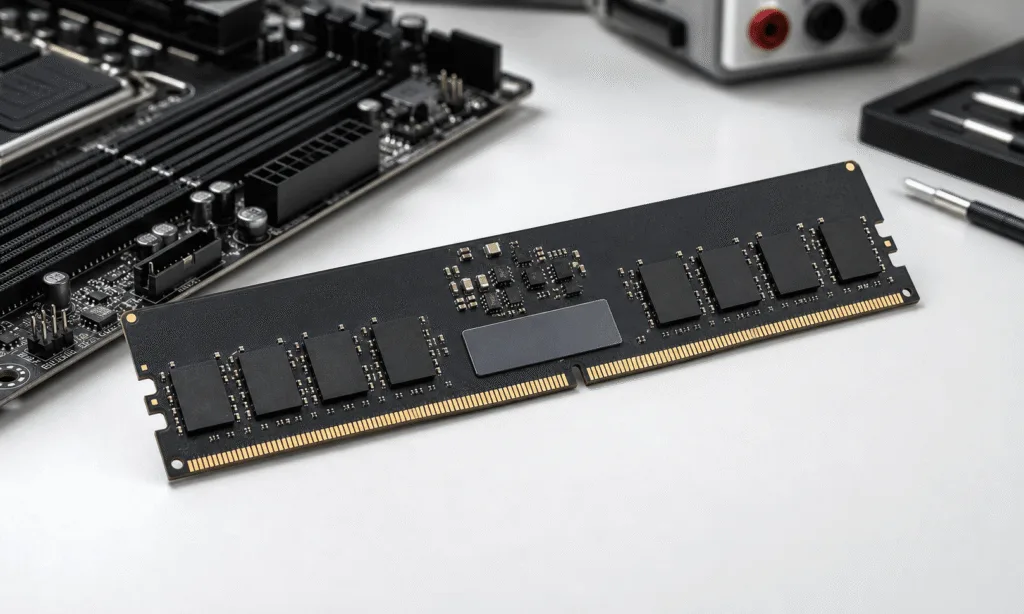
TrendForce forecasts that reballed memory could reach 7–9% penetration in the smartphone market in 2027, compared with its estimate of approximately 3–4% for 2026. In research published on November 6, 2026, the firm linked the expected increase to rising mobile DRAM contract prices and smartphone brands’ efforts to reduce component costs.
The firm identified 4GB LPDDR4X as the main type of reballed memory available in the market, used primarily in 4G smartphones priced below CNY 1,299. It said adoption was concentrated in entry-level and budget models, where consumers are particularly sensitive to price increases.
For manufacturers, the potential saving comes from sourcing lower-cost recovered components. TrendForce said this can ease pressure on the bill of materials, or BOM, while helping brands keep retail prices competitive. The firm views these components as a way to sustain shipment volumes while memory prices remain elevated.
How reballing enables memory reuse
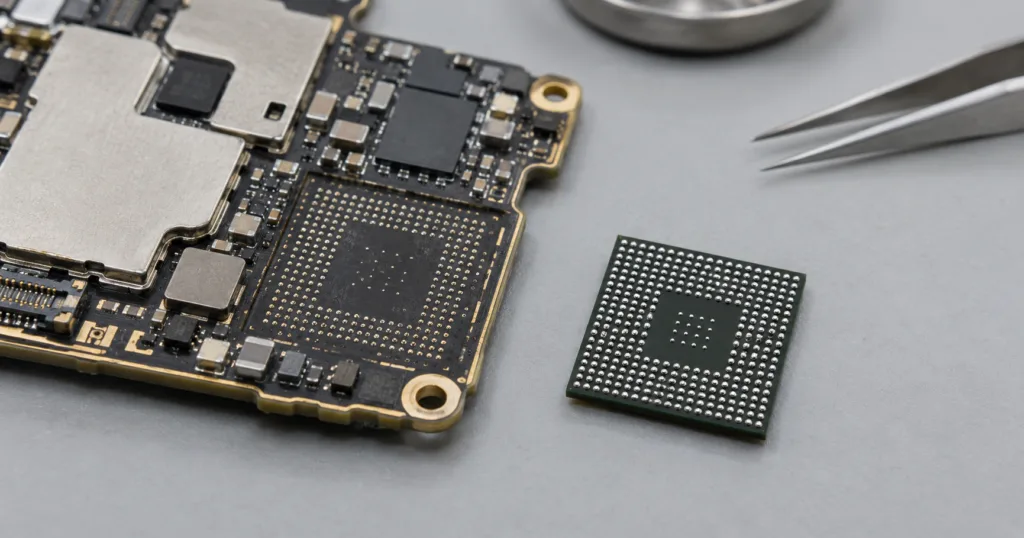
Reballing replaces the solder balls on a chip’s ball grid array, or BGA, package so the component can be mounted again. In the reuse process, memory recovered from an older device can be prepared for installation on another circuit board. Technicians heat the solder joints to release the intact chip package from its original board.
After removal, the existing solder balls are cleared away and the component is cleaned. Replacement balls are positioned with a matching stencil and attached through controlled heating. Inspection checks their alignment and appearance, as well as the condition and cleanliness of the package.
This is specialist component rework. It requires controlled heating, precise alignment and inspection equipment, together with advanced soldering skills. Reballing restores the package’s solder connections; the term alone does not establish where a chip came from or demonstrate its reliability.
Higher prices could broaden adoption
TrendForce expects DRAM price increases to gather momentum in the first quarter of 2027, adding pressure to smartphone production costs. The firm said reballed memory and lower-specification components could consequently spread into higher price segments. That remains a forecast, rather than confirmation that particular premium smartphones will use recovered chips.
The firm also expects reballed components to represent a relatively modest share of total annual smartphone LPDRAM bit consumption, even if their adoption expands in 2027. It therefore considers the practice unlikely to significantly alter the upward trend in DRAM contract prices. Adoption and total memory capacity consumed are separate measures in its assessment.
Quality and sourcing complicate the potential savings. TrendForce warned that inconsistent component quality could affect device reliability and shorten product lifespans. It identified possible consequences including higher warranty and repair costs, damage to brand reputation and reduced consumer confidence.
In its October 30 smartphone market bulletin, TrendForce also said varied sourcing and uneven quality require suppliers to screen and grade reballed parts, producing a wide range of transaction prices. The firm characterized their role as a short-term buffer for low-margin models, with limited influence on overall memory demand.