


Spider-Man Noir is one of Marvel’s sharpest alternate takes on Peter Parker: a Depression-era wall-crawler working in a world of crime bosses, corrupt institutions, smoky clubs, pulp danger, and supernatural menace.
Set on Earth-90214, the Marvel Noir corner of the multiverse reimagines familiar heroes and villains through a 1930s lens. Peter Parker is still driven by loss and responsibility, but this version of Spider-Man does not operate with the same bright, wisecracking energy as the main Marvel Universe Spider-Man. His world is harsher, his enemies are closer to organized crime, and many familiar names arrive with very different roles.
That is what makes Spider-Man Noir such a useful entry point for readers who already know the broad Spider-Man mythology. The names are recognizable, but the details are not simple costume swaps. Norman Osborn becomes a crime lord known as the Goblin. Felicia Hardy is connected to the Black Cat nightclub rather than introduced as a burglar. Sandman, Electro, Mysterio, Robbie Robertson, and Tombstone all shift to fit the setting’s pulp-crime atmosphere.
Spider-Man Noir
Spider-Man Noir debuted in SPIDER-MAN NOIR (2008) #1 by David Hine, Fabrice Sapolsky, and Carmine Di Giandomenico. This Peter Parker lives on Earth-90214 and begins his story as a young man trying to survive in New York while working for photojournalist Ben Urich.
His origin keeps the emotional core of Spider-Man intact while changing the texture around it. Peter’s Uncle Ben has been murdered by criminals connected to Norman Osborn, a local underworld power. Peter’s investigation into Osborn’s operation leads him to a warehouse shipment of stolen artifacts, where he breaks an ancient spider idol and releases supernatural spiders.
After being bitten, the story presents Peter as gaining enhanced strength, speed, endurance, and the ability to produce dark organic webbing from his wrists. Rather than a sleek superhero suit, he builds his look from his uncle’s World War I aviator uniform, creating one of the most recognizable Spider-Man variants in the multiverse.
This version of Peter also has a harder edge than the mainstream Spider-Man. Early stories depict him using firearms, a detail that reflects the pulp setting but also separates him from the more familiar Peter Parker of Earth-616. His battles are not just against masked villains. They involve mob networks, political rot, Nazi plots, scientific cruelty, and supernatural threats.
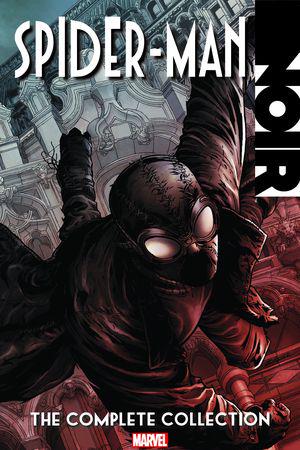
Spider-Man Noir: The Complete Collection
This collection gathers Peter Parker’s core Noir stories, including the original Spider-Man Noir series and Eyes Without a Face. It is the most direct starting point for readers who want the character guide to lead into the comics themselves.
As an Amazon Associate I earn from qualifying purchases.
Key Heroes and Allies
Spider-Man Noir’s supporting cast matters because the series does not simply drop Peter into a period backdrop by himself. His allies help define the world around him, especially the journalists, club owners, and investigators who move through the same dangerous city.
Ben Urich
Ben Urich is central to Peter’s early life in the Noir universe. He is a New York photojournalist who gives Peter work and becomes one of the figures pulling him toward the city’s hidden criminal machinery.
In many Spider-Man stories, Ben Urich represents the power of journalism to expose corruption. Spider-Man Noir keeps that function but places it in a more dangerous environment. Information has a price, and people who dig too deeply into Norman Osborn’s business do not stay safe for long.
Felicia Hardy
Felicia Hardy is one of the most changed familiar figures in Spider-Man Noir. Instead of being introduced primarily through the Black Cat burglar identity, this version is tied to the Black Cat nightclub, a setting that naturally fits the Noir world’s mix of glamour, secrets, and danger.
The comics frame Felicia as someone with access to people and information that Peter and Ben Urich cannot easily reach. Her position in the nightclub scene puts her near criminals, informants, and power brokers, making her valuable to Spider-Man’s investigations while also placing her at risk.
Later material moves Felicia into the masked identity White Widow after violence connected to her dangerous associations. The result is a version of Felicia who still carries the character’s familiar tension with Spider-Man’s world, but through noir melodrama rather than cat-burglar adventure.
Robbie Robertson
Robbie Robertson appears in SPIDER-MAN NOIR: EYES WITHOUT A FACE (2009) #1, where he works as a journalist alongside Peter. Like his main-universe counterpart, Robbie is linked to reporting and public truth, but the Noir universe gives his investigation a grim turn.
Robbie looks into disappearances in Harlem after becoming frustrated by the lack of official concern. His work leads toward Otto Octavius, who is connected to a disturbing plot involving abducted and lobotomized victims. Robbie’s fate becomes one of the darker examples of how costly truth-seeking can be in this setting.
Spider-Man’s fight against Octavius is not just another villain encounter. It becomes personal because Robbie’s investigation exposes both the crime and the human cost behind it.
Major Villains in Spider-Man Noir’s World
The villains of Spider-Man Noir often keep the names and broad identities readers know, but their powers and roles are adapted to the 1930s crime-story framework. Some become mob figures. Others are showmen, corrupt officials, or experiment-driven horrors.
| Character | Noir Role | Notable Appearance |
|---|---|---|
| Norman Osborn | Crime lord known as the Goblin | SPIDER-MAN NOIR (2008) |
| Sandman | Mob enforcer for Crime Master | SPIDER-MAN NOIR: EYES WITHOUT A FACE (2009) |
| Electro | Tesla-coil-powered threat | SPIDER-MAN NOIR (2020) |
| Mysterio | World’s Fair magician and illusionist | EDGE OF SPIDER-VERSE (2014) #1 |
| Tombstone | Corrupt Harlem cop with mob ties | LUKE CAGE NOIR (2009) |
Norman Osborn
Norman Osborn is one of the defining threats in Spider-Man Noir. On Earth-90214, he is not the Green Goblin in the familiar super-villain sense. He is a crime boss whose appearance and reputation earn him the name the Goblin.
This Norman rules much of New York’s criminal underworld and employs dangerous figures such as the Chameleon and Kraven. His version of villainy is grounded less in corporate science and more in intimidation, networks, and control. The Chameleon even creates a mask for Norman to conceal his appearance, reinforcing the idea that power in this world often depends on performance and fear.
Spider-Man eventually exposes Norman, and the conflict ends violently after a spider-infested Kraven turns on him in SPIDER-MAN NOIR (2008) #4. It is a fittingly bleak conclusion for a villain whose influence shapes Peter’s early transformation into Spider-Man.
Sandman
The Noir version of Sandman is another example of Marvel reshaping a familiar villain without simply repeating his main-continuity origin. In Earth-616, Flint Marko becomes Sandman after exposure to irradiated sand. In the Noir universe, the name is tied to his brutal physicality rather than a sand-based transformation.
Introduced in SPIDER-MAN NOIR: EYES WITHOUT A FACE (2009) #1, Sandman works as an enforcer for Crime Master. His reputation comes from his granite-like body and his ability to kill with his hands. That makes him feel more like a pulp bruiser than a science-fiction elemental villain.
His confrontation with Spider-Man nearly ends badly for Peter, but Jean DeWolff intervenes in time. The scene underlines a recurring pattern in Spider-Man Noir: Peter may be formidable, but he is often operating in a city where one mistake can be fatal.
Electro
Electro arrives in SPIDER-MAN NOIR (2020) by Margaret Stohl and Juan Ferreyra. This version of Max Dillon is not a living electrical being created by a freak repair accident. Instead, his power comes through experimental Tesla coils and a modified lightning rod.
That change is especially suited to the Noir setting because it keeps Electro’s electrical identity while grounding it in period-flavored technology. He feels like a dangerous invention brought into a world already crowded with crime and occult forces.
His story takes a stranger turn when the M’kraan Crystal transforms him inside an ancient temple. Electro is ultimately consumed by an evil demigod, which shows how the later Spider-Man Noir material pushes beyond street-level crime into larger supernatural and multiversal danger.
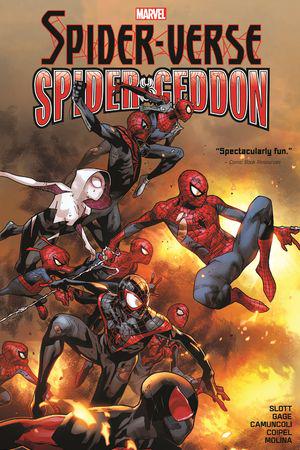
Spider-Verse/Spider-Geddon Omnibus
This omnibus collects the major Spider-Verse and Spider-Geddon events, including material connected to Spider-Man Noir’s multiverse appearances. It works best for readers who want the larger crossover context rather than only the Noir solo stories.
As an Amazon Associate I earn from qualifying purchases.
Mysterio
Mysterio appears in EDGE OF SPIDER-VERSE (2014) #1, where Quentin Beck’s theatrical instincts are translated into the setting through stage magic and spectacle. Instead of simply being a special-effects criminal in a modern superhero world, he performs as a magician at the World’s Fair.
That setting gives Mysterio an ideal Noir-era stage. He can blur performance, deception, and crime in front of an audience, which makes him a natural fit for Spider-Man Noir’s visual style. When he captures Felicia Hardy and uses disorienting gas against Spider-Man, the encounter leans into the character’s classic reliance on illusion without losing the period tone.
Spider-Man eventually sees through the trickery and defeats him. Soon after, Spider-Man Noir is pulled into the broader Spider-Verse conflict, connecting this shadowy corner of Marvel to a much larger multiversal story.
Tombstone
Tombstone makes his Marvel Noir debut in LUKE CAGE NOIR (2009) #1 by Mike Benson, Adam Glass, and Shawn Martinbrough. In the main Marvel Universe, Lonnie Lincoln is known as a powerful mob enforcer with filed teeth and enhanced durability. The Noir version shifts him into a corrupt Harlem police officer with mob connections.
His toughness comes from a congenital condition that causes his skin to harden over time. That detail gives the character a different explanation while preserving the intimidating physical presence associated with Tombstone.
After threatening Luke Cage and the people close to him, Tombstone is defeated when Cage overloads him with gas in LUKE CAGE NOIR (2009) #4. Although he is more directly tied to Luke Cage Noir than Spider-Man Noir, his presence helps flesh out the wider Marvel Noir version of New York.
Why These Reimaginings Work
Spider-Man Noir works because it keeps the emotional scaffolding of Spider-Man while changing the genre around him. Peter is still a young man shaped by loss. He still follows clues into danger. He still faces villains who reflect different forms of corruption and obsession. But the world around him is closer to pulp crime fiction than modern superhero adventure.
That shift gives familiar characters new functions. Norman Osborn becomes a crime boss rather than a costumed industrialist. Felicia Hardy becomes part of the nightclub and information economy. Sandman becomes a terrifying enforcer. Mysterio becomes a stage magician whose illusions fit naturally into a World’s Fair setting. Electro’s technology feels like something pulled from the edge of early electrical experimentation.
For readers, the appeal is not just seeing Spider-Man in a darker costume. It is seeing how much of the Spider-Man mythos can bend while still remaining recognizable. Spider-Man Noir proves that Peter Parker’s core story can survive a major change in era, genre, and atmosphere, especially when the supporting cast is reworked with the same level of specificity.