


The Lord of the Rings remains one of the easiest movie trilogies to return to, especially for viewers who want scale, craftsmanship, and a fully realized fantasy world. Still, rewatchability is not only about size. Sometimes it comes from comfort. Sometimes it comes from momentum, quotable dialogue, a cast with perfect chemistry, or the simple pleasure of watching three films that know exactly what they are.
That is where other trilogies can compete with, and sometimes outpace, Peter Jackson’s Middle-earth films. A three-movie run gives characters enough room to grow without requiring the commitment of a sprawling franchise. It can also make a rewatch feel manageable: one weekend, one complete arc, and no need to keep track of endless spin-offs.
Some of the best examples helped shape the way later movies were made. Others are smaller, more intimate, or simply easier to put on any time. These trilogies are not all better than The Lord of the Rings in the same way, but each has a strong case as a more repeat-friendly watch.

Panasonic DP-UB820-K 4K Blu-ray Player
A dedicated 4K Blu-ray player makes sense for readers planning trilogy rewatches from disc rather than relying on changing streaming availability. This model supports common premium HDR formats and works well for mixed Blu-ray and 4K collections.
As an Amazon Associate I earn from qualifying purchases.
Toy Story
The first three Toy Story films remain one of Pixar’s cleanest emotional arcs. Toy Story introduced Woody, Buzz Lightyear, and a group of toys whose world was built around play, loyalty, jealousy, and the fear of being replaced. Its computer animation was a major moment for feature animation, but the reason it still works is not just technical history. The characters are funny, anxious, vain, loyal, and recognizable.
Toy Story 2 broadened the idea by asking what a toy is supposed to want: to be loved briefly and risk being forgotten, or to be preserved safely and never truly played with. Toy Story 3 then pushed the story toward a natural farewell as Andy grew up and prepared to leave home. For many viewers, that makes the original three films feel like a complete childhood-to-adulthood journey.
The franchise continued after that, and Toy Story 5 is scheduled for theatrical release in June 2026. Even so, the 1995-to-2010 run has a self-contained quality that makes it especially easy to revisit. It is bright enough for family viewing, sharp enough for adults, and emotionally direct without feeling heavy.
The Dark Knight Trilogy
Christopher Nolan’s Batman trilogy is rewatchable for a different reason: it plays like a crime saga as much as a superhero story. Batman Begins rebuilds Bruce Wayne from the ground up, focusing on fear, discipline, and the creation of a symbol. The Dark Knight then widens the canvas into a citywide moral test, with Gotham pulled between order, chaos, and political compromise. The Dark Knight Rises brings the story back to legacy, exhaustion, and whether Batman can mean anything beyond Bruce himself.
The middle chapter is still the most common reason people return to the trilogy. Heath Ledger’s Joker is volatile without feeling random, and the performance won him a posthumous Academy Award for Best Supporting Actor. Christian Bale, Michael Caine, Gary Oldman, Morgan Freeman, Aaron Eckhart, and Maggie Gyllenhaal also give the film enough human texture that it holds up outside its set pieces.
Nolan’s version is not the only valid take on Batman, and later films have moved the character in different directions. What makes this trilogy so easy to revisit is how unified it feels. It has a clear beginning, a towering middle, and a conclusion that actually treats Bruce Wayne’s story as something that can end.
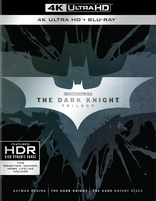
The Dark Knight Trilogy 4K UHD Set
A complete trilogy set fits readers who want Batman Begins, The Dark Knight, and The Dark Knight Rises in one shelf-friendly package. It is especially relevant for viewers who return to the series for its crime-saga scale and practical action.
As an Amazon Associate I earn from qualifying purchases.
The Before Trilogy
The Before trilogy is almost the opposite of The Lord of the Rings in scale, which is exactly why it rewards repeat viewings. Before Sunrise, Before Sunset, and Before Midnight follow Jesse and Celine across three stages of life: a chance meeting in Vienna, a reunion years later in Paris, and a later chapter shaped by commitment, resentment, parenting, and the compromises of adulthood.
The films were released in 1995, 2004, and 2013, giving the trilogy a rare sense of time passing naturally. Ethan Hawke and Julie Delpy do not just play younger and older versions of the same people; they carry the memory of earlier conversations into later ones. A line that feels romantic in the first film can feel complicated by the third.
That makes the trilogy unusually flexible on rewatch. At one age, Before Sunrise may feel like the ideal fantasy of meeting the right person at the right time. Later, Before Sunset may become the most painful and satisfying entry. Later still, Before Midnight may feel like the one that understands love most clearly because it is willing to show irritation, fatigue, and disappointment alongside affection.
Three Flavours Cornetto Trilogy
Edgar Wright, Simon Pegg, and Nick Frost’s Three Flavours Cornetto trilogy is not a trilogy in the traditional plot sense. Shaun of the Dead, Hot Fuzz, and The World’s End do not follow one continuous story, but they share a comic rhythm, a fondness for genre structure, and a running Cornetto gag that ties them together loosely.
That loose connection is part of the appeal. Shaun of the Dead turns a zombie outbreak into a story about arrested development, friendship, and getting one’s life together. Hot Fuzz takes the grammar of American action cinema and drops it into a suspiciously perfect English village. The World’s End starts as a pub-crawl comedy and becomes something stranger, sadder, and more apocalyptic.
Because each film has its own genre engine, the trilogy rarely feels repetitive. A viewer can watch all three together or just pick the one that fits the mood. The editing, callbacks, background jokes, and setups hidden in plain sight also make these films especially rewarding for repeat viewing.
Indiana Jones
The Indiana Jones franchise later expanded beyond its original three films, but Raiders of the Lost Ark, Temple of Doom, and The Last Crusade still work as a near-perfect adventure run. Harrison Ford’s performance is central to that. Indy is capable and charismatic, but he is also bruised, impatient, and frequently overwhelmed, which keeps the action from feeling too polished.
Raiders of the Lost Ark remains the cleanest version of the formula: ancient artifacts, dangerous rivals, practical stunts, supernatural payoff, and a hero who often survives by luck as much as skill. Temple of Doom is darker and stranger, giving the trilogy a more chaotic middle chapter. The Last Crusade then brings in Sean Connery as Henry Jones Sr., turning the adventure into a father-son story without losing the serial-movie energy.
John Williams’ score, Steven Spielberg’s staging, and George Lucas’ pulp instincts all help make the first three films easy to revisit. They move quickly, they rarely overexplain, and they understand the simple pleasure of a cliffhanger, a map, a trap, and a narrow escape.
The Dollars Trilogy
Sergio Leone’s Dollars trilogy is one of the most rewatchable Western runs because it is built on style, tension, and attitude as much as plot. A Fistful of Dollars, For a Few Dollars More, and The Good, the Bad and the Ugly helped define the spaghetti Western for international audiences and turned Clint Eastwood’s taciturn gunslinger into one of the genre’s most recognizable figures.
The films are full of faces, pauses, dust, silence, and sudden violence. Leone stretches confrontations until the smallest glance matters, while Ennio Morricone’s music gives the trilogy a sound that is nearly impossible to separate from its imagery. Even viewers who do not usually seek out Westerns may recognize the shape of these films through decades of later homages.
The Good, the Bad and the Ugly is often treated as the peak, but the trilogy works because each film sharpens the approach. The first is lean and direct. The second adds a more memorable rivalry. The third becomes bigger, stranger, and more operatic. Together, they are easy to return to because so much of their pleasure is visual and musical.
Star Wars Original Trilogy
The original Star Wars trilogy remains one of the most reliable rewatch experiences in popular cinema. A New Hope is simple in the best sense: a farm boy, a princess, a smuggler, a mentor, a villain, and a desperate mission. The Empire Strikes Back deepens the characters and darkens the story. Return of the Jedi brings the emotional conflict between Luke Skywalker and Darth Vader to a satisfying close while still delivering the large-scale adventure audiences expect.
Its influence on blockbuster filmmaking is difficult to miss, but the trilogy’s rewatch value is more immediate than that. Luke, Leia, Han, Chewbacca, C-3PO, R2-D2, and Vader are clear, memorable screen presences. The spaceships, creatures, practical effects, and lived-in production design make the galaxy feel bigger than whatever is happening in the current scene.
The famous revelations may only surprise a viewer once, but they do not lose their power. On rewatch, the appeal shifts toward structure, character details, and the way the trilogy balances mythic stakes with scrappy humor. It is large enough to feel epic and accessible enough to put on without preparation.
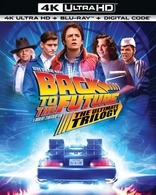
Back to the Future: The Ultimate Trilogy 4K Set
This complete set matches the article’s point that Back to the Future works as a beginning-to-ending trilogy watch. It is a practical pick for readers who want all three films together for a weekend rewatch.
As an Amazon Associate I earn from qualifying purchases.
Back To The Future
Back to the Future may be the most effortless trilogy on this list to rewatch from start to finish. The first film is a remarkably tight time-travel comedy, anchored by Michael J. Fox as Marty McFly and Christopher Lloyd as Doc Brown. The rules are clear, the jokes are fast, and the emotional stakes are simple without being thin: Marty has to get home, but he also has to understand his parents as people.
Back to the Future Part II complicates the timeline by jumping forward, backward, and sideways through altered versions of Hill Valley. Part III then shifts the story into the Old West, giving the trilogy a completely different texture while keeping the Marty-and-Doc friendship at its center. That variety helps the full run stay lively.
The trilogy also benefits from restraint. It tells one complete story across three films and stops there. For viewers tired of franchises that continue until the original shape is hard to see, Back to the Future offers something cleaner: a beginning, a middle, and an ending that still feel connected.
Why These Trilogies Hold Up
The Lord of the Rings is still a benchmark for fantasy filmmaking, and its rewatch value is not in doubt. The difference is that these trilogies offer different kinds of return trips. Some are shorter. Some are funnier. Some are easier to watch casually. Some invite viewers back because the characters age, the jokes land differently, or the craft becomes more visible each time.
That is the real advantage of a great trilogy. It gives enough space for change without turning into homework. Whether it is the emotional clarity of Toy Story, the propulsive comedy of Back to the Future, the genre precision of Star Wars, or the intimate conversations of the Before films, each of these three-movie runs makes a strong case for being revisited again and again.