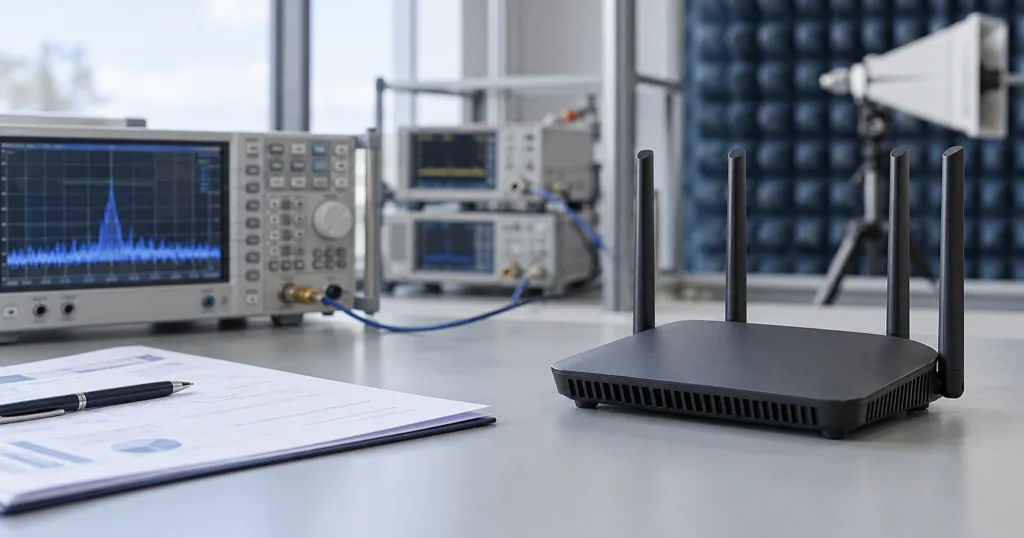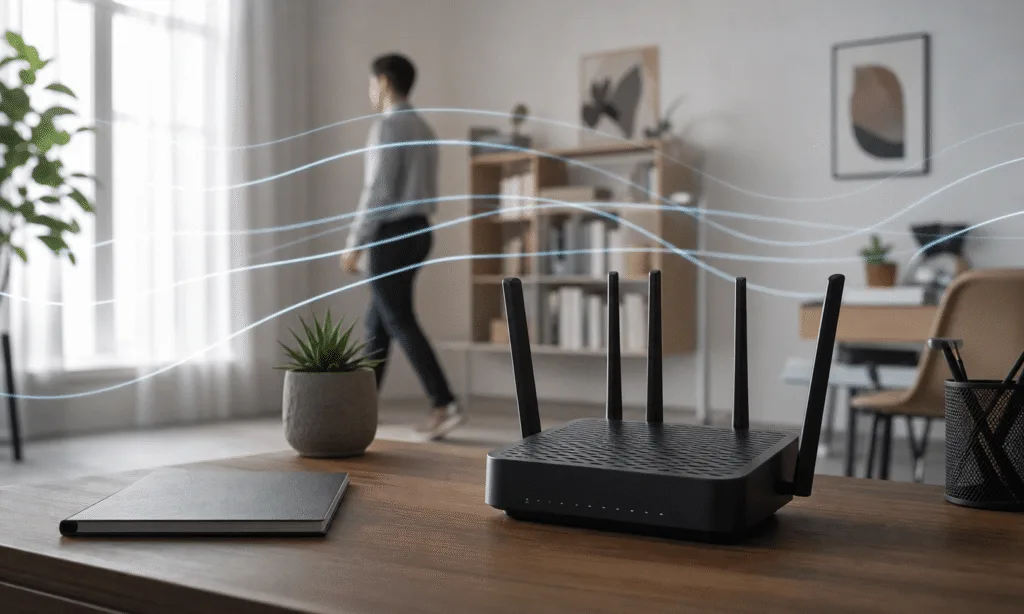
A new Wi-Fi privacy study gives router buyers and network admins a reason to look beyond speed ratings and coverage maps. Researchers at the Karlsruhe Institute of Technology in Germany say standard Wi-Fi equipment can be used to identify people walking through a room by analyzing beamforming feedback data that many modern devices already exchange during normal operation.
The system, called BFId, does not require a hacked router, specialized sensing hardware, or a phone in the target’s pocket. According to the researchers, an eavesdropping device within radio range can passively capture unencrypted beamforming feedback information, then use those signal patterns to identify individuals by the way their bodies affect the wireless environment.
In tests involving 197 participants, BFId reportedly reached 99.5% identification accuracy. That is the number that should make office managers, landlords, venue operators, and privacy-conscious home users pay attention, even if the attack remains a research demonstration rather than a consumer feature you can toggle in a router app.
What BFId Actually Uses
Wi-Fi-based identification is not a brand-new idea. Earlier research has often depended on channel state information, or CSI, which describes how radio signals change as they travel between a transmitter and receiver. CSI can reveal movement patterns, but collecting it has typically required modified firmware and a narrow set of compatible network adapters.
BFId focuses on a more available signal source: beamforming feedback information, or BFI. Beamforming became common with Wi-Fi 5 and helps access points direct wireless transmissions toward connected devices. To make that work, client devices measure the channel and send compressed feedback to the router.
The privacy issue is that this feedback is transmitted without encryption at the MAC layer. A Wi-Fi adapter in monitor mode can potentially capture it without joining the network. The person being identified also does not need to be connected to that network, because the system is reading how their body changes the radio environment around active Wi-Fi communication.
Why This Matters for Buyers and Network Operators
For ordinary consumers, this does not mean every router is suddenly a plug-and-play surveillance camera. The study describes a trained identification system, and real-world accuracy will depend on layout, device placement, traffic, movement, and the availability of prior training data.
Still, the finding changes how privacy-minded buyers should think about wireless gear. Router reviews usually focus on throughput, mesh performance, app controls, and Wi-Fi 6 or Wi-Fi 7 support. This research points to another question: how much sensing-relevant metadata does the network expose during routine operation?
| Method | What it uses | Practical concern |
|---|---|---|
| CSI-based sensing | Detailed channel state information | Often requires specific hardware or modified firmware |
| BFI-based sensing | Beamforming feedback from normal Wi-Fi operation | Can be captured passively when transmitted unencrypted |
| BFId result | Machine learning on BFI patterns | Reported 99.5% accuracy in the study’s participant test |
Can You Block This Today?
The mitigation picture is not especially tidy. The researchers tested reducing the frequency of beamforming reports, but said that had limited impact on identification accuracy, even when sample rates were heavily degraded. Encrypting BFI would be a cleaner privacy fix, but that would require changes at the Wi-Fi standard level and could create compatibility problems with existing devices.
For now, practical defensive steps are limited. Buyers and IT teams can prioritize routers with strong firmware support, keep devices updated, segment guest networks, and avoid assuming that a password-protected network hides all useful radio-layer data from nearby observers. Those steps do not eliminate the BFI issue, but they remain part of a more disciplined wireless setup.
The Verdict: A Research Warning, Not a Shopping Panic
BFId is most useful to readers as a privacy warning, not as a reason to throw out a working router. The study shows that standard Wi-Fi behavior can leak more about people in a physical space than most buyers would expect. That matters most in shared offices, apartment buildings, schools, retail spaces, and other environments where someone could be within radio range without being trusted.
The broader concern is where Wi-Fi sensing goes next. IEEE 802.11bf-2025 formalizes WLAN sensing capabilities for uses such as presence detection and environmental monitoring. Those features may support useful products, but they also make privacy rules and technical safeguards more urgent.
For buyers, the short version is simple: router privacy is no longer only about passwords, encryption settings, and cloud apps. The radio behavior itself can reveal patterns. Until standards and vendors address beamforming feedback more directly, Wi-Fi hardware should be treated as part of the privacy surface of a room, not just the internet connection inside it.