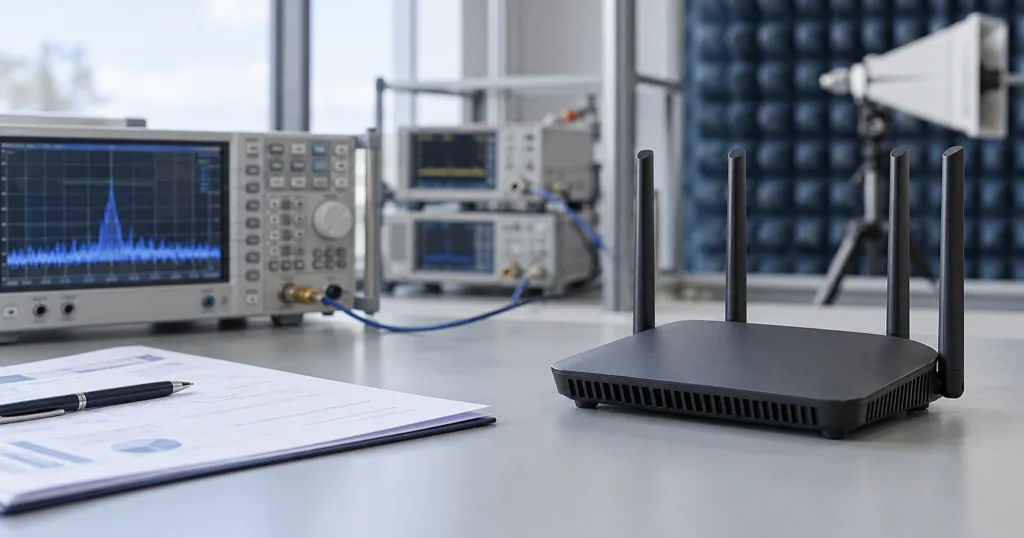
The Federal Communications Commission has reportedly flagged potentially inaccurate filings for four TP-Link router models and alleged that three exceeded radio power limits in testing. The concerns, set out in letters dated October 15, 2026, emerged while the company was pursuing conditional approval to sell new Wi-Fi 8 products in the United States.
The FCC’s Office of Engineering and Technology reportedly said it had “tentatively determined that TP-Link included false or incorrect information in its applications” for equipment authorization. The applications concern four models, including Archer routers. The reported findings remain preliminary.
The letters reportedly asked TP-Link to provide a detailed response and supporting documentation by October 30, 2026. The concerns relate to the accuracy of certification information and whether tested devices operated within permitted radio power levels.
TP-Link pledges cooperation on technical questions
In a statement addressing the technical concerns, TP-Link Systems said:
“Routine spot checks have been a standard FCC practice across the consumer electronics industry for many years, and individual product test results can occasionally vary.”
The company also said: “TP-Link Systems fully supports the FCC’s Office of Engineering and Technology and its role of ensuring that all manufacturers adhere to prescribed specifications for their certified products. We remain fully committed to working collaboratively with the FCC to resolve any technical questions that arise — and if necessary, address any confirmed technical issues as swiftly as possible.”
US assembly plans depend on regulatory approval
TP-Link has also outlined plans to assemble networking equipment in the United States. On October 19, 2026, the company announced a letter of intent with electronics manufacturer Key Tronic covering domestic assembly of its networking products.
Under that proposal, Key Tronic would become a primary domestic manufacturing partner, with assembly in Corinth, Mississippi. TP-Link said its Wi-Fi 8 home networking line could enter domestic assembly as early as 2027, subject to US regulatory approval.
In an October 13 FCC filing, TP-Link reportedly proposed nearly $1 billion in US research, development and manufacturing investment. The company’s subsequent Key Tronic announcement described an intended assembly partnership, with production plans still conditional on regulatory clearance.
State officials raise separate security concerns
The technical allegations come alongside broader scrutiny of TP-Link’s security practices and corporate relationships. On October 7, Nebraska Attorney General Mike Hilgers announced that a coalition of 21 state attorneys general had written to the FCC about TP-Link’s request to sell new router models.
The officials raised concerns about the company’s ties to China, its supply chain and representations about router privacy and security. Those concerns form part of the states’ allegations against the company.
TP-Link disputes the accusations. Steve Kovsky, TP-Link Systems’ corporate affairs officer, said: “The coordinated lawsuits are built on false premises.”
In an October 6 statement responding to lawsuits filed by Florida, Montana, Iowa and Nebraska, the company said it is an independent US business that is neither owned nor controlled by a foreign government. It said the devices it sells in the US are manufactured in Vietnam. It also said it complies with US privacy and data protection laws and does not share customer network data with foreign governments or unauthorized third parties.