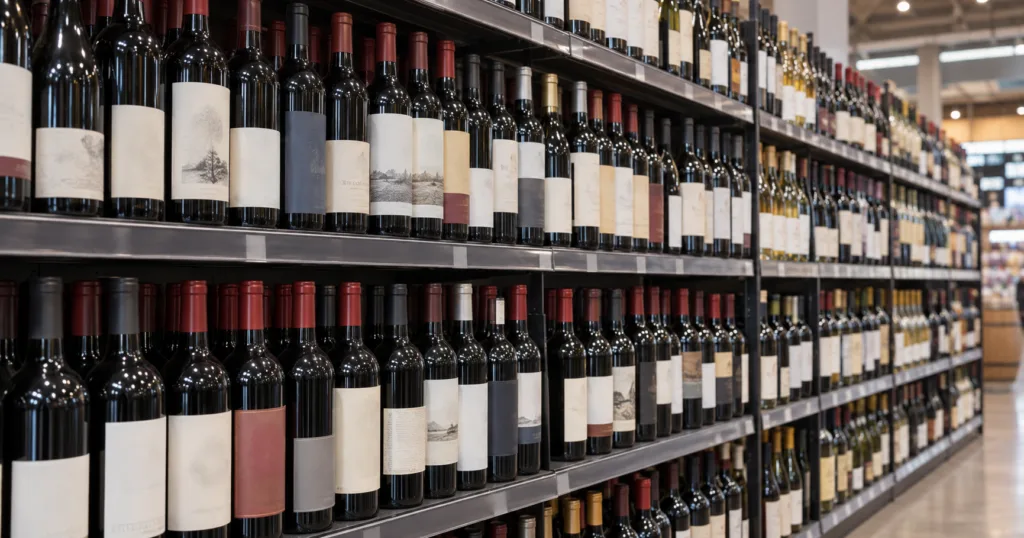
A California wine surplus was supplying retailers with premium bottles for lower-priced private labels in October 2026. Vinetur reported on October 8 that chains including Grocery Outlet, Costco, Kroger and Aldi were sourcing wines as producers sought to clear excess inventory.
The retail discounts accompanied weaker sales and inventory reductions at major alcohol producers. Treasury Wine Estates reported substantial US asset write-downs, while Pernod Ricard reported declining organic sales in the US and China.
Premium wine moves into private labels
Grocery Outlet wine buyer Steve Beckner said a Napa Valley cabernet sauvignon offered under its private label for as little as $9.99 could command $45 to $85 under a winery’s name, Vinetur reported. That comparison was a buyer’s estimate of winery-label pricing.
Beckner also described larger bulk offers: 20,000 to 200,000 cases, compared with roughly 1,000 to 3,000 when he joined Grocery Outlet in 2018.
Navigator Wine Collection president Taylor Case said his company planned to sell a Napa cabernet for $29.99 that he identified as retailing for $149. Vinetur also reported Costco’s Kirkland Signature Stags Leap Cabernet Sauvignon had fallen to $19.99.
Case told the Los Angeles Times in its October 7 report that clearing the surplus could take another 12 to 24 months.
Producers cut inventory and write down assets
Treasury Wine Estates recorded an additional A$558.4 million post-tax charge in its fiscal 2026 results for non-cash write-downs of US assets and further brand impairments, according to its annual report released on August 13. The charge followed impairments recognized in the first half.
In an August 10 announcement, the company outlined plans to reduce California North Coast wine production from the 2026 vintage, including leaving vineyards uncultivated to lower grape intake. It said inventory write-downs predominantly involved bulk wine, which it expected to manage through bulk sales and internal reclassification.
Pernod Ricard’s August 27 results showed organic net sales falling 3.9% for the year ended June 30, 2026. US organic sales declined 14%, with the company citing market softness and inventory adjustments.
China organic sales fell 19%, with Pernod Ricard reporting pressure on prestige categories, particularly Martell cognac. Excluding the US and China, organic sales rose 0.5%. The company reported growth in India and Japan.
US drinking participation remains below 2023 levels
Gallup’s survey published on August 20, 2026, found that 54% of US adults said they drank alcohol, matching 2025’s record low and down from 62% in 2023. The poll was conducted July 1–19.
The same survey found that 51% considered one or two alcoholic drinks a day bad for their health. Gallup described that result as essentially unchanged from 53% in 2025.
Gallup separately reported in August 2025 that drinking participation among adults aged 18 to 34 had fallen from 59% in 2023 to 50% in 2025.
International research showed a different pattern. IWSR’s March 2025 Bevtrac survey found that 73% of legal-drinking-age Gen Z respondents across 15 markets had consumed alcohol within six months, compared with 66% in April 2023. Its population and question differed from Gallup’s US adult survey, so the figures are not directly comparable.
Constellation reports mixed brand performance
Constellation Brands reported on October 6 that net sales rose 6% to $2.63 billion in its fiscal second quarter of 2027, which ended August 31, 2026. Its wine and spirits segment returned to operating profitability and reported a 17% increase in net sales.
Beer depletions, which track distributor sales to retailers, declined 0.6%, according to the company. Corona Extra depletions fell about 5%, while Pacifico grew approximately 19%.
Beer shipments rose 5.5%, and beer net sales increased 5%. Constellation attributed that revenue growth to higher shipment volumes, even as its distributors’ sales to retailers declined.