

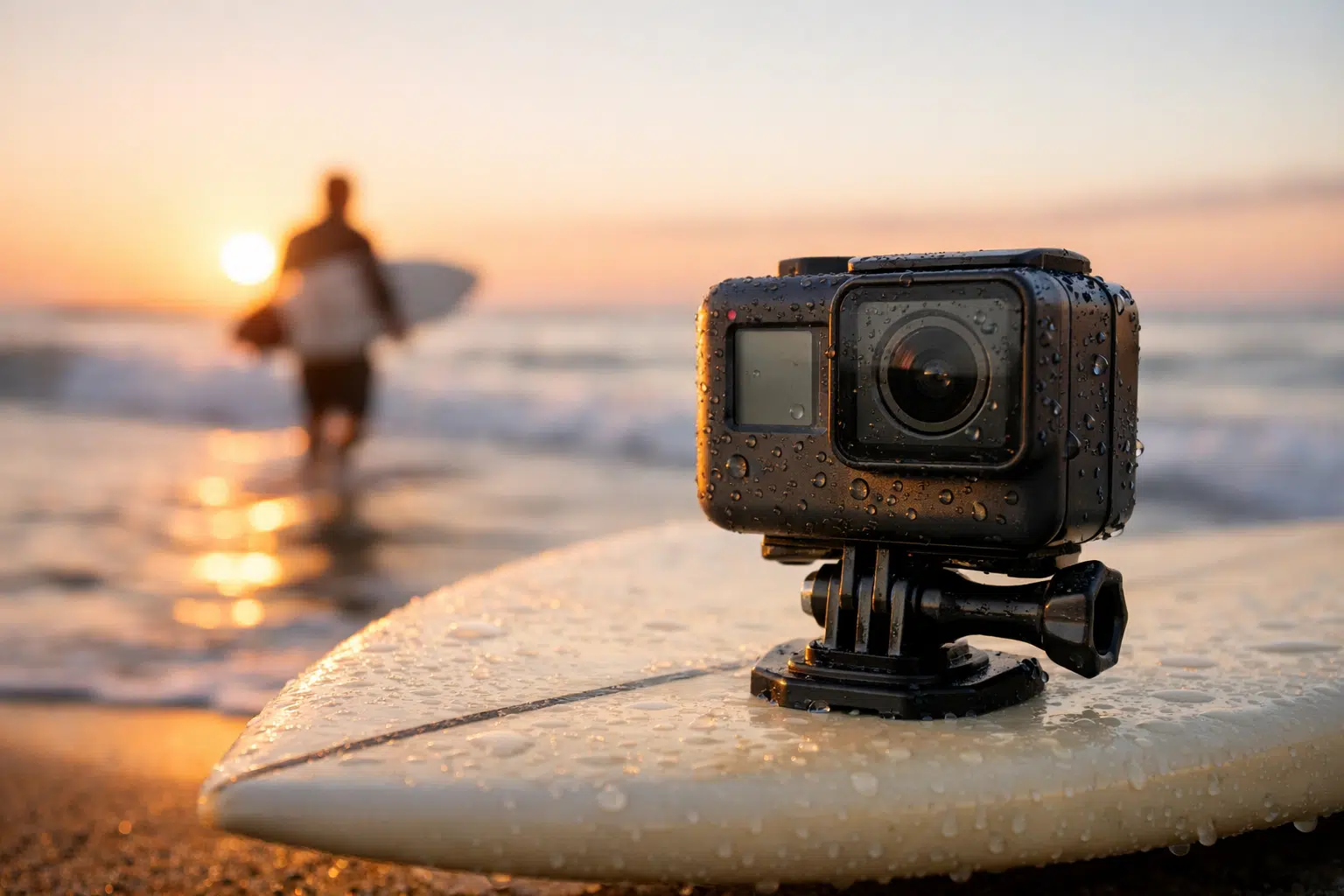

GoPro’s rise is the kind of startup story that starts with a very specific problem: Nick Woodman wanted better ways to capture surfing shots from inside the action, not from the beach.
In 2002, during a surfing trip to Australia, Woodman realized there wasn’t an easy, affordable way for everyday athletes to document what they were doing at close range. That frustration became the seed of GoPro, which he founded the same year.
A scrappy start from a VW van
The earliest funding came from hustle and family support. Woodman sold bead-and-shell belts for under $20—often out of his VW van—and he also received more than $230,000 from his parents to help build the business.
Instead of trying to compete with traditional cameras head-on, the early concept focused on what action athletes actually needed: wearable, durable gear that could go where a handheld camera couldn’t.
The first HERO and the leap to digital
Woodman’s early experiments included wrist-mounted ideas and simple mounting systems. In September 2004, GoPro introduced its first waterproof 35mm film camera—the original HERO—built for capturing action from the user’s perspective. The product became commercially available later, and it quickly found a home in surfing and other outdoor communities.
GoPro’s next big unlock was digital. The company introduced its first Digital HERO camera in 2006, signaling a shift that expanded the market far beyond film users and made it easier for customers to share what they captured.
Early growth, then breakout scale
As the product line matured, GoPro’s business ramped fast. Annual revenue reached about $800,000 in 2006, then climbed to $3.4 million in 2007.
By 2011, revenue had grown to $234.2 million—a sign that GoPro wasn’t just selling a gadget, but building a category.
When drones tested the brand
Like many consumer hardware companies riding momentum, GoPro looked for its next adjacent hit. Drones were the obvious bet, but the Karma launch became a costly lesson. In November 2016, GoPro issued a recall for the Karma drone, and by January 2018, the company confirmed it was exiting the drone business entirely.
The reset pushed GoPro back toward what it does best: cameras, accessories, and the software and services that keep users engaged between upgrades.
The business today: cameras plus subscriptions
That pivot has increasingly been reflected in GoPro’s mix of hardware and recurring revenue. In its FY2023 results (reported on February 7, 2024), GoPro said it sold 3 million camera units (up 6% year over year) and grew its subscriber base to 2.5 million (up 12%). The company also reported $1.0 billion in revenue for 2023.
Woodman has pushed back on GoPro being boxed in as “just” a camera maker, saying he prefers to think of it as “the world’s leading activity capture company.”
Lessons founders can steal from GoPro
1) Start with a problem you actually have
GoPro didn’t begin as a grand plan to reinvent cameras. It started as one person trying to capture a moment that existing tools made difficult.
2) Let constraints shape the product
Early GoPros weren’t about perfection—they were about getting the shot. Durability, mountability, and ease of use mattered more than spec-sheet bragging rights.
3) Sell the lifestyle, not just the device
GoPro’s brand runs on aspiration. The marketing centers the experience, and the camera becomes the passport.
4) Turn customers into the content engine
GoPro’s best advertising has always been what users create. As Woodman has put it, “Our customers are some of the most interesting people in the world”—and their footage is the proof.
5) Pivot before the market forces you
As smartphone cameras improved, GoPro had to adapt. The company was slower than it wanted to be in treating phones as a serious competitive threat, and its post-drone focus shows what the next chapter looks like: better cameras, better software, and more recurring services.
6) Protect focus as you scale
Big visions are seductive. But GoPro’s story shows how quickly expansion bets can become distractions—and how powerful a disciplined return to the core can be.