

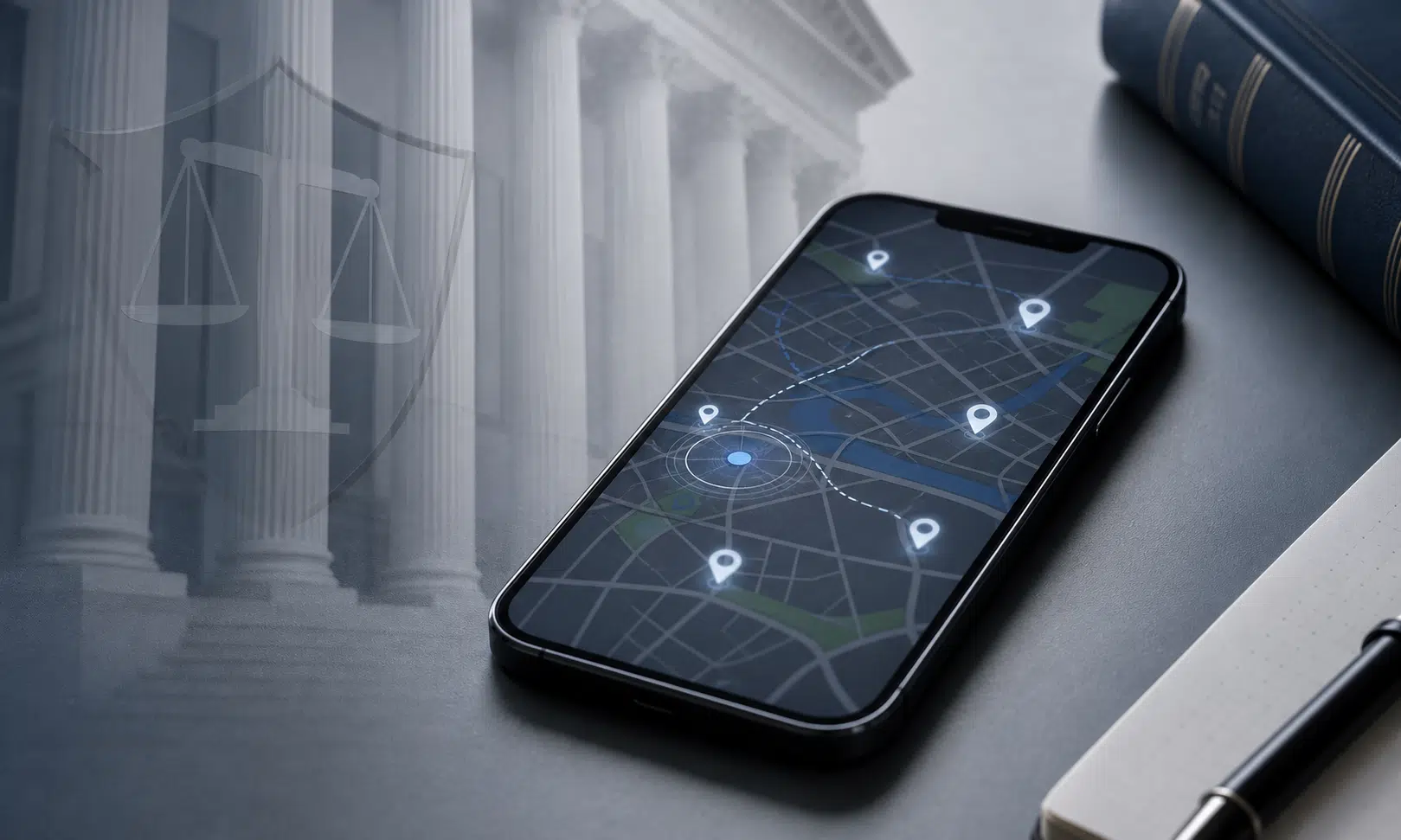

The Supreme Court has put new constitutional weight behind a question that affects nearly everyone carrying a smartphone: if your phone quietly logs where you have been, how easily should police be able to get that information from a tech company?
In a 6-3 decision in Chatrie v. United States, the court held that people can have a reasonable expectation of privacy in phone location records held by third-party companies. The practical effect is a higher bar for law enforcement when seeking location history through geofence warrants, the investigative tool used to ask a company for information about devices that were near a particular place at a particular time.
That matters because modern location data is not just a dot on a map. It can show patterns of movement, visits to sensitive locations, and the routines that make up a person’s private life. The court’s decision signals that handing data to a company like Google does not automatically strip it of constitutional protection when the government comes asking for it.
What the ruling changes
The case grew out of a 2019 bank robbery investigation involving Okello Chatrie. Police used a geofence warrant to obtain location data connected to devices near the crime scene, a search that eventually helped lead investigators to Chatrie.
Geofence warrants work in reverse from a traditional warrant. Instead of starting with a named suspect and seeking information tied to that person, investigators define a location and time window, then ask for data that may identify devices in that area. Privacy advocates have long argued that this structure can sweep in people who are not suspected of any crime.
The Supreme Court’s ruling does not erase geofence warrants from police use, but it does make clear that location-history requests can trigger Fourth Amendment scrutiny. That means courts must look more closely at whether the government’s request is narrow, justified, and specific enough to satisfy constitutional limits.
For phone users, the decision is less about a new setting to toggle and more about the legal boundary around data that already exists. If a company has retained location history, police cannot treat that information as automatically available simply because it sits on a corporate server rather than on the phone itself.
Why the third-party issue matters
The government has often leaned on the idea that people lose some privacy protection when they voluntarily share information with a third party. That argument becomes harder to apply cleanly in the smartphone era, where basic services often depend on data moving through apps, operating systems, cloud accounts, and advertising infrastructure.
The majority treated phone location records as sensitive enough to deserve protection even when a company is holding them. That fits with the broader direction of digital privacy law, where courts have had to account for the fact that carrying a phone is no longer a niche behavior or a meaningful signal that someone agreed to broad government access.
The dissenters, including Justices Samuel Alito, Amy Coney Barrett, and Clarence Thomas, objected to the majority’s approach. Their concern centered on how the court framed the privacy issue and what the ruling could mean for future law enforcement tools.
What happens next
The case returns to the Fourth Circuit, which will still need to address what the ruling means for the warrant used in Chatrie’s case. That narrower question could determine whether the evidence obtained through the geofence warrant survives under the specific facts of the investigation.
For everyone else, the larger takeaway is already clear: phone location data is getting harder for police to obtain through broad requests. The ruling strengthens the argument that digital records can deserve real constitutional protection, even when those records are generated by everyday interactions with consumer technology.
That does not make location tracking disappear, and it does not stop companies from collecting data under their own policies. But it does make the government’s path to that data more constrained. In a world where phones double as pocket-sized location logs, that is a major privacy line for the court to draw.