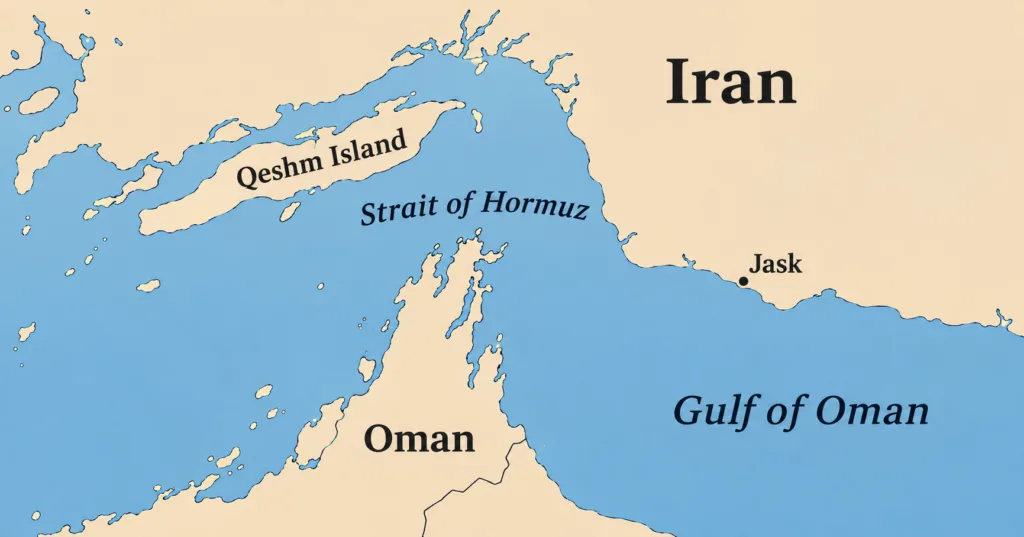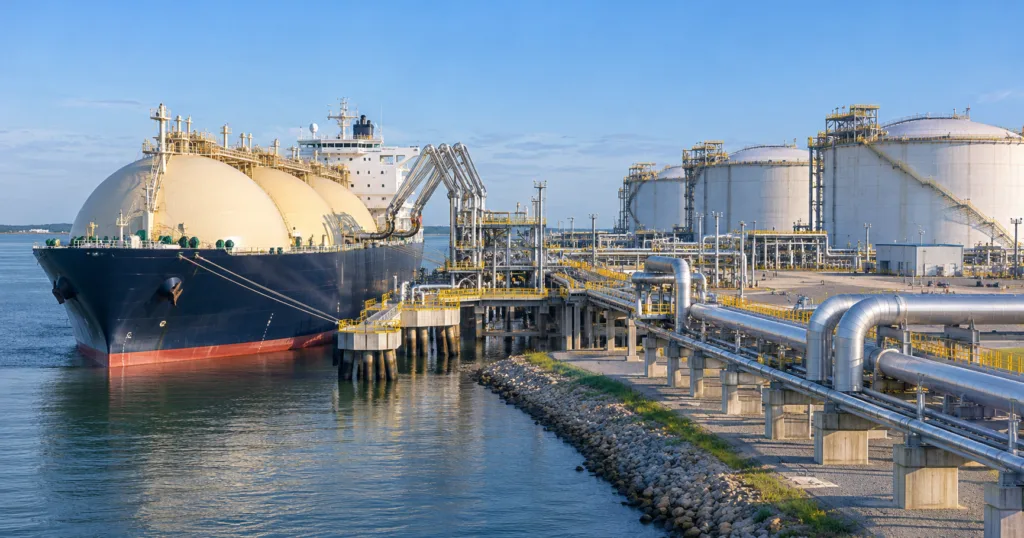
Venture Global raised its 2026 earnings forecast on November 10 after reporting higher third-quarter revenue and profit. The update followed Cheniere Energy’s October 29 guidance increase, as US liquefied natural gas (LNG) exporters reported stronger results amid disruptions to shipments through the Strait of Hormuz.
Venture Global increases its full-year forecast
Venture Global reported revenue of $4.8 billion for the quarter ended September 30, up 43% from a year earlier. Net income attributable to common shareholders reached $2.5 billion, an increase of 493%. The company said it exported 124 cargoes and sold 465.8 trillion British thermal units of LNG, up 25% by volume.
Chief financial officer Jack Thayer said higher sales volumes and prices were the main drivers of the profit increase. The results also included a $1.4 billion non-cash gain on interest-rate swaps.
Management raised its full-year consolidated adjusted EBITDA forecast to $10.0 billion–$10.3 billion from $8.7 billion–$9.1 billion. Adjusted EBITDA is a non-GAAP earnings measure.
The forecast assumed liquefaction fees of $21–$22 per million British thermal units, or MMBtu, for remaining unsold cargoes. That compared with a weighted average fee of $6.46 per MMBtu on contracted 2026 volumes. Venture Global said 99% of its available cargoes for the year had been contracted.
The company also said Plaquemines Phase 1 began commercial operations on October 31, just over 53 months after the project’s final investment decision.
Cheniere lifts guidance for a third consecutive quarter
Cheniere reported a record 188 cargoes exported during the third quarter and a 39% increase in revenue. It raised its 2026 consolidated adjusted EBITDA guidance for the third consecutive quarter, to $8.75 billion–$9.25 billion. Its board also increased the quarterly dividend by more than 12% from the previous quarter.
The companies reported the following financial results for the quarter ended September 30, 2026:
| Metric | Venture Global | Cheniere Energy |
|---|---|---|
| Revenue | $4.8 billion | $6.17 billion |
| Net income attributable to shareholders | $2.5 billion | About $1.2 billion |
Chief financial officer Zach Davis said LNG netbacks for the remainder of 2026 had risen from more than $10 per MMBtu in August to more than $20 at the October 29 earnings call.
Chief commercial officer Anatol Feygin said cumulative global LNG export growth turned negative during the third quarter as constrained Hormuz flows outweighed increases elsewhere. He also highlighted the pricing gap between long-term and spot cargoes, comparing roughly $6 per MMBtu for Henry Hub-linked cargoes loaded on the US Gulf Coast with spot prices that at times exceeded $30 per MMBtu.
Supply losses outweigh production gains elsewhere
The International Energy Agency (IEA) linked the disruption to the Middle East war that began in late February 2026, noting that the strait had carried almost 20% of global LNG supply.
In its November gas security assessment, the agency estimated that LNG loadings from Qatar and the United Arab Emirates fell by more than 60 billion cubic metres year over year between March and October 2026.
Non-Gulf LNG production grew 14% over the same period, the IEA said, replacing about two-thirds of the lost Gulf deliveries. Higher output from other producers therefore only partly offset the disruption.
The agency projected a 3% decline in global LNG supply for 2026, which it said would be the steepest annual fall on record. That forecast assumed trade through the Strait of Hormuz would remain largely disrupted at least through the end of the year.
The IEA said European TTF spot gas prices averaged close to $20 per MMBtu between March and October, almost 70% above the same period a year earlier. It identified the period’s Asian and European gas prices as the highest since the 2022/23 energy crisis.
Flexible contracts help buyers adjust
The share of destination-flexible LNG contracts rose from 29% in 2016 to more than 50% in 2025, the IEA said. These arrangements allow cargoes to be redirected between markets. Asian buyers doubled their Atlantic Basin LNG imports year over year between March and October, primarily through purchases from the United States.
The IEA said EU gas inventories entered the 2026/27 heating season at their lowest levels since 2013. Its simulations showed EU inventories could fall below 10% of working capacity by the end of March 2027 if winter weather was colder than average and Hormuz LNG flows remained disrupted.
Low inventories could also increase Europe’s need to refill storage in summer 2027, extending tight market conditions beyond winter, the IEA warned.
Over the longer term, the agency estimated that conflict-related supply losses would equal 15% of the new LNG supply expected globally during 2026–2030. It said the effects would be concentrated in 2026 and 2027, potentially keeping markets tighter than previously anticipated.