


AMD is preparing a compact Ryzen AI Halo Mini PC built around its Ryzen AI MAX platform, with the top-end Ryzen AI MAX+ 395 expected to sit at the center of the configuration. The system is being positioned less like a typical living-room mini PC and more like a small AI developer workstation, putting it in the same broad conversation as NVIDIA’s DGX Spark.
A firm public launch timeline has not been confirmed by AMD, but the device has recently been shown in developer-focused settings, including AMD’s AI Dev Day in San Francisco. Photos from the event showed the system being handled on-site, and current reporting points to a possible June launch window. Pricing has not been announced.
The important part for buyers is the hardware direction. Ryzen AI Halo is expected to use AMD’s Ryzen AI MAX family, the Strix Halo lineup that combines Zen 5 CPU cores, RDNA 3.5 integrated graphics, and an XDNA 2 NPU in a high-performance mobile-class package. That combination gives AMD a credible foundation for compact systems aimed at local AI workloads, model testing, creator tools, and developer environments where GPU memory and software support matter as much as raw CPU performance.
AMD’s Ryzen AI MAX chips have already appeared across several premium system types, including laptops and small-form-factor machines. The exact level of adoption is still early and varies by vendor, but the direction is clear: AMD is trying to turn Strix Halo into a platform for buyers who want more graphics and AI capability than a normal thin-and-light processor can offer, without moving to a full desktop tower.
For the Ryzen AI Halo Mini PC, the pitch appears to be focused on developers and small-form-factor AI users. The system is described as supporting the full Ryzen AI MAX range, with configurations reaching up to 16 CPU cores, 40 graphics compute units, and as much as 128 GB of LPDDR5X-8533 memory. That memory figure is especially important in this category because local AI workloads often run into capacity limits before they run into traditional CPU bottlenecks.

GMKtec EVO-X2 Ryzen AI Max+ 395 Mini PC
The GMKtec EVO-X2 is a current Ryzen AI Max+ 395 mini PC for readers who want to compare AMD’s upcoming system with hardware already on the market. It is most relevant to developers looking at compact local AI machines rather than basic office mini PCs.
The Ryzen AI MAX+ 395 is the flagship part in the family, and it is the configuration most likely to draw comparisons with compact AI boxes from NVIDIA and other vendors. It pairs a high-end Zen 5 CPU block with a large integrated Radeon GPU and AMD’s dedicated NPU. For users running local generative AI tools, image models, coding assistants, or development environments, that makes the Mini PC more interesting than a standard productivity-focused small PC.
AMD is also emphasizing software readiness. The Ryzen AI Halo Mini PC is expected to support AMD ROCm, including the current ROCm software stack, and is being lined up for developer applications such as LM Studio, ComfyUI, VS Code, and other AI-oriented workflows. The company is also pointing to optimization work for models and tools including GPT-OSS, FLUX.2, SDXL, and related local AI use cases.
That software story will matter more than the spec sheet alone. NVIDIA’s advantage in AI hardware has long been tied to its software ecosystem, and DGX Spark buyers are paying not only for the box but for a platform designed around AI development. AMD has made progress with ROCm, but the experience can still depend heavily on the model, framework, operating system, and application being used. A compact Ryzen AI Halo system will need the software side to feel ready on day one if it wants to attract developers outside AMD’s existing enthusiast base.
Physically, the system looks like a dense, premium mini PC rather than a generic office box. It is expected to use a dual-fan cooling design, which makes sense given the power and thermal demands of a high-end Strix Halo configuration. The enclosure also includes a programmable LED accent bar, a cosmetic touch that may appeal to desktop users but is unlikely to be the deciding factor for anyone buying the system for AI work.
Storage capacity has not been detailed in full, though the system is expected to ship with high-capacity options. That will be another practical consideration for local AI users, since model files, datasets, checkpoints, virtual environments, and generated media can quickly consume drive space. A machine in this class needs more than a fast processor; it needs enough memory and storage to avoid becoming a constant cleanup project.
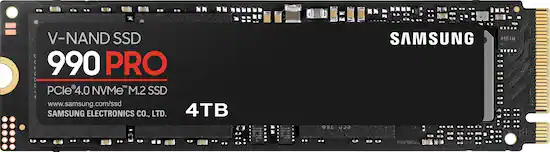
Samsung 990 PRO 4TB NVMe SSD
A 4TB NVMe SSD is a practical add-on for readers planning to keep local models, datasets, checkpoints, and generated media on a compact AI workstation. Check the target mini PC’s M.2 slot support before buying.
The clearest comparison point is NVIDIA’s DGX Spark, which is priced at $4,699 for its 128 GB LPDDR5X configuration. DGX Spark is not aimed at casual buyers. It is a compact AI developer system for users who want a prebuilt local platform around NVIDIA’s AI stack. AMD’s Ryzen AI Halo Mini PC appears to be going after a similar kind of buyer, though likely from a more PC-oriented and potentially lower-cost angle.
Existing Strix Halo mini PCs give a rough sense of where AMD’s system could land. GMKtec’s EVO-X2 with a Ryzen AI MAX+ 395, 96 GB of LPDDR5X memory, and 2 TB of storage has been selling in the low-to-mid $2,000 range depending on retailer and configuration. AMD has not shared official pricing for its own Ryzen AI Halo Mini PC, so any estimate should be treated cautiously, but a price somewhere below DGX Spark would be the obvious way to make the system attractive.
If AMD can bring the Ryzen AI Halo Mini PC to market around the $2,000 to $3,000 range, it could become an appealing option for developers, researchers, and advanced hobbyists who want a compact local AI system without spending nearly $5,000. That still would not make it cheap, but it would place the machine in a very different buying category than NVIDIA’s DGX Spark.
The buyer question is whether AMD’s box will be a polished developer platform or simply a powerful mini PC with AI branding. The hardware appears strong on paper: plenty of unified memory, a flagship Ryzen AI MAX+ SoC, serious integrated graphics, and a form factor small enough for a desk or lab bench. The harder part is making ROCm, model support, and application compatibility feel predictable enough for people who care more about getting work done than tuning drivers.
For now, AMD has not publicly confirmed final pricing, exact launch timing, or the complete configuration list. What is clear is that the Ryzen AI Halo Mini PC is meant to show what Strix Halo can do outside notebooks. If the final product arrives with strong software support and a meaningful price advantage over DGX Spark, AMD could have one of the more interesting compact AI systems of the year.