


A young materials company is trying to change one of the least glamorous but most important parts of modern life: the cooling systems that keep food, buildings, medicine, and equipment at the right temperature.
Barocal, founded by University of Cambridge materials physicist Xavier Moya, is developing a solid refrigerant that absorbs and releases heat when pressure is applied and removed. Instead of circulating conventional refrigerant gases through a sealed vapor-compression system, the company’s approach uses a solid material whose thermal behavior changes when squeezed.
The pitch is straightforward: cooling demand is rising, conventional refrigerants can be environmentally damaging when they leak, and compressors consume a meaningful share of electricity in refrigerators, air conditioners, and commercial cooling systems. If Barocal can turn its material science into reliable equipment, it could offer a cleaner route for some refrigeration and HVAC applications.
The company has recently raised $10 million to push the technology toward commercialization. That follows earlier support, including funding from the European Innovation Council and prize money from an energy solutions competition. The new capital does not mean the technology is ready for store shelves, but it does suggest Barocal has moved beyond the purely academic stage and into the harder work of making a cooling system that can be built, serviced, and sold.
How Barocal’s Solid Refrigerant Works
Most refrigerators and air conditioners rely on a refrigerant that changes state as it moves through a closed loop. In broad terms, the refrigerant absorbs heat from the space being cooled, then releases that heat elsewhere. Compressors, coils, expansion components, and fans all help move the heat in the right direction.
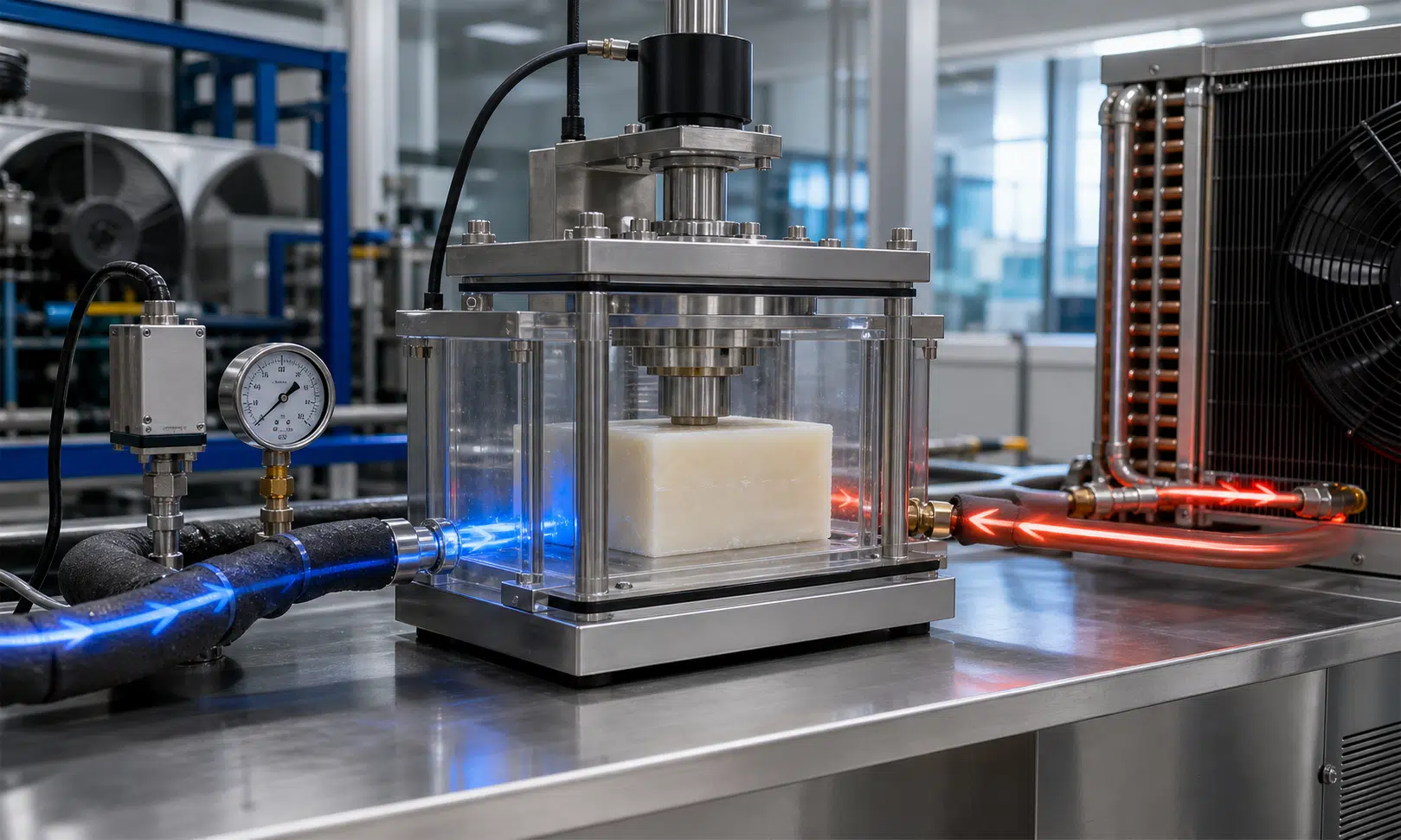
Barocal’s system is based on a different physical effect. Its material is described as a class of plastic crystals whose molecules can rotate freely when the material is not under pressure. In that relaxed state, the material can absorb heat. When pressure is applied, the molecular motion changes and the material releases heat.
That pressure-driven behavior is known as the barocaloric effect, which is where the company gets its name. The idea is not simply to replace one chemical with another inside the same old refrigerator layout. It points toward a different kind of cooling machine, one built around solid materials and controlled pressure changes rather than evaporating refrigerant gases.
In practical terms, the heat still has to go somewhere. Barocal has described systems in which water carries heat away from the solid material toward a radiator, where it can be dissipated. That part matters because material performance alone is not enough. A real cooling system has to move heat efficiently, fit into available space, operate quietly, last for years, and make economic sense for buyers.
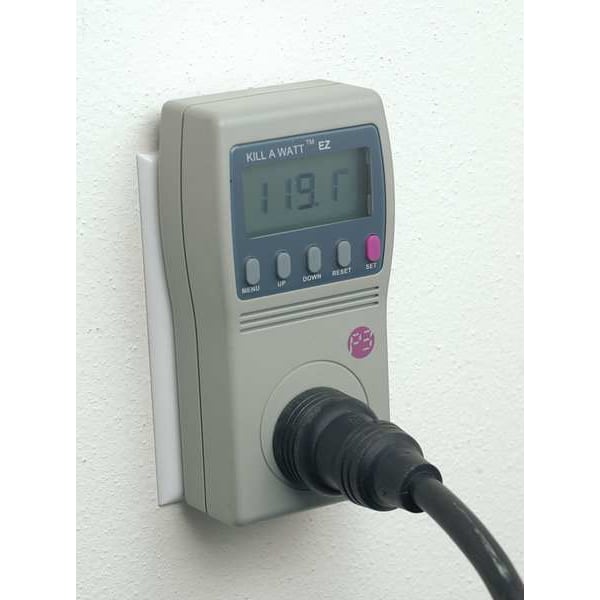
Plug-In Electricity Usage Monitor
A plug-in electricity monitor can help readers measure how much energy a refrigerator, portable AC, or other plug-in cooling device uses over time. It is best for outlet-powered equipment, not hardwired central HVAC systems.
As an Amazon Associate I earn from qualifying purchases.
Why Cooling Needs a Cleaner Option
The appeal of a solid refrigerant is tied directly to the problems with conventional cooling. Refrigerators and air conditioners are everywhere, and demand is expected to grow as more buildings, supply chains, data centers, and medical systems depend on controlled temperatures.
Conventional refrigerants have improved over time, but many still create environmental problems if they escape. Some older refrigerants damaged the ozone layer. Many newer ones are potent greenhouse gases. Even when systems are well maintained, leaks can happen during operation, repair, disposal, or poor handling at end of life.
Energy use is the other major issue. Cooling equipment runs for long hours, often during the hottest parts of the day when power grids are already under pressure. Any technology that can cut electricity use, reduce refrigerant leakage risk, or simplify parts of the cooling cycle would draw attention from equipment makers and large commercial buyers.
Barocal’s material is especially interesting because the company says its solid refrigerant can operate across a wide temperature range, with stable variation of about 90 degrees Fahrenheit, or 50 degrees Celsius. That kind of range could make the material useful in more than one cooling category, though the equipment design will decide where it actually fits.
For now, the company appears focused on commercial-grade HVAC and refrigeration rather than consumer appliances first. That makes sense. Commercial users often have clearer payback calculations, higher energy bills, stricter maintenance schedules, and stronger incentives to reduce refrigerant risk.
Commercialization Is the Hard Part
The science behind the barocaloric effect is not new, and Barocal is not the only group pursuing pressure-based or solid-state cooling. Researchers have been studying caloric cooling methods for years, including barocaloric, magnetocaloric, and electrocaloric approaches. The University of Cambridge also had a long-running research program in this field before Barocal was formed.
That history is important because it keeps the promise in perspective. A promising material does not automatically become a practical refrigerator. The gap between laboratory performance and market-ready hardware can be wide, especially in cooling, where buyers expect reliability, low noise, low maintenance, and predictable operating costs.
Barocal has to solve several linked engineering problems:
- Apply and release pressure efficiently without wasting too much energy.
- Move heat away from the solid material quickly enough for useful cooling.
- Package the system into equipment that fits commercial spaces.
- Keep operating noise and vibration within acceptable limits.
- Build around a material that can withstand repeated pressure cycles over long service life.
- Compete with established cooling systems on upfront cost, serviceability, and energy use.
Those are not small details. They are the difference between an impressive material and a product that contractors, facility managers, and refrigeration buyers are willing to install.
The company has said it has been trialing its technology with multiple international companies and has aimed for a product within a few years. That timeline should be treated as a development target rather than a guaranteed launch date. Cooling equipment has to pass through testing, certification, manufacturing scale-up, and customer validation before it becomes a normal purchasing option.

HVAC Refrigerant Leak Detector
Until solid-state cooling systems are commercially available, facility teams still need practical tools for maintaining conventional HVAC and refrigeration equipment. A refrigerant leak detector supports routine checks and service diagnostics.
As an Amazon Associate I earn from qualifying purchases.
Where This Technology Could Fit First
If Barocal reaches market, the earliest use cases are likely to be places where refrigerant risk, energy cost, and maintenance planning already matter. Supermarket refrigeration, cold storage, commercial building HVAC, and industrial cooling are more plausible early targets than a low-cost kitchen refrigerator.
Large commercial systems also give manufacturers more room to test new architectures. A novel pressure-based cooling unit may need different layouts, control systems, and heat exchangers than conventional equipment. Commercial customers can justify pilot installations when the numbers work, especially if the technology helps with emissions reporting or regulatory pressure around refrigerants.
Residential refrigerators and home air conditioners could come later if the system becomes compact and cheap enough. For consumer appliances, the bar is unforgiving. The equipment must be quiet, inexpensive, reliable, easy to repair, and able to run for years with little attention. A better refrigerant story alone will not be enough if the final machine costs too much or performs worse than standard models.
That is why Barocal’s funding round is notable but not conclusive. The company is moving into the stage where investors, partners, and potential customers will judge it on system performance rather than material promise.
The Bottom Line for Buyers and the Cooling Industry
Barocal’s solid refrigerant is one of the more practical-sounding attempts to rethink cooling because it targets two major pain points at once: harmful refrigerant gases and energy demand. A pressure-responsive solid that can absorb and release heat could reduce dependence on conventional refrigerants, especially in larger systems where engineering changes are easier to justify.
The buyer-aware view is more cautious. This is not yet a drop-in replacement for every refrigerator or air conditioner. The material has to become part of a complete machine that can beat incumbent systems on enough measures to matter: efficiency, cost, reliability, size, safety, and serviceability.
Still, the direction is worth watching. Cooling is only becoming more important, and the industry needs options that do not simply swap one refrigerant problem for another. If Barocal can turn its squeezable solid into dependable commercial equipment, it could give HVAC and refrigeration buyers a new path away from high-impact cooling gases without giving up the basic performance they need.