

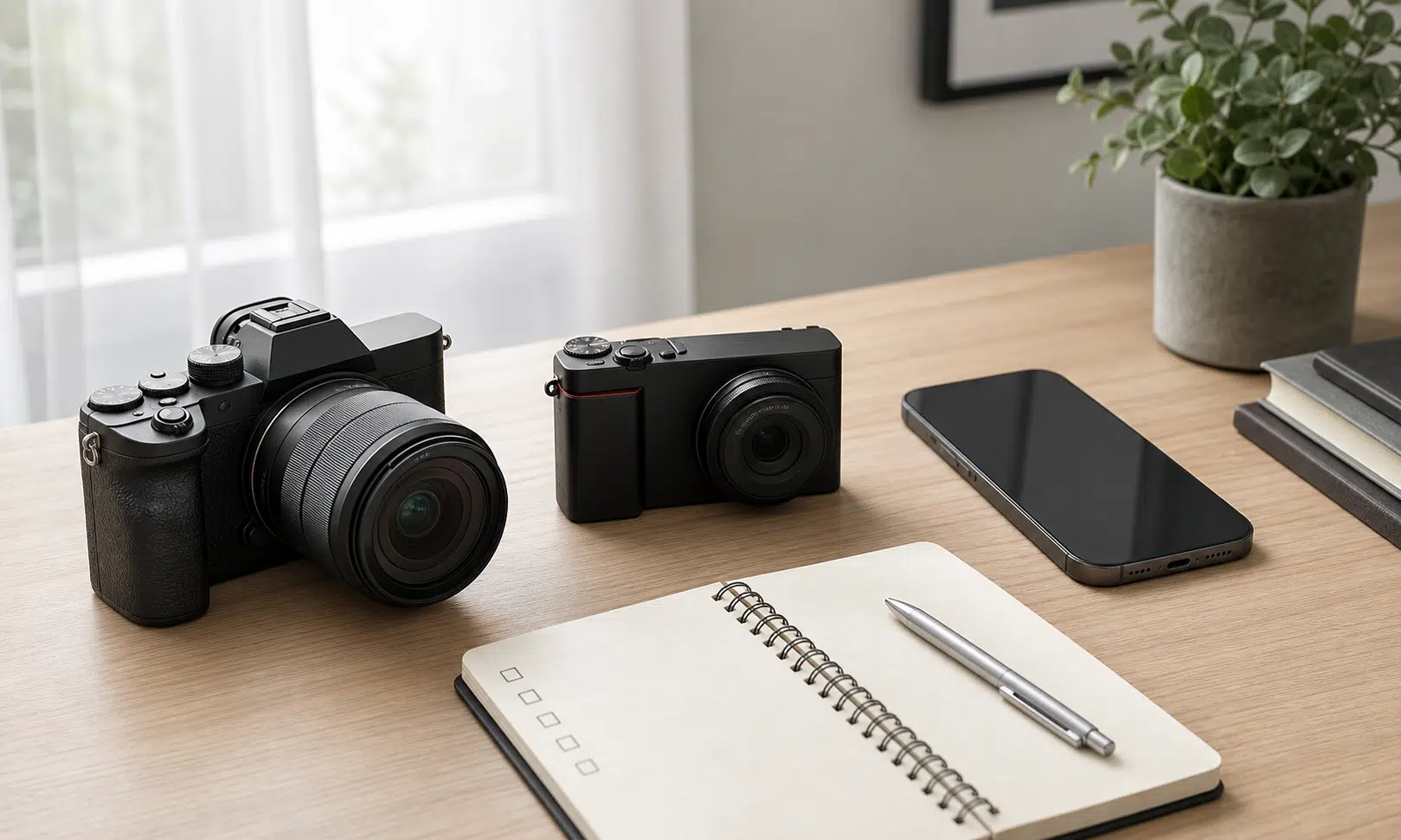

Smartphone cameras are good enough that many people never need anything else. They are quick, always nearby, and capable of making clean-looking photos and video with very little effort.
But a phone can also start to feel limiting once you care more about how an image is made. The processed look, limited optical reach, and lack of tactile control are common reasons people begin looking at dedicated cameras.
That does not mean every beginner should buy the same model. The better question is what kind of camera will make you want to keep shooting after the novelty wears off. Some beginners need a simple mirrorless camera with room to grow. Others want a compact video-friendly camera, or a system that makes learning exposure, lenses, and color more enjoyable.
Quick Picks
| Pick | Best fit | Main tradeoff |
|---|---|---|
| Canon EOS R50 | A balanced first mirrorless camera | Fewer direct controls than more advanced bodies |
| Nikon Z50 II | Budget-aware buyers who still want a dedicated camera | Lens choice is not as broad as some competing systems |
| Canon EOS R50 V | Beginners leaning toward video and social content | Still may feel limiting for photographers who want more physical controls |
| Sony ZV-1 II | A compact upgrade without interchangeable lenses | Smaller sensor than mirrorless alternatives |
| Fujifilm X-M5 | Beginners who want to learn and experiment | A slightly steeper learning curve |
Why Move Beyond a Smartphone?
A dedicated camera is not automatically the better choice for every person. If most of your photos are quick snapshots, family moments, receipts, meals, or travel memories shared from your phone, staying with a smartphone may be the sensible decision.
The case for buying a camera gets stronger when you want a different shooting experience. A camera can make you slow down, frame more deliberately, and think about light, distance, subject separation, and timing. That alone can be enough to make photography feel more satisfying.
The other reason is control. Phones rely heavily on software decisions. That can be convenient, but it can also leave images looking sharper, brighter, or more processed than you intended. A beginner camera gives you a more direct path into lenses, exposure choices, focal length, and color style without forcing you straight into professional equipment.
Canon EOS R50: Best Overall Beginner Pick
The Canon EOS R50 is the easiest recommendation to understand if you want a first interchangeable-lens camera that does not feel intimidating. It is positioned as a beginner-friendly mirrorless option, and its appeal is the balance: simple enough for a first camera, but not so stripped down that you immediately outgrow it.
For someone moving from a phone, the important point is not that the R50 magically makes every photo better. It is that it gives you a cleaner path into the basics: lenses, framing, subject tracking, video, and still photography in one small body.
Why it makes sense
- It offers access to Canon’s RF lens system.
- It suits beginners who want one camera for both photos and video.
- Its beginner-focused design keeps the jump from a phone from feeling too abrupt.
What to know first
- It has fewer direct controls than more advanced cameras.
- Buyers who expect to adjust settings constantly may eventually want a higher-end body.
For many beginners, the R50 is the practical middle ground: approachable, flexible, and capable of supporting a real photography habit.
Beginner Cameras Compared
| Image | Product | Best fit | Link |
|---|---|---|---|
 |
Canon EOS R50 | The Canon EOS R50 is a sensible first mirrorless camera for beginners who want one compact body for photos, video, and learning lenses. It keeps the jump from a phone manageable while still leaving room to grow. | Check Price on Amazon |
 |
Nikon Z50 II | The Nikon Z50 II fits beginners who want a compact interchangeable-lens camera without immediately building an expensive kit. It is most appealing if Nikon’s Z lens options match the way you plan to shoot. | Check Price on Amazon |
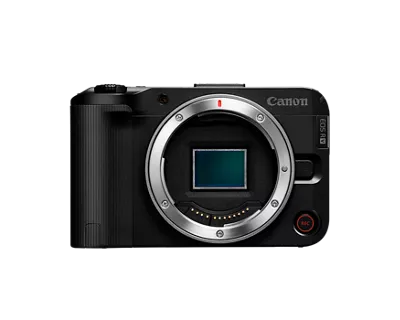 |
Canon EOS R50 V | The Canon EOS R50 V makes the most sense for beginners who expect video, social clips, and creator workflows to matter as much as still photos. It is a stronger fit for hybrid content than for someone focused only on traditional photography controls. | Check Price on Amazon |
 |
Fujifilm X-M5 | The Fujifilm X-M5 is a good match for beginners who want photography to become a hands-on hobby. Its film simulations and creative controls make it more rewarding for experimentation than simple point-and-shoot upgrading. | Check Price on Amazon |
As an Amazon Associate I earn from qualifying purchases.
Nikon Z50 II: Best Budget-Aware Choice
The Nikon Z50 II is worth comparing if price matters and you still want the feel and flexibility of a dedicated camera. It fits the buyer who is not trying to build a professional kit immediately, but does want something more intentional than a phone.
The appeal here is straightforward: a compact mirrorless body, approachable handling, and a path into Nikon’s Z system. It is a sensible option for people who want a first camera they will actually carry rather than a large kit that stays at home.
Why beginners may like it
- The body is compact enough for regular use.
- It gives new photographers an interchangeable-lens system to grow into.
- It is a budget-conscious alternative to some higher-priced beginner setups.
Limitations
- The lens ecosystem is smaller than some competitors.
- Buyers should check whether the lenses they want are available before committing to the system.
The Z50 II makes the most sense for a beginner who wants value, portability, and a camera system without chasing the most expensive first step.
Canon EOS R50 V: Best for Future Content Creators
Some beginners are not only thinking about still photography. They also want a camera that can handle YouTube, short-form video, travel clips, and social content. That is where the Canon EOS R50 V belongs in the comparison.
The R50 V is presented as the more creator-focused choice, aimed at people who expect video to be part of the reason they are buying a camera. If your interest is split between photos and content creation, it is more relevant than a traditional stills-first recommendation.
Why it is worth considering
- It is aimed at video and social media use.
- It keeps the beginner-friendly Canon approach.
- It suits buyers who want to grow into content creation without starting with a complicated setup.
Possible drawbacks
- Photographers who want more advanced hands-on controls may want a different body.
- It is a better fit for hybrid creators than for someone focused only on traditional photography.
If your first camera needs to serve both photography and video, the R50 V deserves a close comparison with the standard R50.
Sony ZV-1 II: Best Compact Upgrade
Not everyone wants to buy lenses. Some people simply want something smaller than a mirrorless kit but more camera-like than a phone. The Sony ZV-1 II fits that role.
Its main advantage is convenience. It is a compact camera rather than an interchangeable-lens system, which makes it easier to carry and less complicated to buy. That matters for travelers, vloggers, and casual shooters who want a dedicated camera but do not want to think about building a lens collection.
What makes it different
- It avoids the cost and complexity of interchangeable lenses.
- It is easy to pack for travel or everyday use.
- It is a natural fit for buyers who care about convenience first.
Downsides
- Its sensor is smaller than some mirrorless rivals.
- It does not offer the same long-term flexibility as a lens-based system.
The ZV-1 II is not the best choice for someone who wants to learn a full camera system. It is stronger as a compact, practical step beyond phone-only shooting.
Fujifilm X-M5: Best for Learning Photography
The Fujifilm X-M5 is the most interesting choice for beginners who want photography to feel creative from the start. Instead of only emphasizing simplicity, it gives new shooters more room to experiment with style, color, and manual choices.
Fujifilm’s appeal often comes from the way its cameras encourage experimentation. Film simulations, manual controls, and distinctive color rendering can make the learning process feel less clinical and more hands-on.
Why it appeals to enthusiasts
- It encourages more active learning than a fully automated point-and-shoot approach.
- Film simulations give beginners a direct way to explore different looks.
- It is a strong fit for someone who wants photography to become a hobby, not just a phone replacement.
Things to consider
- It may have a steeper learning curve than more automated beginner cameras.
- It is not the simplest choice if you only want better snapshots with minimal effort.
For a buyer who wants to understand photography instead of simply buying a better device, the X-M5 may be the most rewarding option in this group.
What Beginners Should Prioritize
Specifications can distract first-time buyers. A camera with the longest feature list is not always the one you will enjoy using.
Before choosing, think about how you actually plan to shoot:
- Portability: A smaller camera is more likely to come with you.
- Lens flexibility: Mirrorless systems make sense if you want room to grow.
- Video needs: Creator-focused models are better if social content matters.
- Controls: Simpler bodies are easier at first, while more manual controls can help you learn.
- System commitment: Buying a mirrorless camera usually means buying into a lens ecosystem.
Should You Buy a Camera or Keep Using Your Phone?
If you only want quick, convenient photos, your phone may still be the right answer. A dedicated camera adds cost, another battery, storage cards, and one more device to carry.
But if you are starting to notice the limits of phone photography, a beginner camera can be a worthwhile upgrade. The Canon EOS R50 is the most balanced place to start for many buyers. The Nikon Z50 II is a practical value pick. The Canon EOS R50 V is better aligned with video-first creators. The Sony ZV-1 II keeps things compact. The Fujifilm X-M5 is the choice for people who want to learn and experiment.
The best first camera is the one that matches the way you want to shoot, not the one with the loudest spec sheet.