


A floorstanding speaker can look like the obvious upgrade from a standmount model in the same range. It is bigger, has more cabinet volume, often uses more drivers, and is usually marketed as the choice for listeners who want deeper bass, greater scale and a sound that can fill a larger room.
That expectation is reasonable. It is also incomplete.
Moving from a compact speaker cabinet to a taller one changes more than the amount of air behind the drivers. It affects how the enclosure behaves, how the bass is controlled, how much unwanted vibration has to be managed and, in some cases, whether the drivers are still working in the conditions they were originally designed for.
That is why a floorstander is not automatically a standmount with extra bass. When it is well engineered, it can keep the family character of the smaller model while adding weight, reach and dynamic ease. When it is not, the result can feel less balanced, less controlled and less rhythmically convincing than expected.
The simple upgrade path is not always simple
For many buyers, the decision starts with a familiar comparison: standmount speakers or floorstanding speakers. The smaller option usually offers easier placement, a more rigid cabinet and a lower starting price. The larger option promises more low-end authority and a larger presentation, especially in medium-to-large rooms.
On paper, it can seem as if a manufacturer only needs to take the ingredients from a standmount model, place them in a larger cabinet, add bracing and damping, and call the job done. In practice, the cabinet is part of the acoustic system. Change the cabinet and you change the operating environment.
A driver that works cleanly in one enclosure volume may not behave the same way in a much larger box. The bass alignment, internal air loading and cabinet resonance all matter. A manufacturer may be able to adapt or specify a driver for the larger design, but that adds development work and cost. Moving to a larger driver can solve one problem while creating another, because the new unit will bring its own acoustic demands.
Tweeters are usually less affected by the jump in cabinet size because they tend to be isolated from the main enclosure volume. The bigger challenges generally sit lower down the frequency range, where mid/bass drivers and woofers interact more directly with the cabinet.
Floorstanding speakers to compare by room, bass needs and system matching
| Image | Product | Best fit | Link |
|---|---|---|---|
 |
ELAC Debut 2.0 F6.2 | The ELAC Debut 2.0 F6.2 is a sensible tower to compare if you want deeper bass and scale without jumping into premium pricing. Its three-way layout makes it relevant for readers weighing whether a larger cabinet is worth the extra space. | Check Price on Amazon |
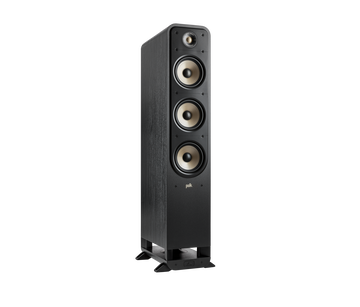 |
Polk Signature Elite ES60 | The Polk Signature Elite ES60 is worth comparing for medium-to-large rooms where a standmount may feel undersized. Its larger driver array suits buyers prioritizing room-filling weight while still thinking about cabinet control. | Check Price on Amazon |
 |
Klipsch RP-8000F II | The Klipsch RP-8000F II is a useful comparison point if dynamics and easy room-filling output are priorities. Its presentation and size make room matching especially important. | Check Price on Amazon |
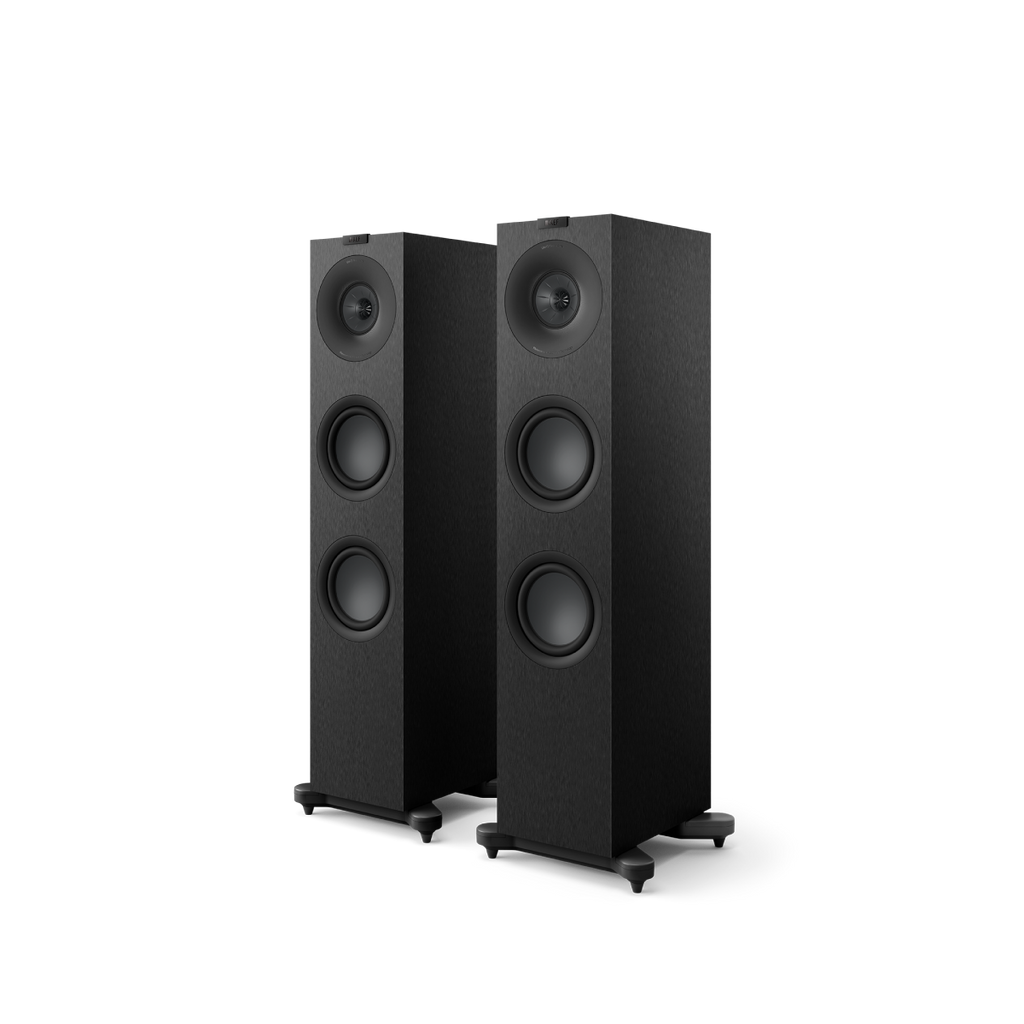 |
KEF Q7 Meta | The KEF Q7 Meta is a strong comparison candidate for buyers focused on imaging, integration and controlled bass rather than size alone. It suits systems where amplification and placement can be chosen with care. | Check Price on Amazon |
As an Amazon Associate I earn from qualifying purchases.
Why bigger cabinets create bigger problems
The cabinet of a speaker is supposed to support the drivers without adding much sound of its own. That becomes harder as the enclosure grows.
A compact standmount cabinet is usually easier to make stiff because its panels are smaller. A floorstanding cabinet has taller, broader panels, and those panels can be more prone to vibration if they are not properly controlled. More surface area also means more area that can radiate unwanted sound if resonance is allowed to build.
That matters because a speaker should be driven by its drivers, not by its cabinet panels joining in. If the enclosure starts contributing audible energy of its own, the sound can lose clarity and timing. Bass can become thick or poorly defined. The tonal balance can drift. The speaker may still sound large, but not necessarily accurate or well controlled.
Bracing and damping help, but they are not free. Internal braces add material, labour and design complexity. Damping has to be used carefully rather than simply stuffed into the box, because too much or poorly placed damping can affect liveliness and bass behaviour. At lower price points, the available budget may limit how much engineering can be put into controlling the enclosure.
As prices rise, manufacturers have more room to use better cabinet materials, more sophisticated internal structures and driver choices better suited to the enclosure. That does not guarantee a better speaker, but it does reduce some of the compromises that can make budget floorstanders difficult to execute.
What buyers should listen for
The main appeal of a good floorstanding speaker is still strong. A well-matched pair can bring deeper bass, a larger sonic image and more effortless dynamics than a smaller speaker can usually manage. They can also make more sense in a room where standmount speakers would need to be pushed hard to sound full.
The important point is to listen for control, not just size.
- Bass definition: The low end should sound extended without becoming loose, boomy or detached from the rest of the music.
- Balance: A larger speaker should not make voices or instruments feel recessed just because the bass is fuller.
- Timing: Music should still have drive and coherence. Extra weight should not slow the presentation down.
- Room fit: A speaker that sounds impressive in a demo room may overload a smaller living space.
- System matching: A floorstander that is harder to drive may need more capable amplification than a smaller sibling.
Standmount vs floorstanding speakers: the practical tradeoff
| Choice | Likely strengths | Possible compromises | Best suited to |
|---|---|---|---|
| Standmount speakers | Cabinet rigidity, easier placement, often strong value | Less bass extension and scale without careful matching | Small to medium rooms, focused listening setups |
| Floorstanding speakers | Greater bass weight, larger sound, stronger room-filling ability | More cabinet vibration to control, more placement sensitivity, higher cost | Medium to large rooms, listeners who want scale and low-end reach |
This is also why it is worth comparing models within the same speaker family rather than assuming the larger one is automatically the better buy. Ideally, the floorstander should preserve the tonal character of the smaller model while adding scale. If it sounds like a completely different speaker, that may be a deliberate design choice, or it may point to compromises in the larger enclosure.
Who should buy floorstanders?
Floorstanding speakers make the most sense if your room can support them and your system is good enough to control them. They are not just about playing louder. Their real advantage is the ability to sound fuller and more relaxed at normal listening levels, with bass and dynamics that do not feel squeezed.
They are less convincing as an automatic upgrade for every listener. In a small room, a well-designed standmount can sound cleaner and better balanced than an oversized tower. In a modest system, a demanding floorstander may expose weaknesses in amplification or placement more clearly than expected.
The best approach is to treat floorstanders as a different engineering proposition, not merely a larger version of the speaker you already like. Bigger boxes can bring bigger rewards, but only when the cabinet, drivers and room all work together. When they do, the payoff is substantial. When they do not, the extra size can become part of the problem rather than the solution.