



Cloudflare and Quad9 are easy DNS recommendations because they are fast, privacy-minded, and simple to set up. For many people, that is exactly the point: change a couple of DNS addresses, forget about them, and let the resolver do its job quietly in the background.
That simplicity is also the reason I started looking elsewhere. I did not want DNS to be another invisible setting that I had to trust blindly. I wanted to see what my devices were contacting, understand why something was being blocked, and adjust filtering without changing every browser, app, or device one by one.
That is where NextDNS makes a stronger case. It is still a DNS resolver, but it behaves more like a lightweight network control panel. You can monitor queries, turn on blocklists, create different profiles, add allowlist and denylist rules, and apply stricter filtering to some devices without forcing the same setup onto everything.
It is not the right choice for everyone. Cloudflare remains the easiest pick if you mainly want speed and a clean setup. Quad9 is still a strong free option if your priority is malware and phishing protection without much tuning. But if you want DNS filtering that you can actually inspect and shape, NextDNS is the more useful tool.
Quick Verdict: Who Should Choose NextDNS?
NextDNS is best for people who want more than a fast public DNS address. It makes the most sense if you care about device-level visibility, ad and tracker blocking, parental filtering, telemetry reduction, or custom rules for different devices.
Cloudflare is still the easier recommendation for anyone who wants a free, fast resolver with almost no setup. Quad9 is a good fit if you want a free DNS service focused on blocking malicious domains and you do not need ad-blocking lists, per-device profiles, or detailed logs.
NextDNS is the better fit if you want to answer questions like:
- Which domains are my devices contacting in the background?
- Which requests are being blocked, and why?
- Can I use stricter filtering on a child’s tablet than on my own laptop?
- Can I block tracking, ads, telemetry, gambling, adult content, or social media from one dashboard?
- Can I fix a broken site by allowing one domain instead of turning filtering off completely?
That last point matters. The difference is not simply that NextDNS blocks more things. It is that it gives you more control when something goes wrong.

GL.iNet Flint 2 Wi-Fi 6 Router
A configurable router can make DNS filtering easier to apply across phones, laptops, TVs, and other home devices. The GL.iNet Flint 2 is a practical fit for readers who want more control over DNS, VPN, and network-level filtering from one router.
As an Amazon Associate I earn from qualifying purchases.
NextDNS vs Cloudflare vs Quad9 at a Glance
| Service | Best For | Filtering Style | Customization | Cost |
|---|---|---|---|---|
| NextDNS | Users who want logs, custom rules, device profiles, and flexible filtering | Ads, trackers, malware, adult content, categories, blocklists, and custom domains | High | Free tier with a monthly query limit; paid Pro plan for unlimited queries |
| Cloudflare 1.1.1.1 | Simple, fast DNS with minimal setup | Standard resolver, plus separate Families options for malware or malware and adult content blocking | Low | Free |
| Quad9 | Free security-focused DNS that blocks malicious domains | Malware, phishing, spyware, botnets, and related threats depending on the selected service address | Low | Free |
This comparison is why I do not think of NextDNS as a direct replacement for every Cloudflare or Quad9 user. It is a different kind of product. Cloudflare and Quad9 are better if you want a DNS resolver you rarely look at again. NextDNS is better if you want DNS to become part of how you manage privacy, security, and content filtering.
NextDNS Makes DNS Visible Instead of Invisible
With a basic public DNS resolver, you usually do not see much after setup. You change the address, confirm the internet still works, and move on. That is convenient, but it also means DNS filtering can feel like a black box.
NextDNS changes that by giving you a dashboard where you can review DNS activity. You can see domains your devices requested, whether those requests were allowed or blocked, and which rule or list caused a block. You can also filter activity by device or time period, which makes troubleshooting much easier.
That kind of visibility is useful even if you are not deeply technical. You may notice a smart TV repeatedly contacting tracking domains, a Windows PC making background requests while idle, or a mobile app reaching out to analytics services even when you have not opened it recently. DNS logs do not tell you everything about network behavior, but they show enough to make patterns obvious.
The practical benefit is simple: when something breaks, you have a place to look. If a website refuses to load, a video player stalls, or an app cannot sign in, you can check whether NextDNS blocked a related domain. If it did, you can allow that domain instead of disabling your whole setup.
That is the part I missed with simpler DNS services. Cloudflare and Quad9 can be excellent at what they do, but they are not built around this kind of personal dashboard and rule management.
Granular Filtering Is the Main Reason to Use NextDNS
The analytics dashboard is useful, but the stronger reason to choose NextDNS is control. Instead of accepting one fixed filtering policy, you can build a setup that matches how you actually use your devices.
NextDNS lets you enable security protections, privacy filters, parental controls, ad and tracker blocklists, and specific category blocks. You can also add individual domains to an allowlist or denylist, which gives you a clean way to handle exceptions.
That matters because aggressive filtering always comes with tradeoffs. Block too little and the service does not do much. Block too much and websites, apps, newsletters, sign-in pages, embedded videos, or payment flows may break. NextDNS gives you tools to tune the middle ground.
Blocklists Let You Decide How Strict to Be
NextDNS supports selectable blocklists, which means you are not forced into the same filtering setup as everyone else. You can keep things conservative or turn on more aggressive lists if you are comfortable troubleshooting the occasional broken site.
Common filtering goals include:
- Blocking known malicious domains
- Reducing ads and trackers at the DNS level
- Blocking adult content or other mature categories
- Filtering gambling, dating, piracy, social media, online gaming, or video streaming categories
- Reducing telemetry from operating systems, apps, smart TVs, and other connected devices
DNS-level blocking is not a perfect replacement for a browser extension, endpoint security app, or router firewall. It cannot remove every ad, and it cannot inspect encrypted page content. Still, it is useful because it works before a device connects to a blocked domain. If a request does not resolve, the app or website cannot complete that connection through normal DNS.
Allowlist and Denylist Rules Keep Filtering Manageable
The allowlist and denylist are the pressure valves. If a blocklist catches a domain you actually need, you can allow it. If a domain keeps showing up in your logs and you never want your devices to contact it, you can deny it.
That sounds basic, but it is one of the features that makes NextDNS feel practical instead of brittle. A strict filtering setup is only useful if you can fix false positives quickly. Otherwise, the easiest workaround becomes turning the whole thing off.
With NextDNS, the workflow is more controlled. Check the logs, identify the blocked request, allow the specific domain if needed, and keep the rest of the filtering in place.
Profiles Make NextDNS Better for Mixed Households
One of the biggest advantages NextDNS has over simpler DNS options is profiles. A profile is basically a separate configuration with its own rules, logs, blocklists, and filtering choices.
That means you can run different policies for different situations. Your own laptop might use privacy and tracker blocking without heavy content restrictions. A child’s tablet can use stricter adult content filtering, SafeSearch, and blocked categories. A smart TV can have telemetry and ad-related domains filtered without applying those same rules to your work computer.
This is especially useful in a household where not every device has the same job. A single blanket DNS policy can be too strict for adults, too loose for kids, and awkward for shared devices. Profiles give you room to separate those needs.
A practical setup might look like this:
- Personal profile: security protection, privacy blocklists, and light ad/tracker filtering
- Kids profile: adult content filtering, SafeSearch, YouTube Restricted Mode, and selected category blocks
- Smart TV profile: telemetry and tracking reduction with fewer content restrictions
- Testing profile: minimal filtering for troubleshooting sites and apps
This is where NextDNS starts to feel less like a DNS address and more like a small policy system for your network.
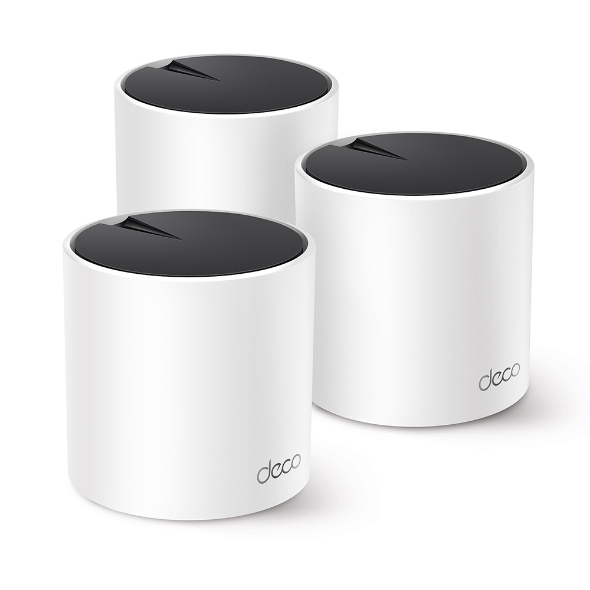
TP-Link Deco X55 Mesh Wi-Fi 6 System
A mesh system can help keep family filtering consistent across rooms where tablets, TVs, and laptops move around. The Deco X55 is relevant for readers who want better Wi-Fi coverage alongside app-based device and family controls.
As an Amazon Associate I earn from qualifying purchases.
NextDNS Is Useful for Parental Controls, but It Is Not Magic
DNS filtering can be a good extra layer for family devices because DNS is involved early in the process of reaching a website or service. If a domain is blocked at the DNS level, the device usually cannot reach it through normal browsing.
NextDNS supports category-based filtering, including options that can help restrict adult content and other categories. It can also enforce SafeSearch across supported search engines and apply YouTube Restricted Mode. For parents, that is useful because it works across more than one browser and does not rely entirely on every app having good parental controls.
However, DNS filtering should not be treated as complete protection. It has limits. It may not catch every questionable search, every mirrored streaming site, or every piece of mature content inside a platform that is otherwise allowed. Apps may use their own network behavior, content may come from shared domains, and some services are difficult to filter cleanly without breaking unrelated features.
The best way to use NextDNS for family safety is as one layer alongside device-level parental controls, app store restrictions, account settings, browser settings, and direct supervision. It can reduce exposure and block a lot of obvious categories, but it should not be the only control you rely on.
Cloudflare Is Still Better for Simple Speed
Cloudflare became a default DNS recommendation for a reason. Its 1.1.1.1 resolver is easy to remember, easy to configure, and built for speed. If all you want is a fast DNS resolver with minimal decisions, Cloudflare is hard to argue against.
Cloudflare also offers 1.1.1.1 for Families, with options designed to block malware or malware plus adult content. That gives casual users a simple way to add basic filtering without creating an account or managing blocklists.
The tradeoff is that Cloudflare’s consumer DNS setup is intentionally simple. That is good if you do not want dashboards, logs, profiles, or tuning. It is less appealing if you want to understand what your devices are doing or customize policies by device.
For many users, that simplicity is the feature. For me, it became the limitation.
Quad9 Is Strong for Free Threat Blocking
Quad9 is also easy to recommend, especially for people who want a free public DNS service focused on security and privacy. Its secure DNS service blocks domains associated with malicious activity such as malware, phishing, spyware, botnets, and related threats.
Quad9 is not trying to be a customizable ad-blocking and parental-control dashboard in the same way NextDNS is. Its appeal is that you can point your DNS settings at Quad9 and get threat blocking without building your own filtering policy.
That makes it a good choice for people who want protection without maintenance. It is also a better fit for users who do not want DNS logs tied to a personal dashboard or who prefer a nonprofit security-focused resolver.
The limitation is customization. If you want category filtering, device-specific profiles, selectable blocklists, telemetry controls, and detailed logs, Quad9 will feel much more limited than NextDNS.
Pricing Is the Main Catch With NextDNS
Cloudflare and Quad9 are free, which gives them a major advantage. NextDNS has a free plan too, but it comes with a monthly query limit. Once you exceed that limit, it continues resolving DNS like a standard non-blocking DNS service, but the filtering value is no longer the same until the quota resets or you move to a paid plan.
NextDNS lists a free tier with 300,000 queries per month and a Pro plan with unlimited queries for personal and close family use. Pricing can vary by region and currency, so it is worth checking the current price before subscribing. In the United States, the plan has commonly been shown around $1.99 per month or $19.90 per year; in some regions, NextDNS displays local pricing in other currencies.
Whether the free tier is enough depends on your household. One person with a few devices may stay within the limit. A busy home network with phones, laptops, tablets, TVs, consoles, smart speakers, and IoT devices can burn through DNS queries much faster.
The paid plan is not expensive compared with many security or privacy tools, but it is still a paid service competing against two good free alternatives. That means the value depends on whether you will actually use the dashboard, profiles, and filtering controls.
How to Decide Which DNS Service to Use
The best DNS service depends less on a universal winner and more on what you want DNS to do.
Choose Cloudflare if you want the easiest speed-focused option. It is fast, simple, and widely supported. Use the Families addresses if you want basic malware or adult content filtering without creating a custom setup.
Choose Quad9 if you want a free, security-focused resolver that blocks malicious domains and does not ask you to manage a dashboard. It is a good low-maintenance choice for malware and phishing protection.
Choose NextDNS if you want visibility and control. It is the stronger option if you want to review DNS activity, use different profiles for different devices, block ads and trackers at the DNS level, reduce telemetry, manage parental filtering, and create custom allowlist or denylist rules.
A simple decision table helps frame it:
| If You Want… | Pick |
|---|---|
| The fastest simple setup with almost no maintenance | Cloudflare |
| Free malicious-domain blocking without much configuration | Quad9 |
| Custom blocklists, logs, profiles, and device-specific filtering | NextDNS |
| Basic family filtering with minimal setup | Cloudflare Families or NextDNS |
| More control over ads, trackers, telemetry, and categories | NextDNS |
Start Conservatively if You Switch to NextDNS
The easiest mistake with NextDNS is turning on too much at once. Because it gives you so many filtering options, it is tempting to enable every privacy list, security setting, and category block immediately. That can work, but it also increases the chance of breaking sites and apps.
A better approach is to start with a conservative setup and make it stricter over time. Enable core security protections first, add a trusted ad or tracker blocklist, then watch the logs for a few days. If everything works, add more specific categories or telemetry controls.
When something breaks, check the logs before changing settings blindly. If NextDNS blocked a domain tied to the broken feature, allow only that domain if you trust it. If you cannot identify the problem, temporarily switch the device to a lighter profile and compare behavior.
This gradual setup is the difference between a useful DNS filter and one you abandon after it breaks a login page.
NextDNS Is Better When You Want DNS to Be a Control Layer
I would still recommend Cloudflare or Quad9 to plenty of people. If someone asks for a free DNS resolver that is fast and simple, Cloudflare is an easy answer. If they want free security-focused DNS blocking without much configuration, Quad9 is a sensible pick.
NextDNS is for a different kind of user. It is for someone who wants to see what their devices are doing and make decisions based on that information. The logs, profiles, blocklists, allowlist, denylist, and category filters make DNS feel less like a hidden setting and more like a practical control layer.
That control comes with responsibility. You have to make choices, and occasionally you have to fix something that your own rules broke. But if you are willing to spend a little time tuning it, NextDNS offers a better balance of visibility, filtering, and flexibility than the simpler public DNS services.
For me, that is the reason it stands out. It is not just about being faster than another resolver. It is about knowing what is happening on your network and having the tools to shape it.