DoorDash’s retail delivery pitch extends beyond getting a purchase to your door. The company is advertising Dasher Returns at $7.99 per eligible return, pairing shopping from nearby stores with a paid pickup service when something needs to go back.
That offer sits alongside retail partnerships, drone delivery plans, and restaurant software designed to bring customers back. Together, they suggest DoorDash wants a larger role in local shopping, from discovering a product to returning it.
Clothing joins the delivery menu
DoorDash names Macy’s, Anthropologie, The North Face, Vans, and Timberland among its retail partners, extending its selection across clothing, shoes, and beauty products. The additions follow partnerships with Barnes & Noble, Gap, and Kohl’s.
The model depends on merchandise already sitting in nearby stores. Retailers get another way to reach shoppers through DoorDash’s app, while their existing locations supply the orders. The store becomes both a place to browse in person and the starting point for a delivery.
For shoppers, the appeal is access to familiar brands through an app they already use. But a longer list of retailers only goes so far: the usefulness of same-day retail delivery depends on whether the purchase and any return are convenient.
What the $7.99 return service offers
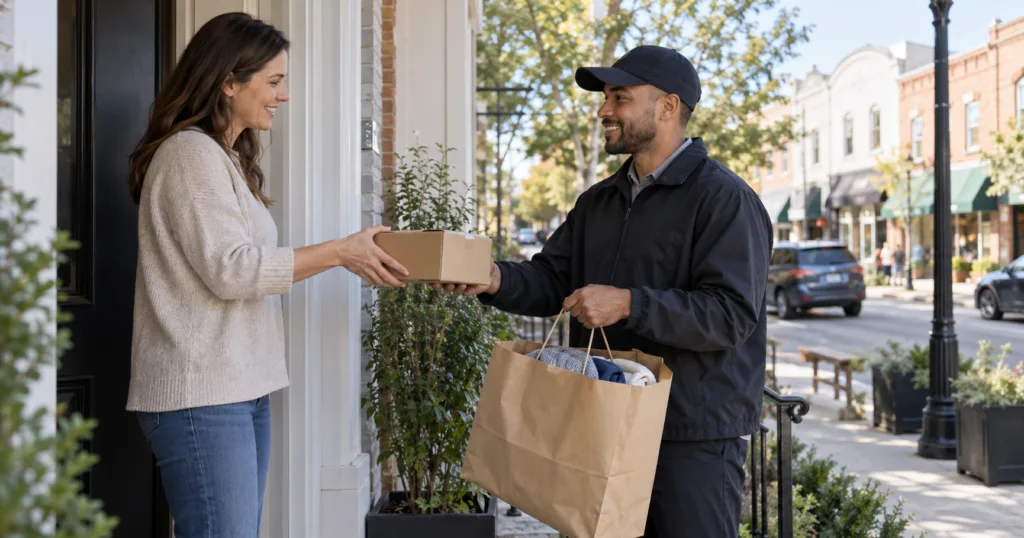
DoorDash describes Dasher Returns as a doorstep pickup service for eligible retail orders. A driver collects the purchase and takes it back to the store for processing, giving shoppers a way to avoid making that trip themselves.
The company advertises pickup in as little as 30 minutes, although pickup times vary and are not guaranteed. Its stated flat fee is $7.99, with pricing subject to change. DoorDash’s rollout plan starts with select cities and targets nationwide availability in November 2026. Access depends on the rollout as well as order eligibility.
DoorDash says store processing can put eligible merchandise back on sale and get refunds to customers within days. Refund timing varies, so a quick collection does not promise an equally quick credit.
The practical tradeoff is straightforward: shoppers pay for the convenience of having someone else handle the return trip. That may suit someone buying clothing who wants a simpler fallback if the fit is wrong. Eligibility and local availability still matter, and the pickup fee belongs in the cost of that convenience.
Drone delivery comes with limits
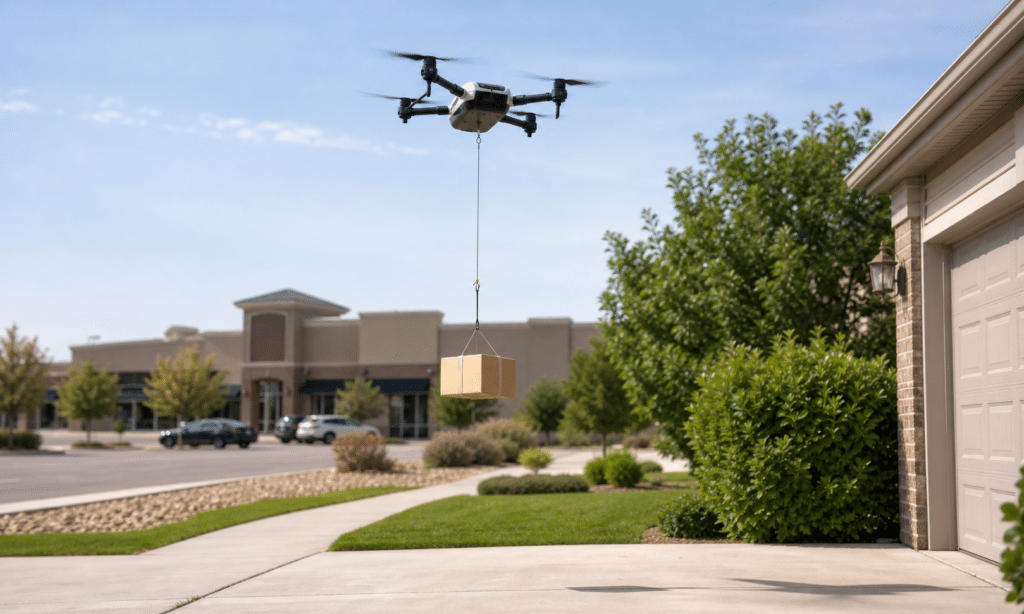
DoorDash’s plans for its own DoorDash Air aircraft include pilot deliveries in Northern California with restaurant partners such as Chipotle and Popeyes. The aircraft would join a delivery network that also uses ground robots and third-party autonomous delivery partners.
DoorDash estimates that roughly 80% of typical restaurant orders in its analysis are small and light enough for the aircraft. Physical suitability is only one condition: the company’s routing system also considers weather, flight range, and other factors when deciding which orders make sense to send by air.
The company reports an average restaurant-to-doorstep delivery time below five minutes in initial tests. Those results cover a limited sample of deliveries and do not guarantee a customer’s delivery time. For shoppers, the relevant question is whether drone delivery serves their order and address.
DashOS aims to connect repeat restaurant visits
DoorDash’s restaurant software push addresses a different part of the business. DashOS is designed to connect ordering, reservations, loyalty, customer information, and marketing, helping a restaurant recognize a guest across delivery and dine-in visits.
The idea is that a delivery order, a direct purchase, and a table booking can inform the same customer relationship. A restaurant could then use that understanding to make its marketing more relevant and encourage another visit.
Beginning in 2027, DoorDash plans to expand access to SevenRooms products for more than 80,000 restaurants using systems that include Clover, Qu, and Deliverect. That remains a planned expansion, with the intended reach extending beyond delivery into reservations, direct ordering, and loyalty.
Taken together, these initiatives suggest a broader business built around local merchants and repeat customers. The shopper-facing proposition is concrete: more things to order and a paid option for eligible returns. Whether that translates into sustained growth depends on the convenience holding up after the order is placed.