


Older AMD GCN graphics cards may be getting a more graceful failure path on Linux, and that matters more than it sounds for anyone still using early Radeon hardware in a gaming PC, living-room box, or low-cost workstation.
The change centers on GPU recovery: what happens after the driver detects that a job has timed out and needs to bring part of the graphics stack back to life. A full GPU reset can be disruptive. The proposed work instead focuses on IP block soft reset support, a more targeted recovery path intended to reset a portion of the GPU without throwing away the entire graphics device state.
For owners of older AMD hardware, the practical pitch is simple: fewer hard failures, less disruption after a graphics hang, and a better chance that a Linux desktop or game session can recover without forcing a full restart. It is not a performance upgrade, and it does not turn an early GCN card into modern hardware. But for aging GPUs that are often kept alive precisely because Linux support remains useful, recovery behavior is part of the real user experience.
What Is Changing In AMDGPU Recovery
The AMDGPU driver work reworks how IP block soft reset is used. The basic idea is to treat the reset as a recovery method rather than leaving it tied to older reset paths that have not been a reliable answer for the affected hardware.
In practical terms, an IP block soft reset is intended to reset one functional area of the GPU instead of resetting the whole device. That distinction matters because a full reset can be more visible to the user and more disruptive to workloads that were not responsible for the hang.
The proposed recovery flow is designed around limiting collateral damage. When a job times out, the driver can attempt to preserve the state of affected command rings, perform the hardware-specific reset, and restore what it can afterward. Some low-level details around exactly which rings are affected and how each hardware block behaves should still be treated carefully until the code is merged and tested broadly across real systems.
That is the buyer-relevant part: this is not a new feature you toggle in a settings menu. It is driver plumbing that could make older AMD cards feel less brittle when something goes wrong.
Why Early GCN Owners Should Care
Early AMD GCN cards occupy an unusual place in the Linux ecosystem. They are old enough that many Windows-focused gaming discussions have moved on, but they are still common in budget desktops, spare builds, emulation systems, and Linux machines where open driver support is a major reason to keep using them.
A GPU hang is one of the more frustrating failure modes on any desktop. If the display freezes, the compositor dies, or a game leaves the driver wedged, users often do not care which internal engine caused the problem. They care whether the machine comes back cleanly.
Better recovery does not guarantee that every crash becomes harmless. It also does not imply that all early GCN cards will behave identically. The relevant hardware generation, driver version, kernel version, and workload all matter. But targeted recovery is exactly the kind of infrastructure improvement that can extend the practical life of older hardware.
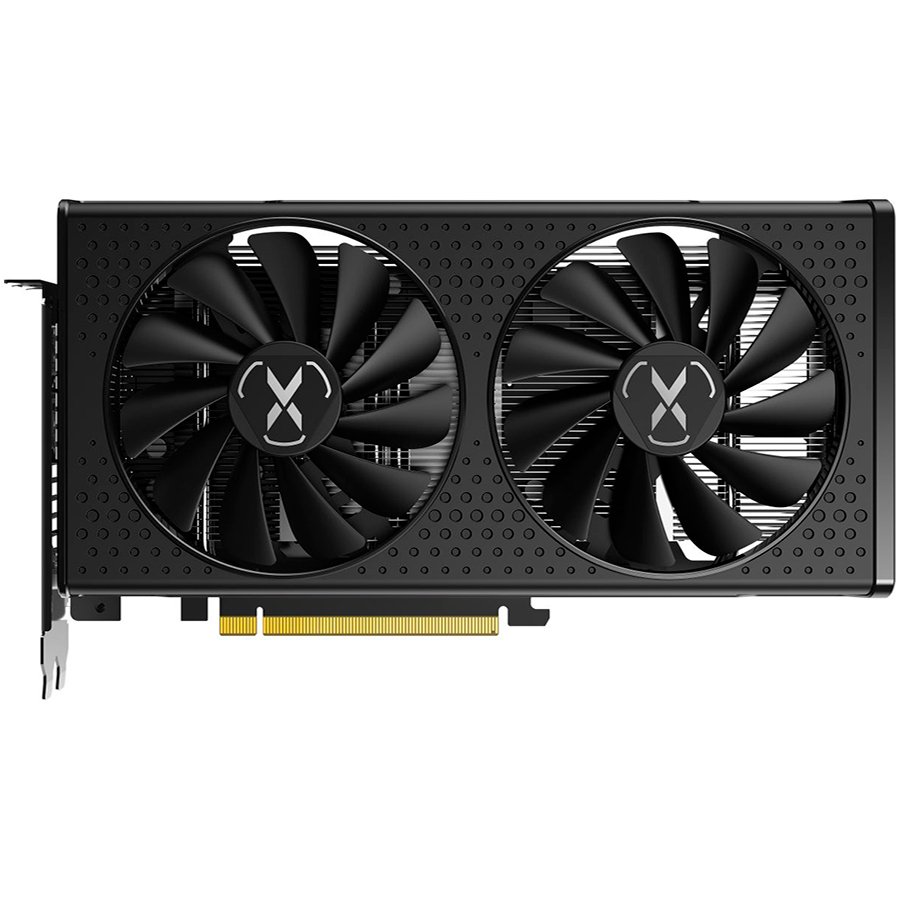
XFX Speedster SWFT 210 Radeon RX 6600 8GB
For a Linux system that needs a newer AMD card instead of another aging GCN model, the Radeon RX 6600 is a reasonable 1080p-focused upgrade path. Check your case clearance, PSU connector, and distribution kernel support before buying.
As an Amazon Associate I earn from qualifying purchases.
For someone deciding whether to keep an older Radeon card in a Linux box, this kind of work is a point in favor of staying with supported AMD hardware rather than treating age alone as a reason to replace it. For someone buying used, it is still not a blank check: power draw, video output needs, game requirements, VRAM capacity, and kernel support remain more important than one recovery improvement.
How The Recovery Approach Compares
The important comparison is not between two graphics cards. It is between reset strategies and how much of the system they disturb when the GPU hits a fault.
| Recovery path | Intended scope | Practical tradeoff |
|---|---|---|
| Full GPU reset | The whole GPU | Broadest recovery attempt, but also the most disruptive. |
| Ring reset | A command ring | More targeted, but limited to the ring-level recovery model. |
| IP block soft reset | A GPU functional block | Aims to recover a larger block than a single ring while avoiding a full device reset. |
That middle ground is why the work is interesting. If the driver can recover the problem area without resetting everything, innocent work has a better chance of surviving the event. The implementation still has to be hardware-specific, and broad reliability depends on testing across the affected chips.
The GFX8 Focus
The work specifically targets GFX8-era behavior as part of enabling the new recovery method for that generation. GFX8 includes AMD graphics hardware from the GCN era, including chips that still show up in used systems and older Linux gaming machines.
The proposed fixes address reset reliability issues that can appear after recovery attempts, including problems involving compute work and post-reset power behavior. Those details are low-level, but the user-facing effect is easier to understand: a reset path is only useful if the GPU comes back in a sane state afterward.
A firm landing timeline has not been publicly confirmed, so this should not be treated as an immediate reason to buy a specific used graphics card. Kernel-side driver work can also take time to reach mainstream distributions, especially for users who stay on long-term support releases.
What This Means For Buying Or Keeping Older AMD GPUs
For most readers, the decision is not whether IP block soft reset sounds elegant. The decision is whether an old AMD GPU is still worth keeping or buying for Linux.
The answer depends on the job:
- For a basic desktop, media box, or lightweight Linux gaming system, stronger recovery behavior makes older Radeon cards a little more appealing.
- For modern games, demanding creative workloads, or high-efficiency builds, this does not change the bigger limitations of early GCN hardware.
- For users who value open Linux driver support and already own a compatible card, this is a welcome maintenance improvement rather than a reason to rush into an upgrade.
The best buyer takeaway is restraint. This is useful driver work, especially because it targets hardware that is well past the marketing spotlight. But it should sit alongside the normal used-GPU checklist: display outputs, cooling condition, VRAM amount, power requirements, distribution kernel version, and whether the card is supported by the AMDGPU driver path you intend to use.
Bottom Line
The proposed AMDGPU recovery work is the kind of Linux improvement that does not look flashy but can matter a lot in daily use. A better reset path for early GCN-era hardware could reduce the pain of GPU hangs and make older Radeon cards more dependable in Linux systems.
It will not make old GPUs faster, quieter, or more power-efficient by itself. It also should not be treated as proof that every affected card will recover perfectly from every fault. But for Linux users keeping older AMD hardware in service, targeted recovery is a meaningful quality-of-life improvement, and another sign that driver maintenance for legacy Radeon systems still has practical value.