

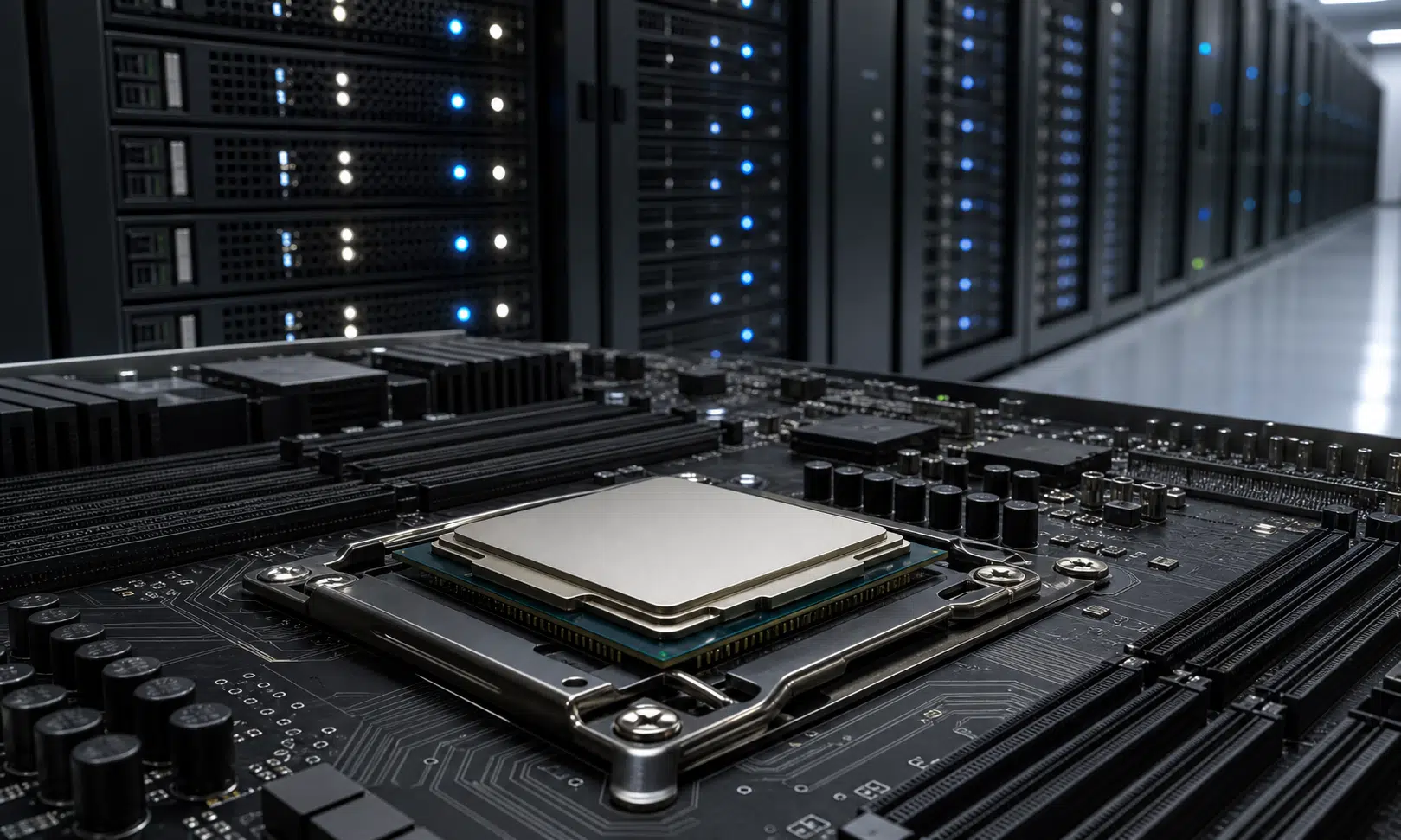

Intel’s next major efficiency-core Xeon platform, Clearwater Forest, appears to be moving deeper into the production and software-enablement phase as the company prepares its next wave of data center processors.
The chip family is expected to sit under the Xeon 6+ banner and use Intel’s 18A process technology, making it one of the most important server products tied to Intel’s foundry roadmap. For buyers, the headline is not just process-node progress. Clearwater Forest is being positioned around high core density, platform efficiency, and workloads where rack-level power consumption matters as much as raw socket performance.
A firm launch timeline has not been publicly confirmed in a way that buyers should treat as final, but Intel’s recent software support updates suggest that the platform is no longer a distant roadmap item. The company has been preparing developer tooling for several upcoming CPU families, including Clearwater Forest, which matters for enterprise teams that need compiler, library, and framework support in place before hardware lands in production clusters.
What Clearwater Forest Is Expected To Bring
Clearwater Forest is the follow-up direction for Intel’s efficiency-core Xeon strategy, building on the idea behind Sierra Forest: more cores per socket for highly parallel server workloads. Instead of chasing the same profile as P-core Xeons built for peak single-threaded or mixed enterprise performance, this class of chip is meant for density.
That makes it more relevant to infrastructure teams running scale-out services, cloud-native workloads, edge deployments, telecom infrastructure, and other environments where many threads can be distributed efficiently. It is less obviously aimed at buyers who need the strongest per-core performance for licensed enterprise databases or heavily serialized applications.
Intel has discussed Clearwater Forest in connection with several packaging and manufacturing technologies, including RibbonFET, PowerVia, Foveros Direct 3D, and EMIB. Because some platform details remain difficult to independently verify, the safer takeaway for buyers is that Clearwater Forest is designed as a major manufacturing and packaging step for Intel’s server roadmap rather than a simple frequency or core-count refresh.
Intel Xeon Silver 4510 Server Processor
A current-generation Xeon Scalable processor can be useful for teams comparing today’s server platforms against upcoming dense E-core options. Confirm socket, motherboard, BIOS, memory, and cooling support before buying.
As an Amazon Associate I earn from qualifying purchases.
Reported Specifications And Buyer-Relevant Signals
The most widely discussed Clearwater Forest configuration centers on a very dense E-core design, with reporting pointing to as many as 288 Darkmont-class efficiency cores and a large on-package cache pool. Those figures should be treated as expected top-end specifications until Intel publishes final, SKU-level documentation.
The same caution applies to platform I/O details. Reports have pointed to DDR5 memory support, multi-socket capability, UPI links, PCIe Gen 5 connectivity, and CXL support, but buyers should wait for final platform guides before planning exact lane counts, memory speeds, or chassis layouts around those numbers.
| Area | Buyer takeaway |
|---|---|
| CPU design | Expected to focus on dense E-core compute rather than maximum per-core performance. |
| Manufacturing | Positioned as an important Intel 18A server product. |
| Memory and I/O | Reported platform details are promising, but final planning should wait for official SKU and board documentation. |
| Best-fit workloads | Most interesting for parallel, scale-out, power-sensitive infrastructure. |
| Procurement risk | Early adopters should validate software support, platform availability, thermals, and OEM configurations before committing. |
Performance Claims Need Careful Reading
Intel has shown Clearwater Forest performance material using an Ericsson test comparison against a current Xeon E-core platform. The reported result favored the newer chip on rack power, performance per watt, and total performance. That is a useful signal, especially for telecom and edge infrastructure buyers, but it should not be read as a universal benchmark.
Vendor-provided workload testing can show the direction of improvement, but purchasing teams still need to test their own stack. A dense E-core CPU can look excellent in services that scale cleanly across many cores, while other workloads may depend more on memory behavior, software licensing, latency targets, accelerator use, or per-thread performance.
For that reason, Clearwater Forest should be evaluated less like a generic server CPU upgrade and more like a workload-specific infrastructure option. The most important question is not whether it has the largest core count on a slide. The question is whether it lowers cost per unit of useful work in a real rack, under the buyer’s power budget, cooling limits, and software constraints.
Where It Fits Against Other Intel Server Roadmap Parts
Intel is also preparing future P-core Xeon platforms, including Diamond Rapids, for customers that need a different performance profile. Some early material points to higher core counts and broader memory bandwidth on upcoming OEM systems, but firm configuration details and release timing should be treated cautiously until the relevant vendors publish final specifications.
That split is important for buyers. Clearwater Forest is the more natural candidate for density-first deployments. Diamond Rapids-style P-core systems are likely to be more relevant where per-core strength, memory bandwidth, and traditional enterprise performance matter more.
- Choose an E-core Xeon direction when throughput per watt and thread density are the main goals.
- Watch P-core Xeon platforms when application licensing, latency, or per-thread behavior is more important.
- Wait for final OEM systems before comparing socket counts, memory configurations, and expansion options.
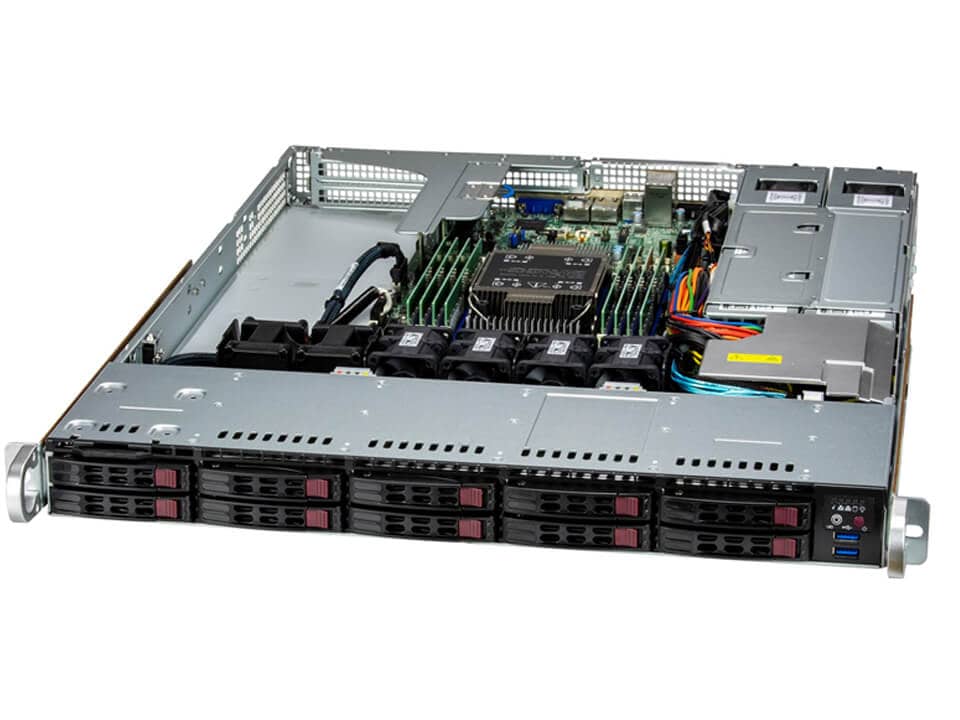
Supermicro SYS-111E-WR 1U Rack Server
A 1U rack server platform is a practical reference when planning around power, cooling, storage bays, PCIe expansion, and remote management. Match the exact chassis and board configuration to the CPUs, memory, and drives on your approved hardware list.
As an Amazon Associate I earn from qualifying purchases.
Early Verdict: Promising, But Not A Blind Upgrade
Clearwater Forest looks like one of Intel’s most important near-term server launches because it combines the company’s 18A manufacturing push with a practical data center goal: more efficient throughput at scale. If the final products match the direction Intel has been showing, the chips could be attractive for cloud, telecom, hosting, and edge operators trying to fit more compute into fixed rack power.
The buyer-aware answer is still to wait for final SKUs, OEM server listings, platform documentation, and independent testing. Clearwater Forest is worth tracking closely, but it should be shortlisted for the workloads it is built for, not treated as a universal replacement for every existing Xeon deployment.