

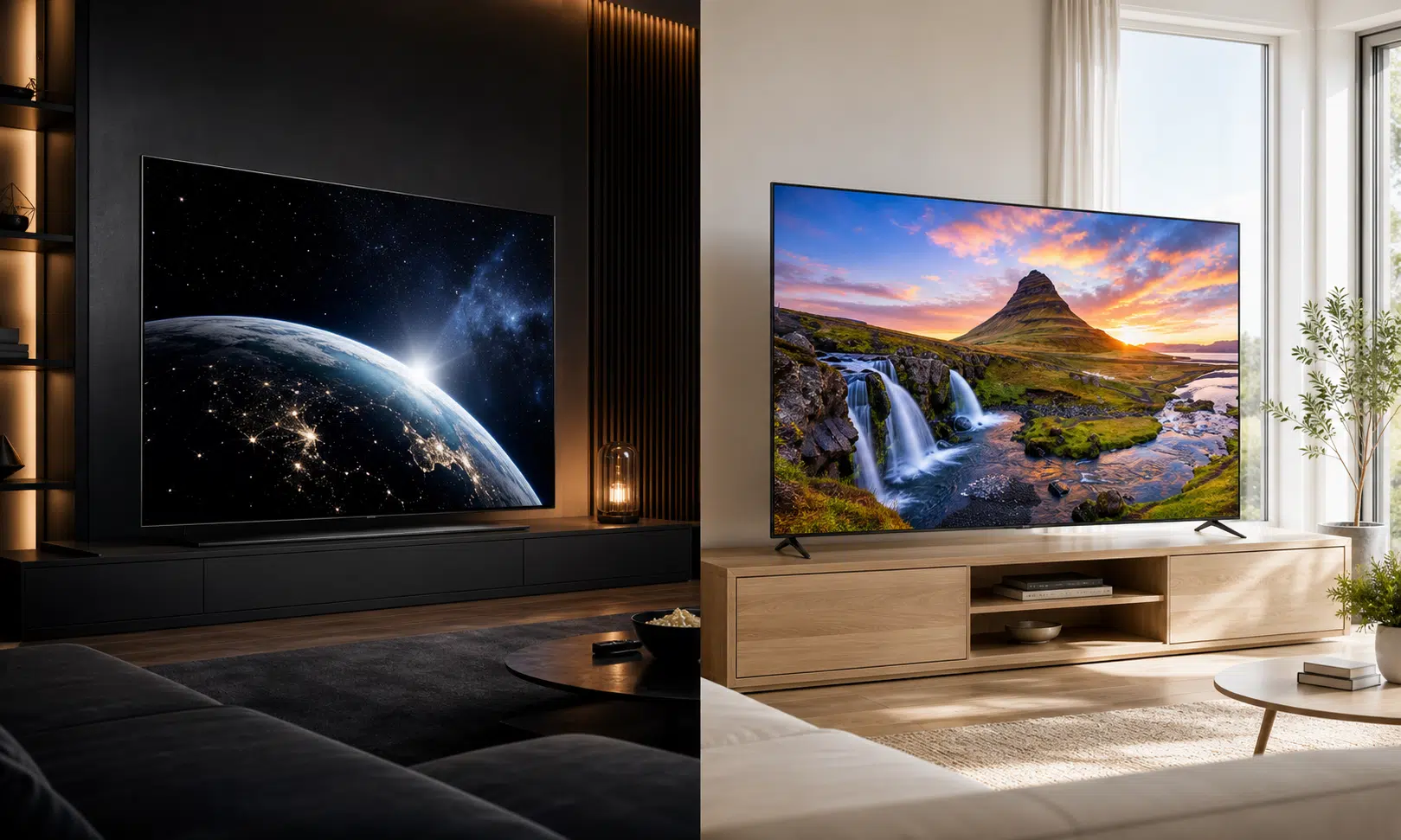

The LG C6 and Hisense UR9 sit in the same premium-TV conversation, but they are not trying to win buyers in the same way.
The LG C6 is the latest mid-range OLED in LG’s long-running C Series. That matters because the C Series has often been the sweet spot in LG’s OLED lineup: strong picture quality, serious gaming support and a price below the company’s most expensive OLED models.
The Hisense UR9 is a different kind of pitch. It is Hisense’s flagship RGB LED TV, a newer display approach designed to deliver very high brightness and stronger color volume than more conventional Mini-LED sets. In practical terms, the UR9 is aimed at buyers who want a bright, punchy picture in a room that is hard to control for light.
So the choice is not simply LG versus Hisense. It is OLED contrast versus RGB LED brightness. It is four HDMI 2.1 inputs versus three. It is webOS versus Google TV. It is a more refined home-theater picture versus a more aggressive, daylight-friendly presentation.
For most picture-quality purists, the LG C6 is the safer and better-rounded pick. The Hisense UR9 is still worth a serious look if you have a very bright room, want a larger screen for less money during a sale, or are curious about RGB LED’s strengths.
LG C6 vs Hisense UR9: quick verdict
The LG C6 is the better TV for viewers who care most about contrast, black levels, shadow detail and overall image control. OLED’s pixel-level dimming gives it an advantage the Hisense UR9 cannot fully match, even though the UR9 can get much brighter.
The Hisense UR9 makes its strongest case in bright rooms. Its brightness gives regular TV, sports and HDR highlights a lot of presence, especially in spaces where sunlight or overhead lighting would make a dimmer TV look flat. It also supports HDR10+ in addition to Dolby Vision, which may matter if you use services or discs that support both formats.
The value question is more fluid. Launch prices and sale prices can change quickly, especially with premium TVs. The important buyer takeaway is that the C6 is likely to feel like the more polished display, while the UR9 becomes more compelling when its price is meaningfully lower than the equivalent LG OLED.
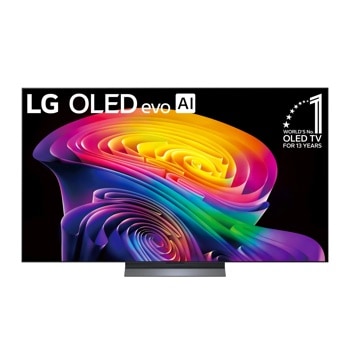
LG C6 OLED evo 4K TV
The LG C6 is the stronger fit for viewers who prioritize black levels, shadow detail and a polished home-theater picture. Its four HDMI 2.1 inputs also make it easier to connect multiple gaming and streaming devices.
As an Amazon Associate I earn from qualifying purchases.
Specs and format support
On paper, both TVs look well equipped for a premium setup. They support Dolby Vision, modern gaming features and HDMI 2.1 bandwidth. The differences start to matter once you count ports, compare HDR formats and think about how many devices you plan to connect.
| Category | LG C6 | Hisense UR9 |
|---|---|---|
| Display type | OLED | RGB LED |
| Core strength | Perfect black levels and precise contrast | Very high brightness and strong color volume |
| HDR formats | Dolby Vision, HDR10, HLG | Dolby Vision, HDR10+, HDR10, HLG |
| HDMI 2.1 inputs | Four | Three |
| Smart platform | LG webOS | Google TV |
| Best fit | Movie nights, gaming, darker rooms, picture accuracy | Bright living rooms, sports, punchy HDR, big-screen value |
The LG C6’s four HDMI 2.1 ports are a real advantage if you have several devices. A common premium setup might include a PlayStation 5, Xbox Series X, soundbar or AV receiver, and a streaming box. With four ports, there is less juggling.
The UR9 has three HDMI 2.1 inputs, which is still useful, but it gives you less flexibility. Hisense partly offsets that with a USB-C port, though that will not replace HDMI for most living-room gear.
The UR9 also supports HDR10+, while the LG C6 does not. Dolby Vision remains the more common premium HDR format across many streaming services and discs, but HDR10+ support is still a plus for buyers who want broader format coverage.
As for over-the-air TV, the UR9 includes ATSC 3.0 support. That may be useful for viewers who care about future broadcast features, though ultra-high-definition broadcasts are still not something every buyer can count on in daily use.
Size choices and panel differences
The C6 lineup needs a careful read because not every size is treated the same. The 42-, 48-, 55- and 65-inch versions are the standard LG C6 OLED models. The 77- and 83-inch versions are sold as C6H models, and those larger sets use LG’s more advanced tandem OLED panel technology.
That means a shopper looking at a 65-inch C6 and a shopper looking at a 77-inch C6H are not necessarily choosing the exact same hardware at different sizes. The larger C6H models are positioned as a step up in panel capability.
The Hisense UR9 is more straightforward in one sense: it is aimed at large-screen buyers. It is offered in 65-, 75- and 85-inch sizes, with a 100-inch version expected as part of the broader lineup. Availability can vary by retailer and timing, so the safest move is to compare the exact size you plan to buy, not just the model name.
Design: slim OLED versus heavier flagship LED
The LG C6 looks like a modern OLED TV in the expected way: slim, clean and more elegant than bulky. Its panel is extremely thin through much of the body, with the chassis widening around the center where the electronics and ports live.
The stand is centered and wedge-shaped, attaching behind the screen. It looks tidy, but there is a practical issue: the screen sits fairly close to the surface below it. If you own a tall soundbar, check the clearance before buying. A soundbar that blocks the bottom edge of the picture can turn a clean setup into an annoyance very quickly.
The Hisense UR9 has a more substantial physical presence. It is not unusually thick for a high-end LED TV, but it looks and feels heavier than the LG. That is not automatically a problem, especially if you plan to wall-mount it, but it does make the C6 feel like the more refined piece of industrial design.
The UR9’s stand has one clear advantage: its base is more accommodating for soundbars. If you are placing the TV on furniture and using a bar speaker, the Hisense may be easier to arrange without blocking the screen.
Picture quality: where OLED still wins
The biggest reason to buy the LG C6 is OLED contrast. Every pixel can turn itself on or off, so black areas of the image can be genuinely black instead of dark gray. That affects almost everything: movies look deeper, HDR highlights stand out more cleanly, and dark scenes can show more convincing depth.
The Hisense UR9 has a brightness advantage, and it is not subtle. In a bright room, that matters. Daytime sports, cable TV, news, animation and bright HDR material can look bold and highly visible. If your living room has large windows or lots of ambient light, the UR9 is built for that problem.
But brightness alone does not decide picture quality. The C6 can make a smaller HDR highlight feel more intense because it is sitting next to true black. A bright lamp in a dark movie scene, a reflection on metal or a starfield against space can look more controlled on OLED because the TV is not relying on larger dimming zones.
The UR9’s RGB LED hardware is designed to produce a wider, more vivid color presentation than standard LED-LCD designs. That can be impressive, especially in demo material and saturated HDR scenes. The caution is that measured color potential does not always mean every movie or show looks more natural. A TV still needs excellent tone mapping, local dimming and processing to turn panel capability into a consistently polished image.
The C6 is also the better bet for viewers who want a more accurate picture out of the box. In its most accurate picture modes, LG’s C Series tends to prioritize balance over showroom punch. That makes it easier to recommend for movie fans, home-theater buyers and anyone who would rather see a cleaner image than the brightest one.
Best for dark rooms
Choose the LG C6 if you watch most of your serious content at night or in a light-controlled room. This is where OLED’s strengths are most obvious. Black bars in movies disappear into the room, dark scenes look more dimensional, and bright highlights have better perceived contrast.
Best for sunny rooms
Choose the Hisense UR9 if your TV has to fight daylight every day. OLEDs have become much brighter than they used to be, and the C6 is not a fragile dim-room-only display. Still, the UR9’s extra brightness gives it more headroom in difficult viewing conditions.

Hisense UR9 RGB MiniLED 4K TV
The Hisense UR9 is the more natural choice for sunny living rooms where brightness matters more than OLED-level black depth. It also suits buyers comparing larger screen sizes and waiting for sale pricing.
As an Amazon Associate I earn from qualifying purchases.
Gaming features
Both TVs are strong gaming displays, but the LG C6 has the cleaner feature story.
The C6 supports 4K gaming at 120Hz and up to 165Hz for compatible PC gaming. It also supports VRR and AMD FreeSync Premium, and those features are available across all four HDMI 2.1 inputs. That is useful if you connect multiple consoles or a gaming PC.
LG’s Game Optimizer is another advantage. It puts key gaming settings in one place and is generally easy to understand while you are actually playing. That matters more than it sounds, because many TV settings menus are still built for patient setup work, not quick changes between matches or games.
The Hisense UR9 also brings serious gaming specs. It supports 4K at 120Hz and can go higher with compatible PC signals. It also supports VRR and FreeSync Premium Pro. For most console players, it should cover the important basics.
The limitation is again input count. Three HDMI 2.1 ports may be enough, but buyers with two consoles, a PC, a soundbar and a streaming box will need to plan the setup more carefully.
- Pick the LG C6 if you want the most flexible gaming setup with four HDMI 2.1 inputs.
- Pick the Hisense UR9 if you want a very bright gaming image and can live with three HDMI ports.
- Use a separate HDMI 2.1 switch or AV receiver only if it fully supports the bandwidth and features your devices need.
Smart TV software: webOS versus Google TV
The LG C6 runs webOS 26. LG’s smart platform has improved over the years, but it can still feel busier than it needs to be. App support is strong, and casual users may be perfectly happy with it, especially if they mostly open Netflix, Disney Plus, Prime Video or YouTube and leave the interface alone.
The issue is that webOS can feel cluttered. If you prefer a simpler streaming experience, you may eventually pair the C6 with a Roku, Apple TV, Chromecast or another dedicated streaming device.
The Hisense UR9 uses Google TV, which is one of the better built-in TV platforms. It is generally easy to navigate, has broad app support and makes sense if you already use Google services. It can still surface recommendations you may not care about, but its layout is usually more straightforward than LG’s interface.
This is one area where the UR9 may feel better day to day, especially for households that rely on built-in apps rather than external streaming hardware.
Price and value
Premium TVs rarely stay at launch pricing for long. That is especially true with LG OLEDs, which often become more attractive later in the year as discounts arrive. The C6 may be expensive early in its life cycle, but the C Series has historically become easier to recommend once sale pricing settles in.
The Hisense UR9 is more price-sensitive because it is competing with OLEDs while introducing a newer RGB LED approach. When the UR9 is close in price to the C6, the LG’s contrast advantage is hard to ignore. When the UR9 is sharply discounted, the conversation changes.
A discounted UR9 can make sense if you want a large, very bright screen and do not care as much about OLED’s perfect blacks. It can also be appealing if you are buying for sports, daytime TV and family-room viewing rather than movie-night accuracy.
The C6 makes more sense if your budget allows it and you want the picture-quality choice that is easier to trust across different types of content. It is the TV more likely to please a buyer who notices black levels, blooming, shadow detail and image accuracy.
Which TV should you buy?
Buy the LG C6 if you want the better overall picture. Its OLED panel gives it the contrast control that still defines premium TV performance, and its four HDMI 2.1 inputs make it easier to build a serious gaming and streaming setup around it.
Buy the Hisense UR9 if your room is bright enough that OLED’s contrast advantage will often be fighting sunlight. The UR9’s brightness is its biggest weapon, and it can make regular daytime viewing easier and more vivid. It is also the more interesting value play when sale pricing pulls it well below the LG.
For most home-theater buyers, the C6 is the clearer recommendation. For bright-room buyers chasing size, brightness and a lower sale price, the UR9 deserves a closer look.
The simplest way to decide is to start with your room, not the spec sheet. If you mostly watch at night, choose OLED. If you mostly watch in a bright living room and want the screen to punch through glare, the Hisense has a real argument. If you want one TV that feels polished for movies, gaming and everyday use, the LG C6 is the safer premium buy.