

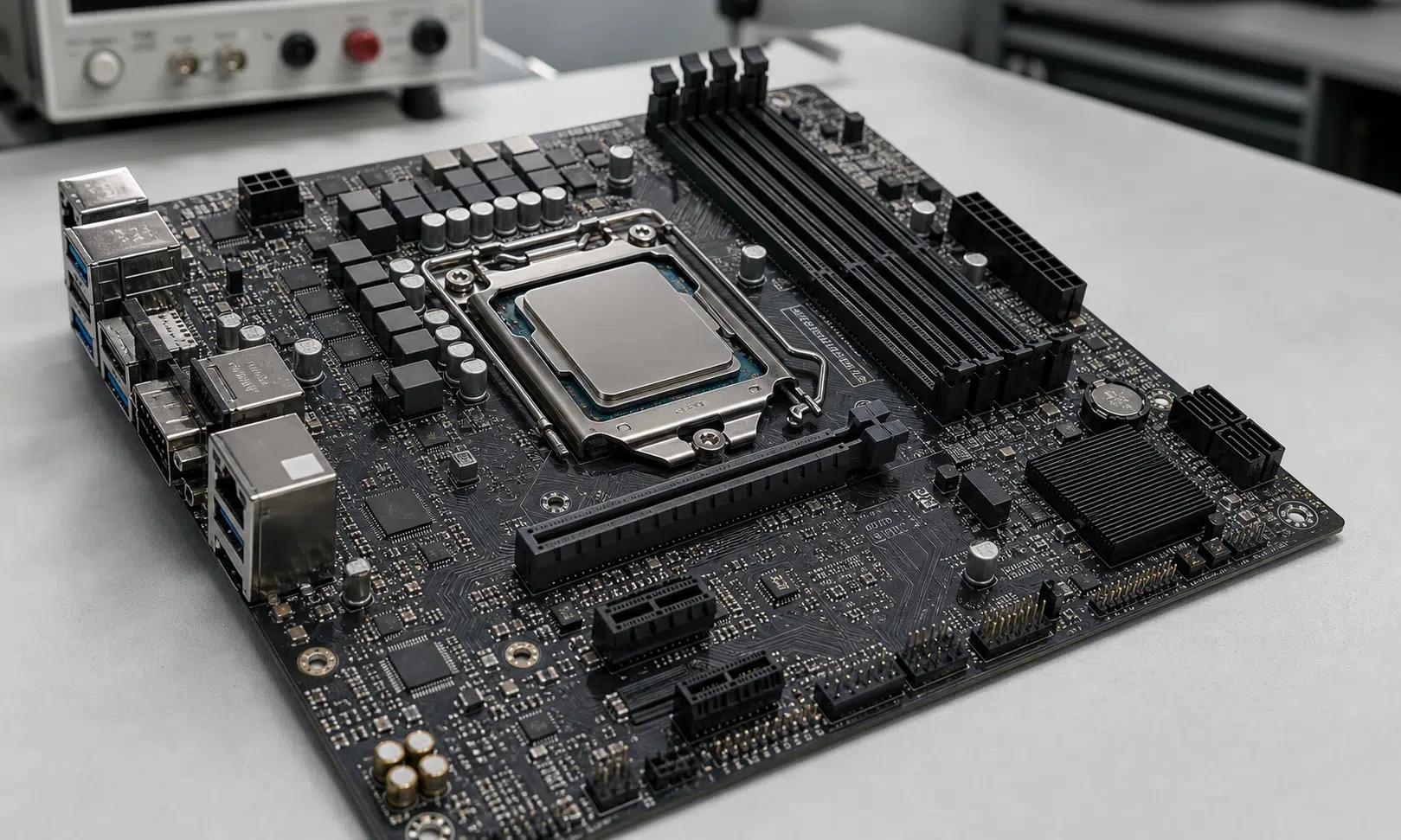

Loongson is pitching the Loongson 3C3000 as a 16-core server processor for low-cost, general-purpose systems rather than high-end AI or accelerator-heavy workloads. The company has framed the chip around small- and medium-sized business use cases, including file servers, database servers, web servers, and business process systems.
The pitch is straightforward: a domestic LoongArch CPU with server-oriented basics such as ECC memory support, PCIe expansion, and a claimed 40W typical power figure at 1.5GHz. The important caveat is that these are company-provided specifications and positioning claims, not independently tested performance results.
That makes the 3C3000 less a direct challenge to mainstream Xeon or EPYC platforms and more a look at how Loongson is filling out China’s local server ecosystem with lower-cost infrastructure parts.
A 16-core LoongArch server chip
The Loongson 3C3000 is described as a 64-bit processor built around the company’s LoongArch instruction set and LA364E core design. Loongson lists the chip in an FCBGA1371 package measuring 37.5mm by 37.5mm, and says it is pin-compatible with the Loongson 3B6000 processor. If that compatibility holds across production platforms, it could help system builders reuse existing board designs rather than starting from scratch.
The processor is listed with 16 physical cores and 16 threads, with clock speeds ranging from 1.5GHz to 1.8GHz. Each core is said to support 128-bit vector instructions and three-issue out-of-order execution. Loongson also lists two fixed-point units, one vector unit, and two memory access units per core.
Those details place the chip in a practical, infrastructure-focused category. It is not being sold on extreme core counts, bleeding-edge memory, or top-tier single-threaded clocks. Instead, the design appears aimed at systems where cost, platform control, power, and local software compatibility matter more than chasing global benchmark leadership.
Memory, cache, and expansion are modest but server-minded
Loongson’s listed cache setup includes 64KB of private L1 instruction cache and 64KB of private L1 data cache per core, plus 16MB of shared L2 cache across the chip. For memory, the integrated controller is said to support two 72-bit DDR4-2400 channels with ECC support.
That memory configuration is not aggressive by modern server standards, especially compared with high-end platforms that have moved to wider DDR5 configurations and much larger cache footprints. But for the workloads Loongson is targeting, ECC support is the more important detail. File, web, and database servers are not exotic use cases, but they do benefit from memory error correction and stable 24/7 operation.
Expansion is similarly practical. The 3C3000 is listed with two PCIe x16 interfaces, for 32 PCIe lanes in total. Those interfaces can reportedly be split into x4 or x8 configurations depending on the platform. Loongson also lists another PCIe x16 interface that can be configured as LCL, or Loongson Coherent Link, for dual-processor interconnection.
| Spec | Loongson 3C3000 listing |
|---|---|
| CPU cores / threads | 16 cores / 16 threads |
| Clock range | 1.5GHz to 1.8GHz |
| Architecture | 64-bit LoongArch |
| Core design | LA364E |
| L1 cache | 64KB instruction and 64KB data per core |
| Shared cache | 16MB L2 |
| Memory | Two 72-bit DDR4-2400 channels with ECC |
| Expansion | Two PCIe x16 interfaces, 32 lanes total |
| Typical power claim | 40W at 1.5GHz |
Other listed interfaces include SPI, UART, three I2C interfaces, AVS, and 16 GPIOs. Those are the kinds of platform details that matter less to retail buyers and more to system integrators building appliances, small servers, and embedded business systems.
The low-power claim is central to the pitch
Loongson lists typical power consumption at 40W when the 3C3000 is running at 1.5GHz. That figure has not been independently verified, but it is central to how the chip is being positioned. A 16-core server CPU in that power range would be attractive for compact infrastructure boxes, office servers, and other deployments where cooling and electricity costs matter.
The processor is also said to support dynamic shutdown of the main module clock and dynamic frequency adjustment of the main clock domain. In plain terms, Loongson is describing power-management features intended to reduce consumption when the chip is not under full load.
The company also lists an internally developed security and trust module with support for Chinese national cryptographic algorithms for encryption and decryption. That fits the broader theme around domestic infrastructure and China’s push for local hardware and software stacks.
Where it fits in Loongson’s server lineup
The 3C3000 appears to sit below Loongson’s higher-core-count 3C6000 server family. The company is positioning it as a lower-cost server CPU for general compute rather than as a flagship part for AI, high-performance computing, or heavily accelerated workloads.
That distinction matters. A chip like this does not need to win against the fastest global server processors to have a market. Its more realistic role is in price-sensitive systems where customers want basic server features, local architecture support, and enough compute for everyday infrastructure workloads.
Loongson has also talked up performance comparisons involving other chips in its roadmap, including higher-end parts, but the 3C3000 should be evaluated on its own terms. Without public pricing or independent benchmarks, its competitiveness remains difficult to judge. The practical questions are whether system builders can ship reliable boxes around it, whether the software stack is mature enough for the intended customers, and whether the total platform cost is low enough to justify choosing it over established alternatives.
Pricing has not been publicly disclosed. That is not unusual for server processors, which are often sold through system builders, integrators, and negotiated enterprise channels rather than as boxed retail components.
A domestic server play, not a benchmark flex
The 3C3000 is best understood as part of Loongson’s broader effort to build out a domestic computing platform around LoongArch. The chip’s specifications point toward practical infrastructure deployments: modest clocks, ECC memory, PCIe expansion, claimed low power, and enough cores for common business services.
For buyers outside that ecosystem, the immediate impact may be limited. Compatibility, software support, pricing, and real-world performance will decide whether the chip is more than a spec sheet. For China’s local server market, however, the 3C3000 shows Loongson continuing to target the unglamorous but important layer of business computing: the small servers that keep files moving, databases running, and internal applications online.