

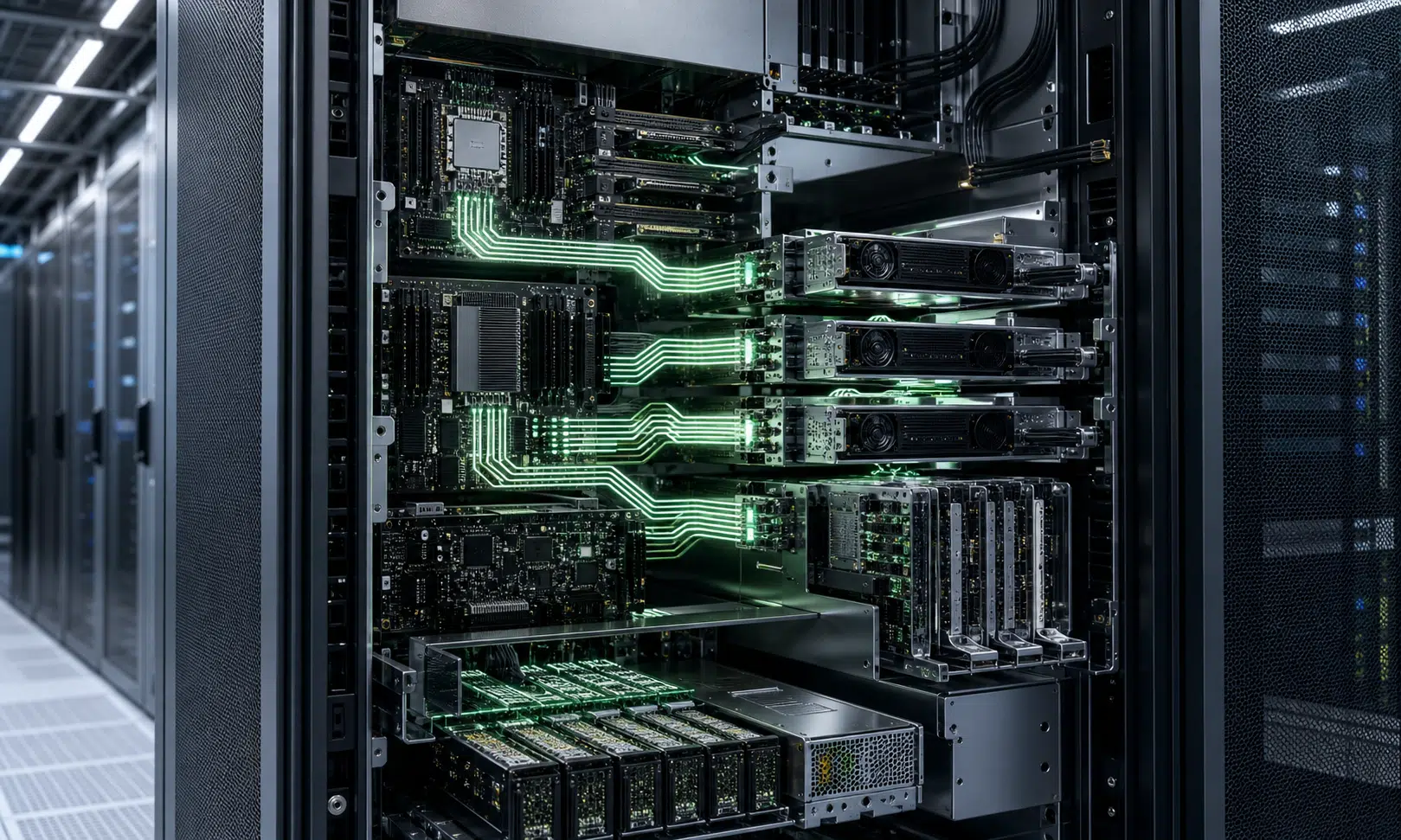

PCIe 7.0 is now an official specification, and the headline number is easy to remember: 128 GT/s per lane. In a full x16 configuration, that works out to up to 512 GB/s of bidirectional bandwidth before real-world overheads and implementation details enter the picture.
That number sounds absurd if the comparison point is a desktop gaming PC. Many systems still do not stretch PCIe 5.0 in ordinary use, and PCIe 6.0 has only started to become relevant for the infrastructure market. But that is the wrong lens for PCIe 7.0. This standard is aimed at the places where data movement has become one of the most expensive and performance-sensitive parts of computing: AI servers, high-performance computing, cloud platforms, fast networking, storage fabrics, and future accelerator systems.
The practical message is not that a gaming motherboard needs PCIe 7.0 tomorrow. It is that the industry is preparing for a generation of systems where CPUs, GPUs, AI accelerators, NICs, storage devices, and retimers all have to move far more data without letting the interconnect become the bottleneck.
PCIe 7.0 Doubles Bandwidth Again
PCI Express has followed a fairly predictable rhythm for several generations: each major version doubles the per-lane transfer rate. PCIe 5.0 runs at 32 GT/s per lane. PCIe 6.0 doubles that to 64 GT/s. PCIe 7.0 doubles it again to 128 GT/s.
In simplified x16 terms, the progression looks like this:
- PCIe 5.0: 32 GT/s per lane, up to roughly 128 GB/s bidirectional bandwidth over x16
- PCIe 6.0: 64 GT/s per lane, up to roughly 256 GB/s bidirectional bandwidth over x16
- PCIe 7.0: 128 GT/s per lane, up to roughly 512 GB/s bidirectional bandwidth over x16
Those figures describe the standard’s theoretical bandwidth. Actual products still depend on controller design, board layout, firmware, signal path quality, cooling, power management, and workload behavior. Even so, the direction is clear. PCIe is being pushed to keep pace with systems that need far more I/O bandwidth than conventional PCs.
PCIe 7.0 also continues the shift introduced with PCIe 6.0. It uses PAM4 signaling rather than the older NRZ approach, and it keeps the newer packet and error-correction concepts needed to make those higher transfer rates usable. The advance is not a dramatic change in what PCIe is. It is a difficult refinement of the physical layer, encoding, error handling, and power behavior so that the same basic interconnect family can keep scaling.
For desktop buyers, that distinction matters. PCIe 7.0 is not a magic feature that automatically makes a graphics card or SSD faster. It is an interface standard that gives future hardware more room to communicate when the attached devices can actually use the bandwidth.
The Real Target Is AI Infrastructure
PCIe 7.0 is best understood as an infrastructure standard first. PCI-SIG has positioned it around data-heavy markets such as AI and machine learning, high-performance computing, cloud platforms, fast Ethernet, and other systems where large devices exchange huge volumes of data.
That is where the pressure is most obvious. Modern AI servers are no longer judged only by accelerator compute throughput. They are also judged by how efficiently data can move between accelerators, CPUs, memory pools, storage, and networking hardware. A fast accelerator that spends too much time waiting for data is not being used efficiently.
This is why interconnect bandwidth has become a serious platform issue. NVIDIA, AMD, Intel, and other hardware vendors increasingly design accelerators and server platforms around the entire data path, not just peak arithmetic performance. PCIe is only one part of that story, alongside technologies such as proprietary accelerator links, CXL, Ethernet, InfiniBand, and emerging optical interconnect work. But PCIe remains one of the industry’s central connection standards, so its roadmap matters.
In that context, 512 GB/s over x16 no longer looks like a marketing number searching for a use case. It looks like a response to systems where the amount of data being moved has grown faster than traditional platform assumptions.
This also explains why PCIe 7.0 can be finalized long before mainstream users need it. Standards have to arrive before mass products. Server vendors, silicon designers, motherboard makers, retimer suppliers, cable vendors, validation labs, and hyperscale customers need time to plan around the specification. For end users, PCIe 7.0 is still mostly a future platform detail; for parts of the infrastructure industry, it is already part of planning cycles rather than a near-term shopping feature.
Signal Integrity Becomes The Hard Part
The higher PCIe speeds climb, the less the challenge looks like a simple controller upgrade. At 128 GT/s, the physical connection becomes a major engineering problem.
Traces on a motherboard are not ideal wires. They have loss, reflections, crosstalk, and sensitivity to board material, length, connector design, and routing. As PCIe data rates rise, the margin for sloppy layout disappears. Server boards already rely on careful signal design, retimers, high-quality materials, and controlled routing to make current high-speed standards work. PCIe 7.0 raises that bar again.
The practical effects are predictable:
- Motherboards and server platforms become harder to design.
- Higher-quality PCB materials and tighter manufacturing requirements become more important.
- Retimers, redrivers, connectors, and cable assemblies take on a larger role.
- Validation and compliance testing become more expensive and more time-consuming.
- Platform cost rises, especially in dense accelerator systems.
This is one reason PCIe 7.0 should not be viewed like a simple checkbox on a consumer spec sheet. Supporting the standard properly is expensive. The economics make the most sense first in servers where additional bandwidth can improve utilization, reduce bottlenecks, or support denser accelerator configurations.
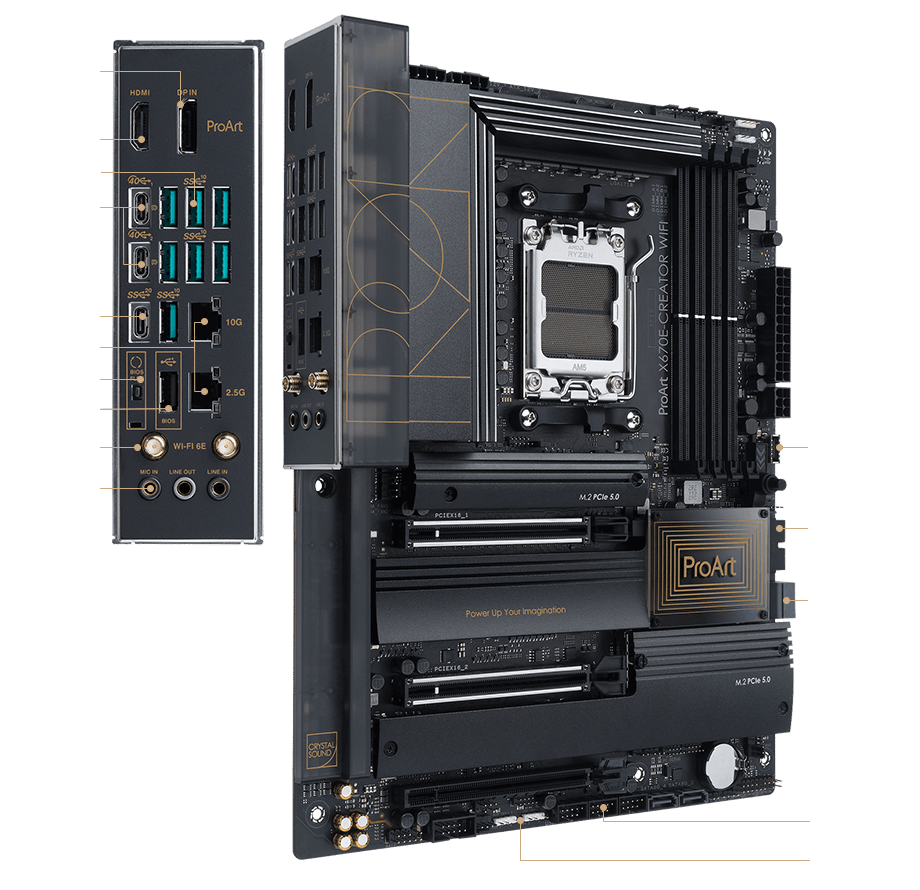
ASUS ProArt X670E-Creator WiFi Motherboard
For builders who need a current high-end desktop or creator platform, a PCIe 5.0 motherboard is a more realistic upgrade than waiting for PCIe 7.0. Check lane layout, CPU compatibility, M.2 placement, and case airflow before buying.
As an Amazon Associate I earn from qualifying purchases.
For PC builders, this is also a useful reminder about current-generation hardware. A solid PCIe 5.0 motherboard, good cooling, and a reliable power delivery design matter more today than waiting for a future interface that no consumer GPU or SSD meaningfully requires yet.
Why Gaming PCs Do Not Need PCIe 7.0 Yet
It is tempting to translate every new PCIe generation into a gaming upgrade, because PCIe slots are associated with graphics cards. In practice, gaming is not the main driver here.
Modern GPUs can benefit from PCIe bandwidth in certain edge cases, especially when VRAM is constrained, when large datasets are moved frequently, or when professional workloads are involved. But typical gaming performance is usually limited by the GPU itself, the CPU, memory behavior, game engine design, resolution, graphics settings, and driver behavior long before the PCIe interface becomes the main obstacle.
That is already visible with PCIe 4.0 and PCIe 5.0. Many current graphics cards do not show dramatic gaming differences between adjacent PCIe generations when given enough lanes. There are exceptions, especially with narrower lane configurations or low-VRAM cards, but the average buyer does not get a clean frame-rate gain simply because the slot is newer.
NVMe SSDs tell a similar story. PCIe 5.0 drives can deliver extremely high sequential numbers, but ordinary desktop use rarely looks like a benchmark chart. Booting Windows, launching games, loading levels, browsing files, or opening applications usually depends on a mixture of random access, software overhead, CPU behavior, and caching. Heat is often the more immediate problem for very fast SSDs. A drive can advertise huge throughput and still require a serious heatsink to sustain it.
That does not make PCIe 7.0 irrelevant to consumers forever. Server-first technologies often drift downward over time. PCIe 4.0 and PCIe 5.0 both followed that pattern, appearing first where the cost made sense and later becoming normal on enthusiast and mainstream platforms. PCIe 7.0 will likely follow a similar path, but that path is measured in years, not months.
What Buyers Should Take From The PCIe 7.0 Announcement
For anyone buying a PC in the near term, PCIe 7.0 should not change the decision much. It is not a reason to delay a gaming build, workstation purchase, or SSD upgrade. The hardware ecosystem around PCIe 7.0 will take time, and early implementations are expected to be concentrated in server and accelerator platforms.
The more useful buyer takeaway is about platform balance. A system should be judged by the workloads it will actually run, not by the newest interface number available on a roadmap.
For gamers, the sensible priorities are still straightforward: the right GPU for the target resolution, a CPU that fits the frame-rate goal, enough memory, a good SSD, stable power, and cooling that can handle sustained load. PCIe version matters, but it rarely sits at the top of the list unless the device is lane-limited or the workload is unusually bandwidth-sensitive.
For workstation buyers, the calculation is more nuanced. PCIe bandwidth can matter for multi-GPU compute, capture cards, high-speed networking, storage arrays, accelerator cards, and certain professional workloads. Even there, PCIe 7.0 is not a near-term requirement for most individual systems. PCIe lane count, slot layout, bifurcation support, platform stability, driver support, and cooling often matter more than the headline generation.
For server and infrastructure buyers, PCIe 7.0 is more important. It points to where platform planning is heading: faster accelerator connectivity, more demanding board design, and greater emphasis on moving data efficiently across the system.
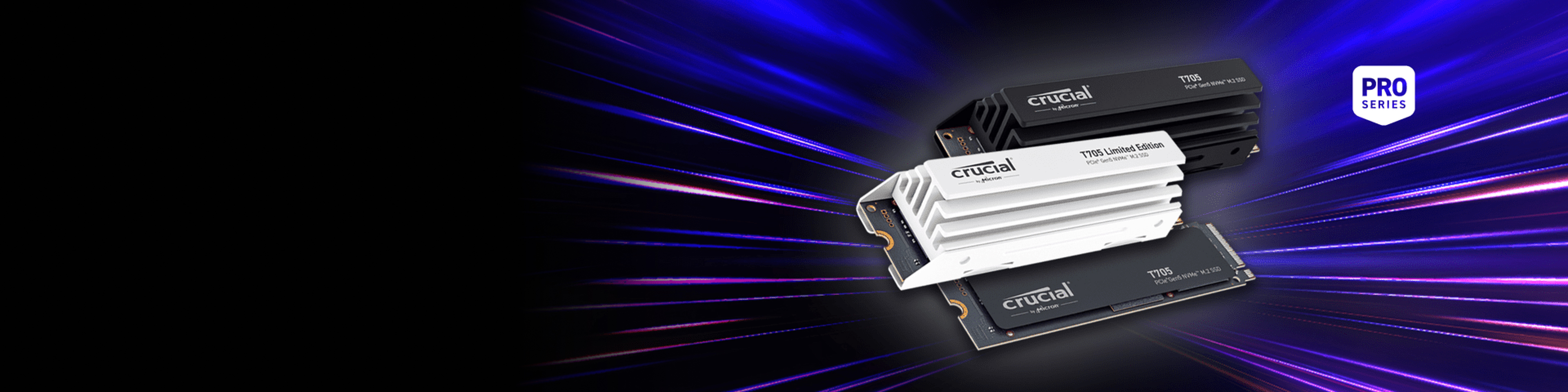
Crucial T705 Gen5 NVMe SSD
A PCIe 5.0 NVMe SSD makes the most sense for users moving large files, editing media, or building a high-end workstation. Make sure the motherboard supports Gen5 M.2 and has enough airflow around the drive.
As an Amazon Associate I earn from qualifying purchases.
The practical question for most readers is not “Do I need PCIe 7.0?” The answer is almost certainly no for a personal PC today. The better question is “What does PCIe 7.0 reveal about where hardware is going?” On that point, the answer is clear: bandwidth, interconnect quality, and data movement are becoming central design constraints.
PCIe 7.0 Also Shows A Bigger Industry Shift
For decades, consumer hardware discussions often leaned on clock speed, core count, shader count, and peak compute. Those numbers still matter, but modern performance is increasingly shaped by how quickly data can be placed where it is needed.
That is true in AI servers, where accelerators need massive data feeds. It is true in storage, where SSDs have moved from simple boot drives to high-throughput components in professional workflows. It is true in networking, where 400G and 800G class infrastructure changes the demands on host systems. It is also true in chip design, where memory bandwidth, cache, packaging, and interconnects can matter as much as raw execution resources.
PCIe 7.0 fits into that shift. It is not flashy in the way a new GPU architecture is flashy. It does not give consumers an easy upgrade story. But it is one of the standards that will shape the machines used to train models, run large-scale simulations, serve cloud workloads, and move data through future data centers.
There is also a cost side. Higher PCIe speeds make everything around the slot more demanding. Better materials, cleaner routing, more validation, retimers, and stronger platform engineering all add cost. That matters because the benefits are not evenly distributed. A hyperscale server operator may have a clear reason to pay for the platform complexity. A gaming PC buyer usually does not.
This is where the industry split becomes visible. The same standard can be essential for one market and unnecessary for another. PCIe 7.0 is a good example: critical for future infrastructure planning, but not a must-have for mainstream desktop use.
Bottom Line
PCIe 7.0 is official, and its 128 GT/s per-lane transfer rate gives the PCI Express roadmap another major bandwidth jump. In an x16 configuration, the specification reaches up to 512 GB/s of bidirectional bandwidth, continuing the familiar doubling pattern from PCIe 5.0 and PCIe 6.0.
The important part is where that bandwidth is meant to land first. PCIe 7.0 is aimed at AI infrastructure, high-performance computing, cloud platforms, fast networking, and other systems where data movement is a serious bottleneck. It is not a near-term gaming feature, and it should not influence most consumer PC buying decisions today.
For the desktop market, PCIe 7.0 remains a future technology. For server vendors and infrastructure planners, it is another sign that the next phase of performance is not only about faster chips. It is about feeding those chips quickly enough to make their performance useful.
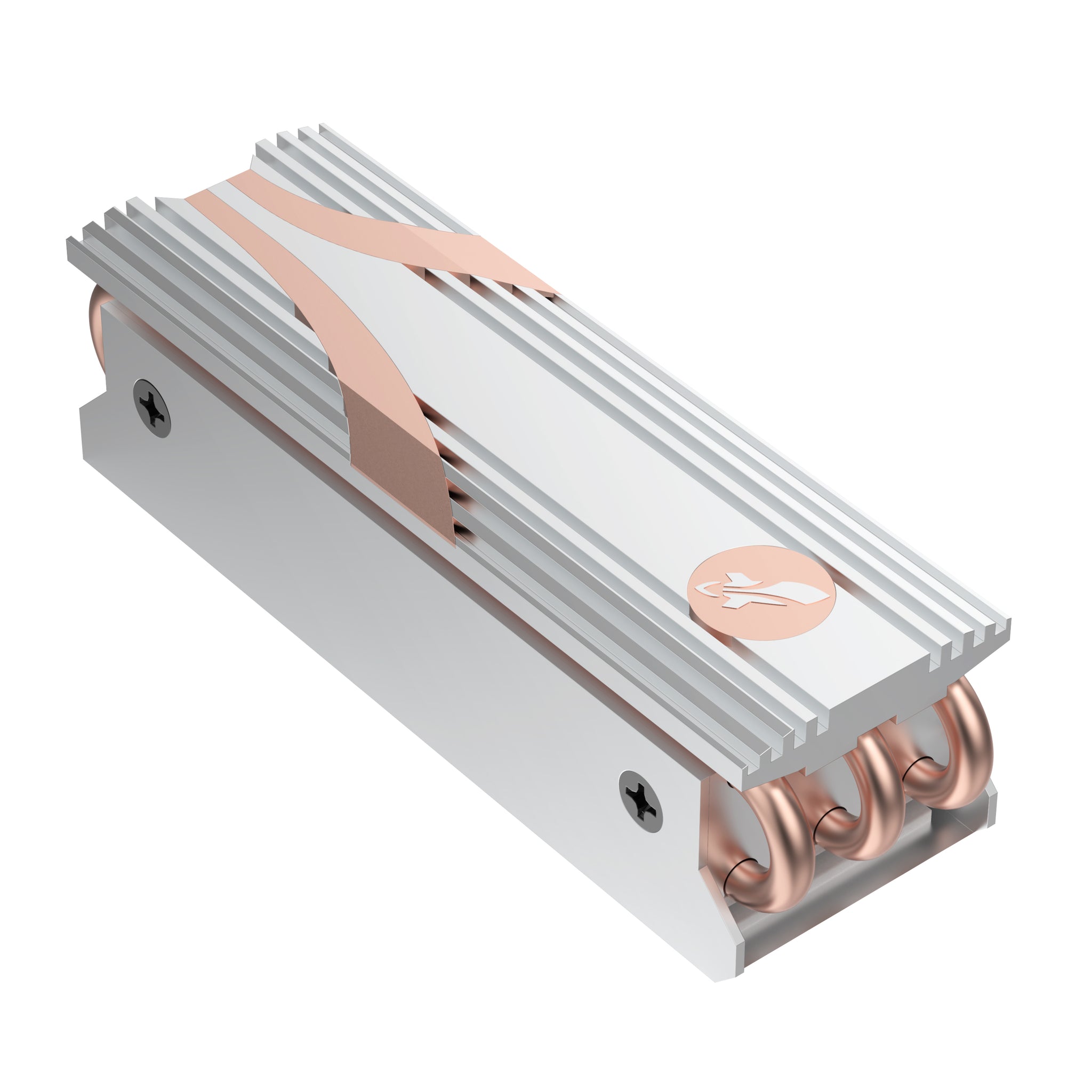
Sabrent M.2 2280 SSD Heatsink
Fast NVMe drives can throttle if they run hot under sustained transfers. A dedicated M.2 heatsink is worth considering when the motherboard heatsink is weak or missing, as long as there is enough clearance near the GPU and CPU cooler.
As an Amazon Associate I earn from qualifying purchases.