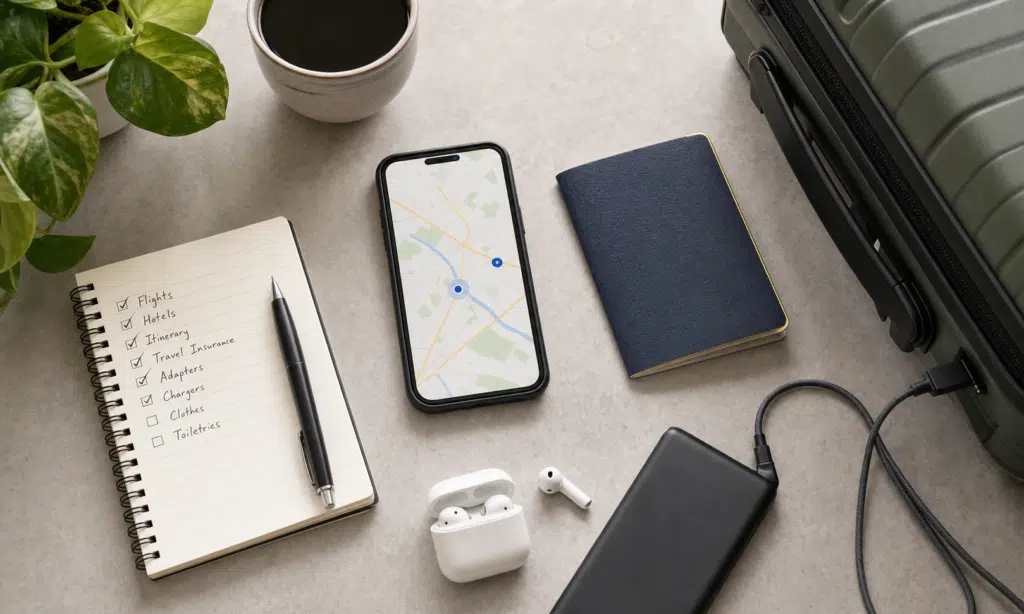
Most people do not love every part of travel. They love being somewhere else: the first walk through a new neighborhood, the meal they could not get at home, the feeling of seeing a place with fresh eyes.
The hard part is everything around that moment. Packing. Airport timing. Flight changes. Jet lag. Confirmation numbers buried in email. The quiet worry that you forgot something obvious.
A good travel system does not remove every surprise. It handles the predictable friction so you have more attention left for the trip itself.
Below are eight useful travel tools organized by when they help most: before the trip, while you are in transit, and once you arrive.
Before You Go: Reduce the Decisions
The easiest travel problems to solve are the ones you handle before leaving home. A few tools can turn scattered planning into a calmer checklist.
1. Timeshifter for Jet Lag Planning
Timeshifter is designed to help travelers manage jet lag with personalized timing suggestions around sleep, caffeine, and light exposure. The exact effect will vary by person, route, and how closely you follow the plan, so it is best treated as a structured guide rather than a guarantee.
It is most useful for long-haul flights, overnight travel, or trips where you need to function soon after landing. If losing the first day or two to exhaustion is your biggest travel complaint, this is a sensible place to start.
2. PackPoint for Smarter Packing Lists
PackPoint builds packing lists based on details such as destination, trip length, weather, and planned activities. That makes it more useful than a generic note called “packing list” that you rewrite from memory every time.
The main benefit is not that it packs for you. It gives you a repeatable structure so you are less likely to forget the small items that create annoying problems later: chargers, adapters, medication, rain layers, workout clothes, or something appropriate for a nicer dinner.

Packing Cube Set
A simple packing cube set turns a checklist into an organized suitcase. Use separate cubes for shirts, layers, workout clothes, or small essentials so the items on your list are easier to find later.
As an Amazon Associate I earn from qualifying purchases.
3. Skyscanner for Flight Search
Skyscanner is a flight metasearch tool that helps compare fares across airlines and travel sites. It is especially helpful when your destination or travel dates have some flexibility.
Use it early in the planning process to get a sense of realistic fare ranges. Then check baggage rules, layover lengths, arrival times, and booking terms before choosing the cheapest option. The lowest fare is not always the best travel decision if it adds a painful connection or lands at an awkward hour.
4. TripIt for Itinerary Organization
TripIt turns travel confirmations into a single itinerary. Instead of searching through email for flight numbers, hotel addresses, car rental details, and reservation times, you can keep the trip’s core information in one place.
This is most useful when a trip has multiple pieces: flights, hotels, trains, rentals, restaurant bookings, tours, or work meetings. It also helps when you are tired, offline, or standing in a line and need one detail quickly.
En Route: Stay Ahead of Friction
Travel days are where small delays become large headaches. The goal here is not perfect control. It is earlier awareness and fewer blind spots.
5. Duolingo for Basic Travel Phrases
Duolingo can help you learn simple phrases before or during a trip. It will not make you fluent on the plane, but even basic greetings, numbers, food words, and polite phrases can make daily interactions smoother.
For travel, focus on practical language first:
- Greetings and thank-yous
- Ordering food and drinks
- Asking for directions
- Numbers, prices, and times
- Transportation words
That small amount of preparation can make you a more confident and considerate guest.
6. FlightAware for Flight Tracking
FlightAware helps track flight status, aircraft movement, and potential disruptions. It can be useful when you want more context than a boarding screen or airline app provides.
If your inbound aircraft is delayed, your own departure may be affected even before the gate announcement changes. That extra notice can give you time to adjust: look at backup connections, contact the airline, move closer to the gate, or simply decide whether you have time to eat before boarding.

Universal Travel Adapter
For international trips, a universal adapter is an easy item to pack before you need it. Choose one that matches your destination’s outlets and remember that most adapters do not convert voltage.
As an Amazon Associate I earn from qualifying purchases.
On Arrival: Make the First Day Easier
Arrival is when planning meets reality. You are tired, your phone battery may be low, and the simplest tasks can feel harder in a new place. Offline access matters here.
7. Google Translate for Offline Translation
The Google Translate mobile app is useful for menus, signs, labels, and simple conversations. Before traveling, download the language you expect to need so you are not fully dependent on mobile data or airport Wi-Fi.
The camera translation feature is especially practical for everyday situations: restaurant menus, transit signs, appliance instructions, museum labels, and grocery packaging. It will not handle every nuance, but it can remove a lot of confusion quickly.
8. Maps.me for Offline Navigation
Maps.me lets you download maps before a trip and use them when you do not have reliable internet. That makes it useful for international travel, rural areas, long walks, and situations where roaming data is expensive or inconsistent.
Before you leave, download the relevant city or region, then save key places:
- Your hotel or rental address
- The airport, train station, or bus stop
- Restaurants and cafes you want to try
- Emergency locations or pharmacies
- Neighborhoods you plan to explore
Offline maps are not just for emergencies. They make wandering easier because you can explore without worrying that one wrong turn will become a problem.
How to Build Your Own Travel Stack
You do not need to use all eight tools at once. Start with the part of travel that consistently creates the most stress for you.
| Travel problem | Tool to try first |
|---|---|
| Jet lag affects the first days of your trip | Timeshifter |
| You often forget important items | PackPoint |
| Flight changes catch you off guard | FlightAware |
| Your itinerary is scattered across emails | TripIt |
| You worry about language barriers | Google Translate or Duolingo |
| You get stressed without reliable data | Maps.me |
The best system is the one you will actually use. For a short domestic trip, that may mean only a packing list and a flight tracker. For a multi-country trip, it may mean itinerary management, offline maps, translation downloads, and jet lag planning.
The Point Is Less Scramble
Effortless travel is not about turning every trip into a perfectly optimized project. It is about removing the avoidable scramble: the missing charger, the buried confirmation number, the unknown delay, the menu you cannot read, the map that will not load.
Set up the basics before you leave. Keep the tools simple. Let them handle the routine parts of the trip so you can pay more attention to the reason you went in the first place.
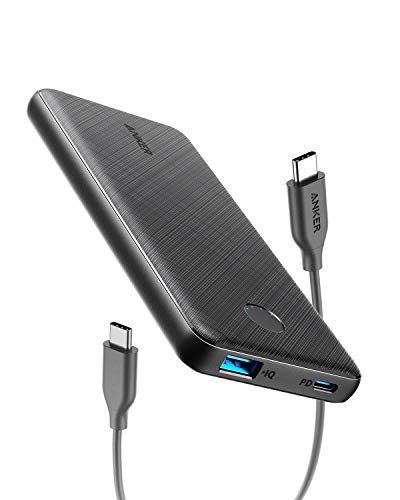
Slim Portable Charger
A slim power bank is helpful when your phone is handling boarding passes, flight alerts, maps, and translation. Charge it before leaving home and keep the cable in the same pocket or pouch.
As an Amazon Associate I earn from qualifying purchases.