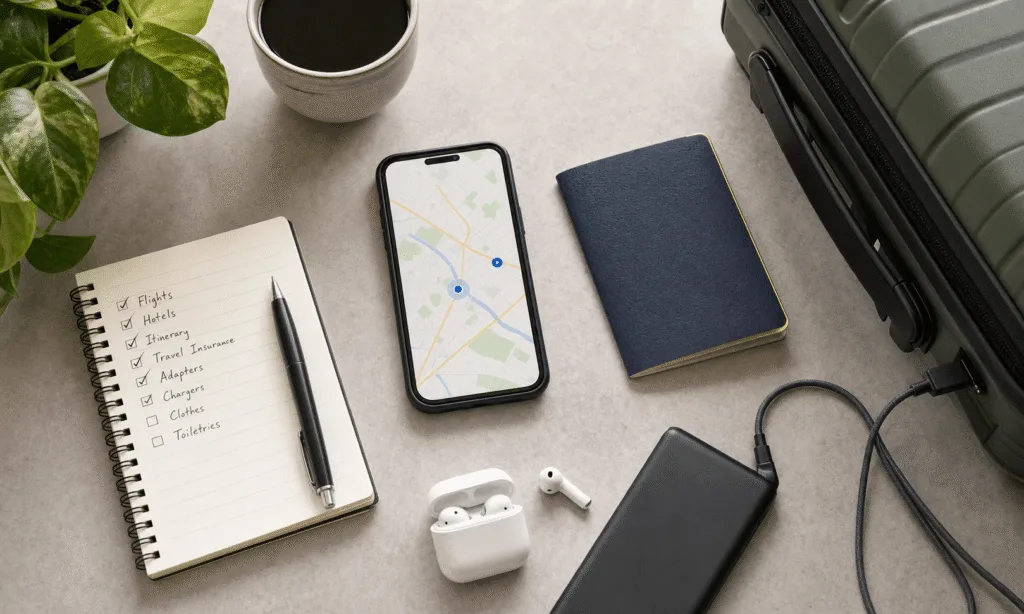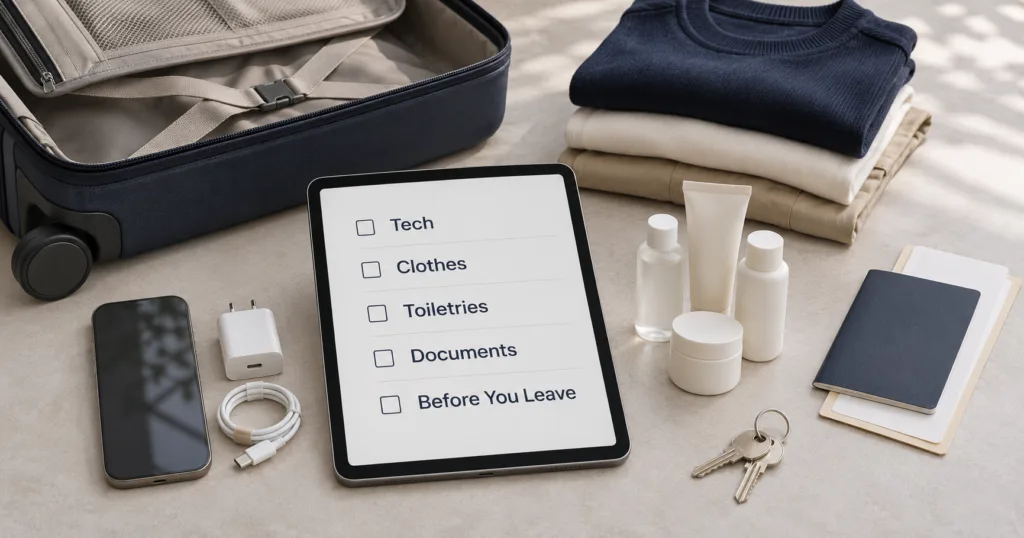
Principle-First Packing proposes a reusable digital packing checklist built around five sections and two ways to check items before a trip. The workflow uses a master note, with Apple Notes or Google Docs suggested as places to store it, and calls for revisions after each journey.
The baseline covers both belongings and departure tasks. Its clothing quantities are an example within the method, while optional additions are meant to reflect personal needs and the conditions of a particular trip.
A master note with five sections
The proposed note, titled “Packing List,” separates belongings and departure tasks into five categories. Its suggested starting contents are:
- Tech: A phone, laptop, chargers, headphones and portable battery.
- Clothes: An example allocation of 5 tops, 4 bottoms, 3 layers, 2 pairs of shoes and 1 set of accessories, plus underwear and socks for each day.
- Toiletries: A toothbrush, toothpaste, deodorant, medications, razor and sunscreen.
- Documents: ID, a passport, cards, some cash and a boarding pass.
- Before You Leave: Online check-in, charging devices, setting an out-of-office message, taking out trash and locking doors and windows.
Customization is a separate part of the workflow. A work trip may call for a laptop stand or notebook; a family trip may involve equipment for children or pets. The proposal also includes optional sections for warm weather, cold weather and trips involving activities such as skiing or camping.
Two proposed checking modes
The workflow describes two approaches to using the completed list:
- READ-DO: Read an entry, pack the item and mark it complete.
- DO-CONFIRM: Pack from memory, then scan the checklist for anything missed.
The suggested sequence begins with READ-DO and moves to DO-CONFIRM once the traveler is familiar with the list.
For maintenance, the workflow proposes spending two minutes after each trip revising the contents. That review involves adding forgotten items and removing items that went unused, so the next version reflects the traveler’s experience.