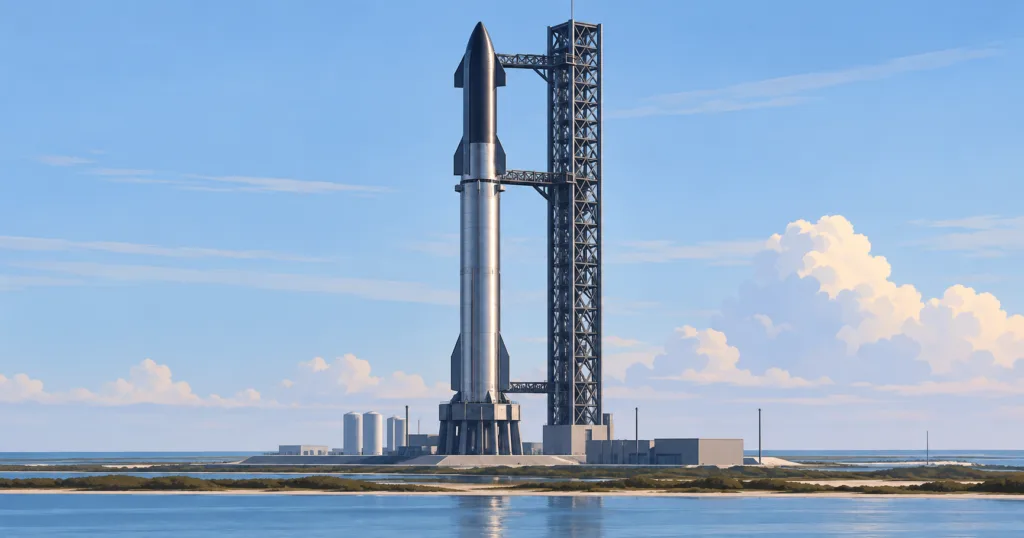
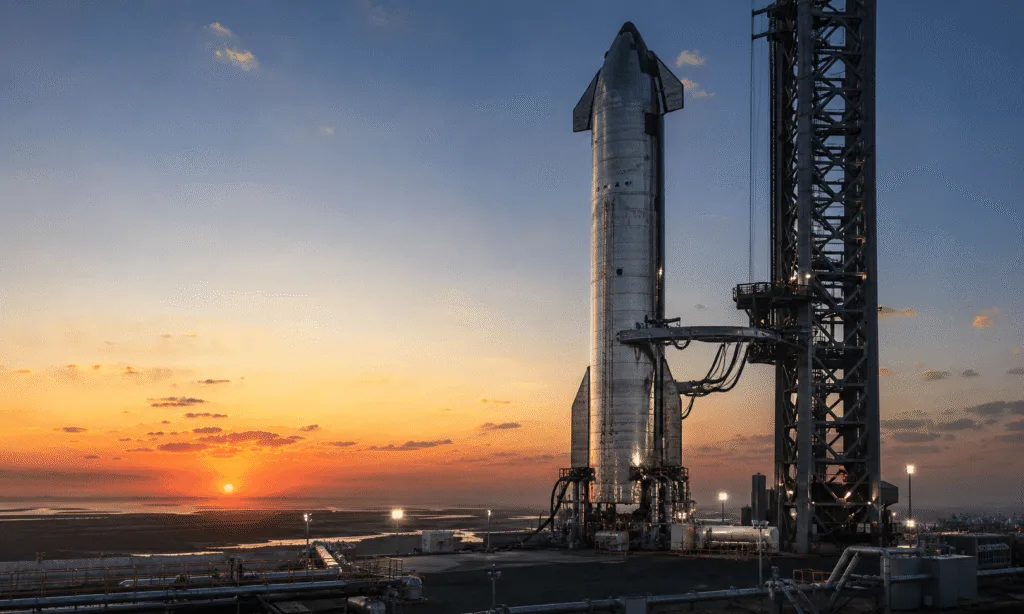
SpaceX is preparing Starship V3 for its first test flight, with Flight 12 tentatively scheduled for Thursday evening, May 21, 2026, from Starbase in South Texas. The mission is expected to introduce redesigned Starship and Super Heavy vehicles, Raptor 3 engines and the site’s new Pad 2.
SpaceX says the primary goal is to demonstrate the new vehicles, engines and launch infrastructure together in flight. The company describes the redesigns as steps toward full and rapid reuse. Flight 12 is planned as a suborbital test ending in controlled splashdowns for both stages.
Planned flight profile
SpaceX’s reported flight plan calls for Super Heavy, designated Booster 19, to target a controlled splashdown in the Gulf of Mexico about seven minutes after liftoff. The Starship upper stage, Ship 39, is expected to continue downrange toward a splashdown in the Indian Ocean a little more than an hour into the mission.
Other objectives in the reported plan include an in-space restart of a Starship Raptor 3 engine and maneuvers during reentry to test the vehicle’s response. SpaceX has caught Super Heavy boosters on earlier flights, but neither stage is scheduled for a tower catch on Flight 12.
SpaceX also plans to deploy 22 Starlink test payloads, intended for demonstrations rather than operational satellite service. The company says the final two will scan Starship’s heat shield and transmit images to operators, testing a way to assess its condition before future returns to the launch site.
SpaceX says one heat-shield tile has been deliberately removed to measure differences in aerodynamic loads on adjacent tiles during reentry. It says several other tiles have been painted white to simulate missing tiles for the imaging test.
Changes to the V3 vehicle
Compared with the vehicles used in earlier Starship test flights, SpaceX says the V3 booster has three steering grid fins instead of four and an integrated hot-staging structure. Hot staging involves starting the upper-stage engines before the stages separate.
SpaceX says the upper stage has a redesigned propulsion system, revised plumbing and wiring, a larger propellant tank and an updated reaction control system for steering in flight. The company has also described changes to Pad 2’s propellant systems and launch mount intended to support repeated launches.
Starlink and Artemis context
SpaceX intends Starship to carry large satellite payloads and support future deep-space missions. The Starlink test payloads on Flight 12 are part of that development program.
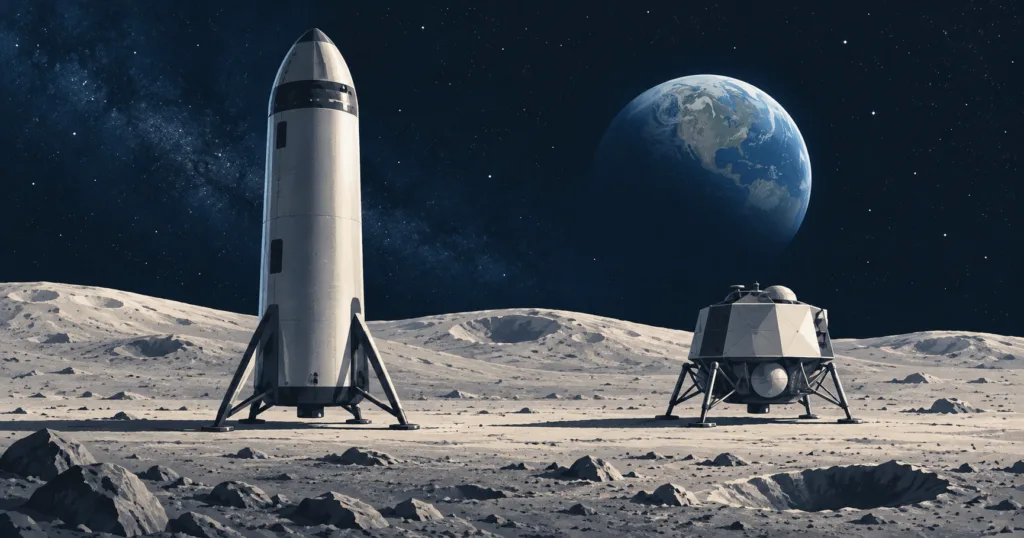
NASA is working with SpaceX on a Starship-derived Human Landing System to carry astronauts between lunar orbit and the Moon’s surface. NASA’s plans call for propellant transfers in Earth orbit and an uncrewed lunar landing demonstration before a crewed landing. Flight 12’s planned suborbital profile does not include either demonstration.
SpaceX plans to stream the mission on its website. The May 21 launch target remains provisional.