Tencent described GPUs used in advertising as a relatively short-cycle investment while taking a longer-term view of spending on its Hunyuan foundation model, as executives discussed returns on the company’s AI infrastructure.
Chief strategy officer James Mitchell outlined the distinction during Tencent’s May 13, 2026 earnings call. The company reported first-quarter revenue of RMB196.5 billion, up 9 percent year over year.
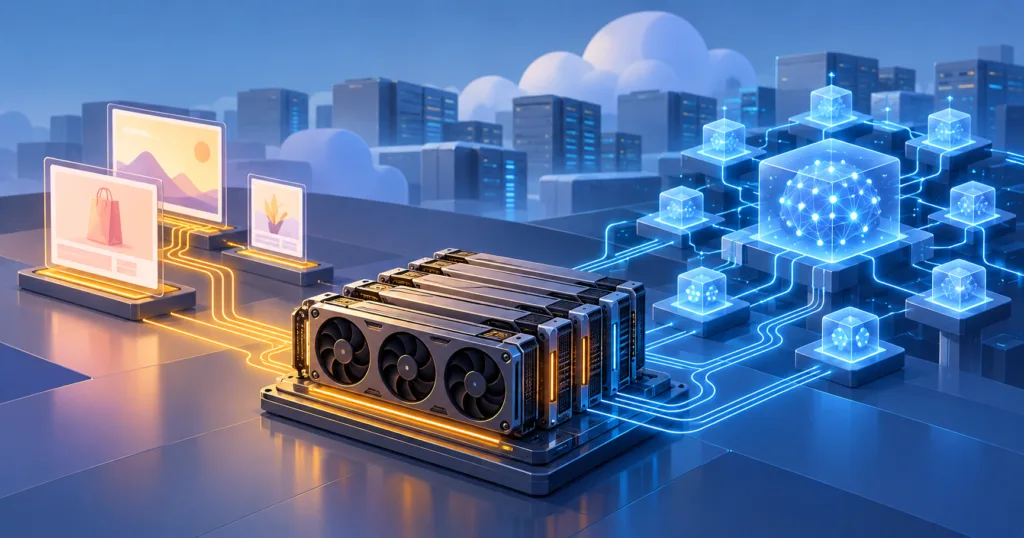
“If we buy GPUs and we deploy them into our ad tech, then that’s a relatively short-cycle investment,” Mitchell said. He said the GPUs improved targeting and click-through rates, producing higher revenue and profit relatively quickly.
Mitchell described Hunyuan investment as important to Tencent’s business over the longer term. He placed GPU investment and its returns within a broader approach of managing products across their full life cycles, rather than requiring every new service to meet near-term financial targets.
He cited earlier Tencent products that underwent lengthy incubation periods without returns before generating returns later, and said the company was comfortable taking a longer-term approach to foundation-model development.
Internal services take priority over cloud capacity
Mitchell said Tencent had prioritized internal AI services ahead of Tencent Cloud, limiting the GPU capacity available to external customers. Advertising and foundation-model development were among the internal uses he described.
He expected increasing supplies of China-designed GPUs to allow Tencent to make more capacity available through its cloud business. That outlook depended on additional hardware becoming available.
“As the supply of China design GPUs progressively ramps up, then we’ll be remedying that situation,” Mitchell said.
GPU procurement remains harder than CPU purchases
Chief financial officer Shek Hon Lo was reported as citing US sanctions and limited fabrication capacity in China as constraints on Tencent’s GPU supply. He said supplies of China-designed application-specific integrated circuits, or ASICs, were increasing from fabrication plants in China and neighboring countries.
Lo also pointed to Tencent’s longstanding relationships with Intel and AMD, describing the company as a major customer whose purchasing volumes had grown over many years. Tencent expected GPU procurement to remain more difficult than buying CPUs, even as accelerator supply improved.