

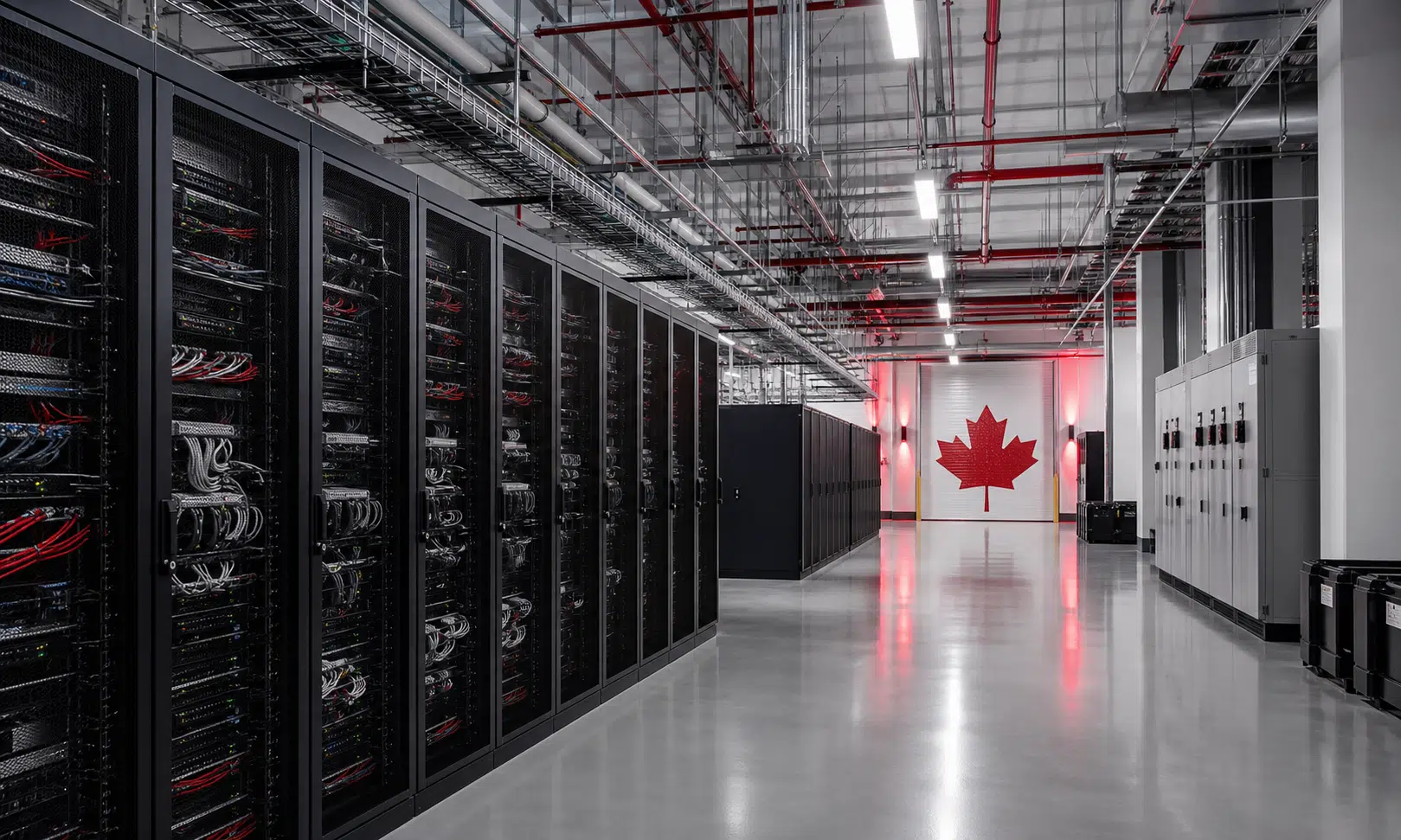

Artificial intelligence has moved well beyond the software demo stage. The models, apps, and enterprise tools getting attention all depend on a large physical base: data centres, servers, networking equipment, power access, cooling systems, and long supply chains that can deliver specialized hardware at scale.
That is where some Canadian-listed companies enter the conversation. They may not be consumer AI brands, and they may not own the models most people recognize, but they can still be tied to the spending cycle behind AI infrastructure.
Two names that have attracted investor attention are Celestica and Keel Infrastructure. They sit in different parts of the buildout. Celestica is closer to the hardware and supply chain side, while Keel is focused on power and data infrastructure for high-performance computing workloads.
Neither stock is a simple bet on AI. Both carry execution risk, valuation risk, and exposure to large customers or large development projects. But for investors studying the AI infrastructure theme, they are worth understanding for specific reasons.
Why AI Infrastructure Matters for Investors
AI demand is often discussed as if it begins and ends with software. In practice, large-scale AI depends on physical capacity. Training and running models requires compute clusters, high-speed networking, storage, reliable energy, and data centre space that can support heavy power and cooling needs.
That creates a wider investment map than just chip designers or software platforms. The AI supply chain can include contract manufacturers, server and storage suppliers, networking specialists, utilities, power developers, cooling companies, and real estate owners.
For investors, the key question is not simply whether AI demand grows. It is which companies can convert that demand into revenue, margins, and durable cash flow. A company can be exposed to an attractive trend and still disappoint if it overpays for capacity, relies too heavily on one customer, or cannot execute on complex projects.
That distinction matters with both Celestica and Keel. Each company has a plausible connection to AI infrastructure demand, but the nature of that exposure is different.
Celestica: Hardware, Supply Chains, and Data Centre Demand
Celestica is one of the more direct Canadian-listed ways to look at the hardware side of the AI infrastructure buildout. The company designs, manufactures, and supports hardware platforms for customers in areas such as cloud computing, communications, enterprise systems, aerospace, health technology, industrial equipment, and capital equipment.
Its Connectivity & Cloud Solutions segment is the part most closely tied to the current AI infrastructure story. This segment includes communications and enterprise end markets, including servers, storage, and networking-related work. Those are not glamorous categories, but they are essential to the systems that make AI workloads possible.
Celestica’s first-quarter 2026 results showed the scale of the current demand cycle. Revenue for the quarter was US$4.05 billion, up 53% from the prior-year period. Adjusted operating margin reached 8.0%, compared with 7.1% a year earlier. The Connectivity & Cloud Solutions segment was the major growth driver, with revenue of US$3.24 billion, up 76% year over year.
That growth was supported by demand from cloud and hyperscale customers, including networking and compute programs. In plain terms, Celestica is benefiting from customers that need more advanced systems to support large data centre deployments.
Why the Celestica Story Has Momentum
Celestica has several traits that make it interesting in the current market:
- It is already generating significant revenue from infrastructure-related demand.
- Its cloud and connectivity business has grown much faster than the company as a whole.
- Management has raised its 2026 outlook, which suggests near-term visibility has improved.
- The company has announced program wins tied to advanced networking hardware.
One notable area is high-speed networking. Celestica has discussed work related to advanced Ethernet switching, including programs designed for AI-scale networks. Management has also pointed to a co-packaged optics Ethernet switch program with a hyperscaler customer, with production expected to ramp in 2027. That timing and customer demand could strengthen Celestica’s role in next-generation data centre infrastructure, although investors should treat future production ramps as plans rather than guaranteed outcomes.
The attraction is clear: if AI infrastructure spending remains strong, companies that can supply the hardware backbone may continue to see demand. Celestica is not trying to own the AI model. It is trying to supply parts of the physical system that customers need to run those models.
What Buyers Should Watch With Celestica
The risk is that the stock already reflects a lot of optimism. Celestica shares have rallied sharply over the past year, and that kind of move can leave little room for disappointment. A strong business can still be a poor short-term purchase if expectations are too high.
Investors should pay close attention to customer concentration, margin sustainability, supply constraints, and capital spending needs. Hardware programs can be large, but they can also be demanding. If a major customer delays orders, shifts vendors, or changes its technology roadmap, results can move quickly.
It is also important to separate revenue growth from investment quality. Celestica’s recent results are strong, but buyers still need to ask what level of growth is already priced into the stock. A practical review should include valuation, backlog quality, expected free cash flow, and how much future growth depends on a small number of hyperscale customers.
Keel Infrastructure: Power and Data Capacity for AI Workloads
Keel Infrastructure sits on a different side of the AI infrastructure buildout. Instead of manufacturing servers or networking hardware, the company is focused on data centre and energy infrastructure for high-performance computing and AI workloads.
This matters because AI demand is not only a chip or server story. Power availability has become one of the biggest constraints for data centre growth. Large AI clusters need enormous electricity capacity, and developers that can secure grid interconnections, energy assets, and suitable sites may become more valuable if demand continues.
Keel describes itself as an infrastructure-first developer and owner of data centres and energy infrastructure. Its assets include power generation facilities, grid interconnection positions, and renewable hydroelectric capacity in regions that include Quebec and Washington state.
The company has reported a total development pipeline of roughly 2.2 gigawatts. Its investor materials break that figure into energized capacity, secured capacity, and expansion capacity. That distinction is important. Energized capacity is already being used on site, secured capacity is tied to executed utility agreements for future delivery, and expansion capacity is still under application, study, or evaluation.
For investors, that means the headline pipeline number should not be treated as fully available operating capacity. It is a development pipeline, not the same thing as revenue-producing infrastructure.
Why Keel Could Appeal to AI Infrastructure Investors
Keel’s appeal comes from a simple idea: AI data centres need power, and power is hard to secure quickly. If the company can convert more of its pipeline into operating infrastructure, it could benefit from demand for high-performance computing capacity.
The renewable angle may also matter. Large technology customers often care about the source and reliability of electricity, not just the amount. Hydroelectric capacity in Canada and the Pacific Northwest could fit that preference, depending on project economics, transmission access, and customer contracts.
Keel is still a more speculative story than Celestica. Celestica already has a large operating base and reported strong quarterly revenue. Keel’s thesis depends more heavily on development execution, financing, power market conditions, and the company’s ability to turn capacity rights and projects into durable commercial relationships.
That does not make Keel uninvestable. It does mean investors should evaluate it differently. The central question is not just whether AI power demand is rising. The central question is whether Keel can deliver projects on time, at acceptable cost, and with customers or contracts that justify the capital invested.
How to Compare the Two Stocks
Celestica and Keel are both tied to the AI infrastructure theme, but they are not interchangeable.
Celestica is closer to the immediate hardware spending cycle. It has visible revenue, established manufacturing operations, and direct exposure to cloud and hyperscale infrastructure programs. The trade-off is valuation sensitivity, customer concentration, and the cyclicality that can come with hardware demand.
Keel is closer to the power and site-capacity constraint. Its upside may depend on the scarcity value of energy-connected infrastructure for AI and high-performance computing. The trade-off is development risk, financing risk, and uncertainty around how quickly pipeline capacity can become productive.
A buyer-aware comparison might look like this:
- Investors wanting current operating momentum may find Celestica easier to analyze because it already reports large revenue and segment results.
- Investors looking for earlier-stage infrastructure exposure may study Keel, but should demand a higher margin of safety.
- Investors worried about AI hype should avoid treating either stock as a guaranteed beneficiary of the trend.
- Investors focused on risk control should watch debt, cash flow, customer concentration, capital spending, and valuation before buying.
The broader lesson is that AI infrastructure investing requires more than spotting companies with AI in the narrative. The best candidates should show a clear connection between customer demand and financial performance.
Bottom Line
Celestica and Keel Infrastructure give investors two different views of the same larger buildout. Celestica is tied to the hardware, networking, and supply chain requirements of cloud and AI data centres. Keel is tied to the energy and data infrastructure needed to support high-performance computing workloads.
Both businesses could benefit if AI infrastructure spending continues, but neither should be treated as a low-risk shortcut into the AI boom. Celestica has stronger current operating evidence, while Keel offers a more development-driven infrastructure thesis.
For investors, the practical approach is to start with the business model rather than the buzzword. Look at what each company actually sells, who its customers are, how much of the growth is already priced in, and what could go wrong if AI infrastructure demand slows or shifts. That is the difference between chasing a theme and making a disciplined investment decision.