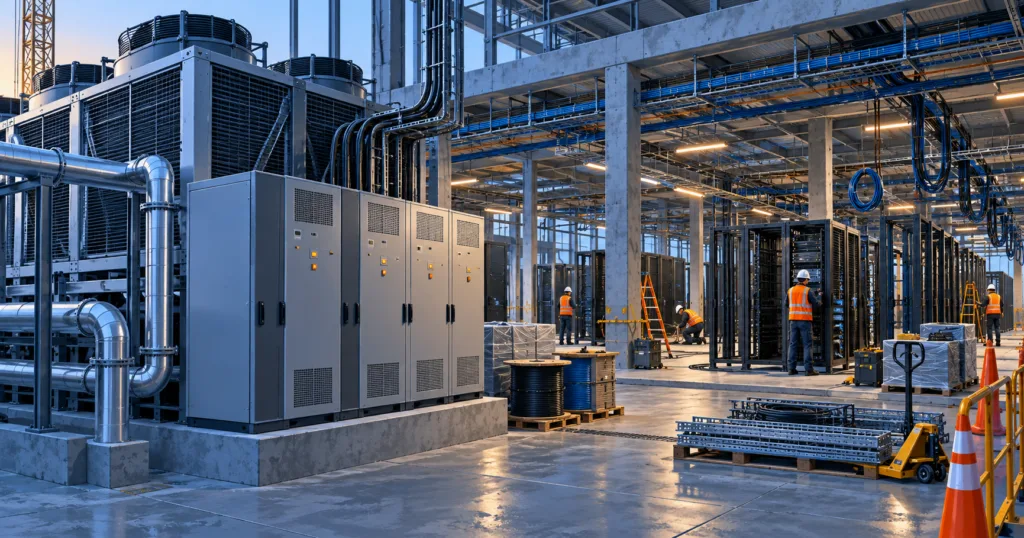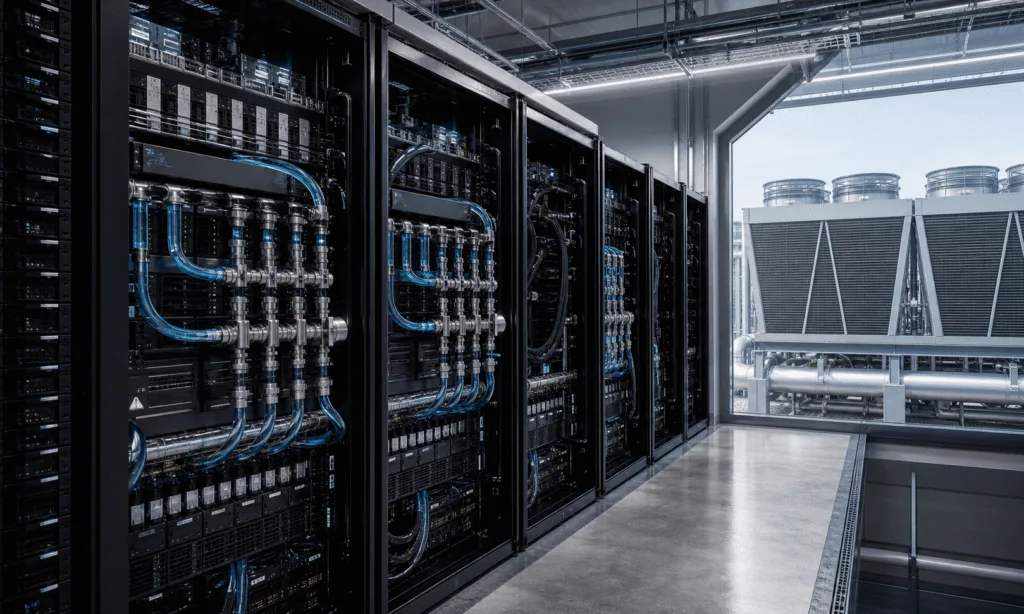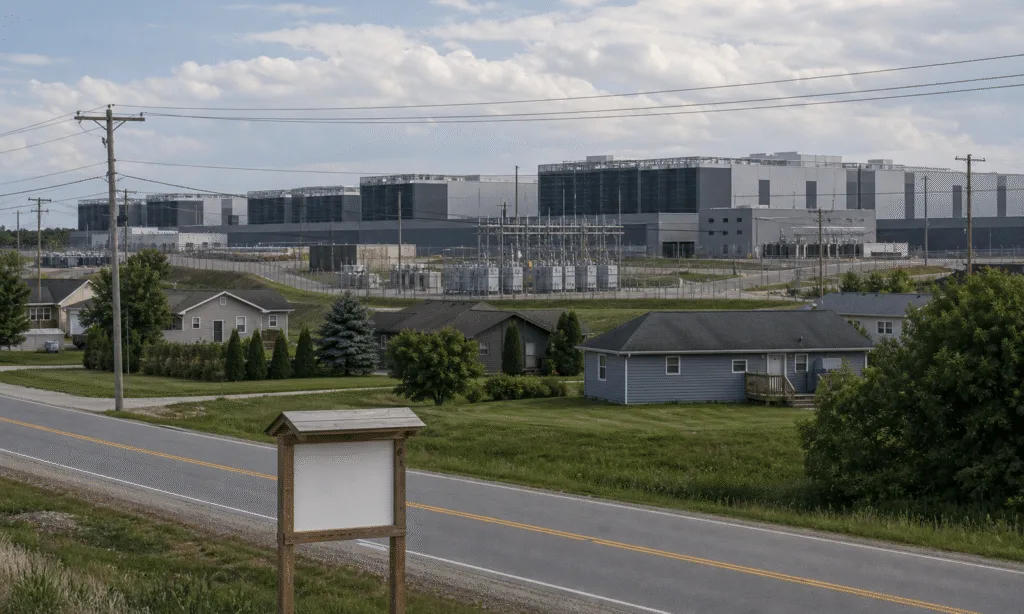
Crusoe ordered 13 aircraft-derived gas turbines for AI data centers, equipment supplier ProEnergy said, as developers face years-long waits for grid connections and power-generation equipment. ProEnergy’s April 16, 2026, announcement described the units as intended for upcoming hyperscale projects.
Rystad Energy analyst Audun Martinsen said speed was driving interest in converted jet engines. “It’s all about getting power as fast as possible,” he said. With jet-powered units, “they can have a data center running in 24 months,” he estimated.
Grid connections can take years
The International Energy Agency’s 2025 Energy and AI report listed data center connection queues of up to seven years in Northern Virginia. That regional figure describes grid access; Martinsen’s estimate concerns getting a facility running with jet-powered generation. Neither establishes a delivery schedule for an individual project.
Generating electricity on site also faces equipment constraints. In its 2026 Key Questions on Energy and AI report, the IEA cautioned that a gas-turbine supply shortage means on-site generation does not necessarily offer a faster route to market at scale.
The agency estimated that reliable on-site gas power for critical, variable data center loads requires generating capacity 30% to 70% above demand. That requirement increases the amount of generating equipment a developer must secure.
Aircraft engines enter data center power plans
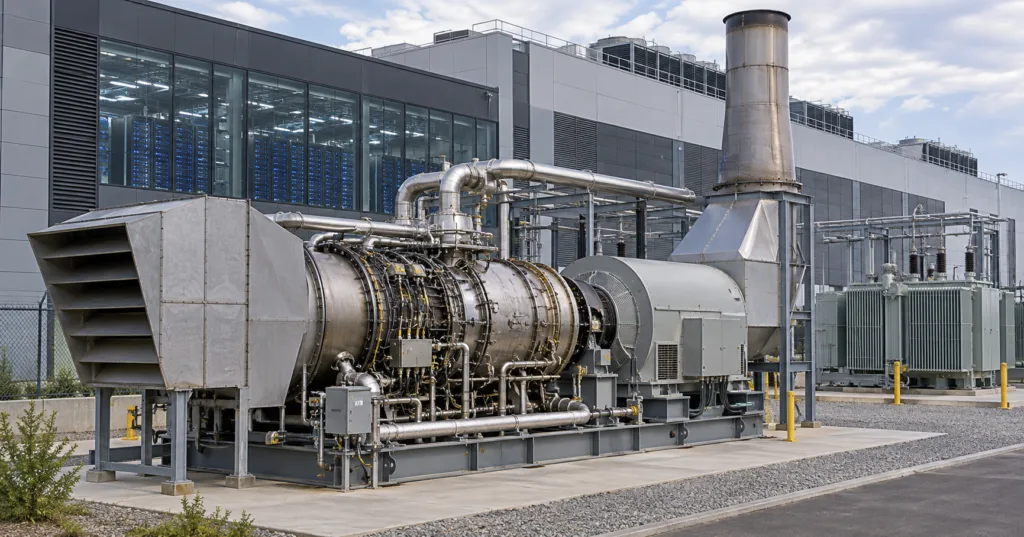
ProEnergy said Crusoe’s order comprises 13 PE6000 generator sets, each rated at 50 megawatts. John Adams, Crusoe’s senior vice president for power infrastructure, described the acquisition as a way to provide energy capacity rapidly for its hyperscale projects. The announcement did not identify which campuses would receive the equipment.
ProEnergy described the PE6000’s aircraft origins when it introduced the turbine in 2023. The company said each unit starts with an overhauled CF6-80C2 engine core, a type used in aircraft including the Boeing 747.
In Mississippi, an air construction permit issued March 11, 2026, to xAI affiliate MZX Tech lists eight ProEnergy turbines rated at 50 megawatts each at its Southaven site. A July state order describes the permitted stationary turbines as the planned permanent power source for MZX’s computing facilities. The Southern Environmental Law Center identified the plant as intended to supply xAI’s Colossus 2 data center in Memphis.
The permit also shows specific emissions differences. It sets a carbon-monoxide concentration ceiling of 4 parts per million by volume for the ProEnergy units, compared with 2 for the site’s Solar turbines, measured on the same dry basis at 15% oxygen. Those are permitted limits, rather than measurements of actual pollution.
Crusoe’s turbine procurement has also changed. Boom Supersonic announced in December 2025 that Crusoe had ordered 29 Superpower natural-gas turbines, alongside a turbine backlog exceeding $1.25 billion. Boom chief executive Blake Scholl said in September 2026 that the companies were no longer proceeding with their turbine launch partnership.
A Crusoe spokesperson said turbines remained part of the company’s energy plans after the Boom arrangement ended. Crusoe described its initial Abilene campus serving Oracle and OpenAI as grid-powered, with gas turbines used for backup.