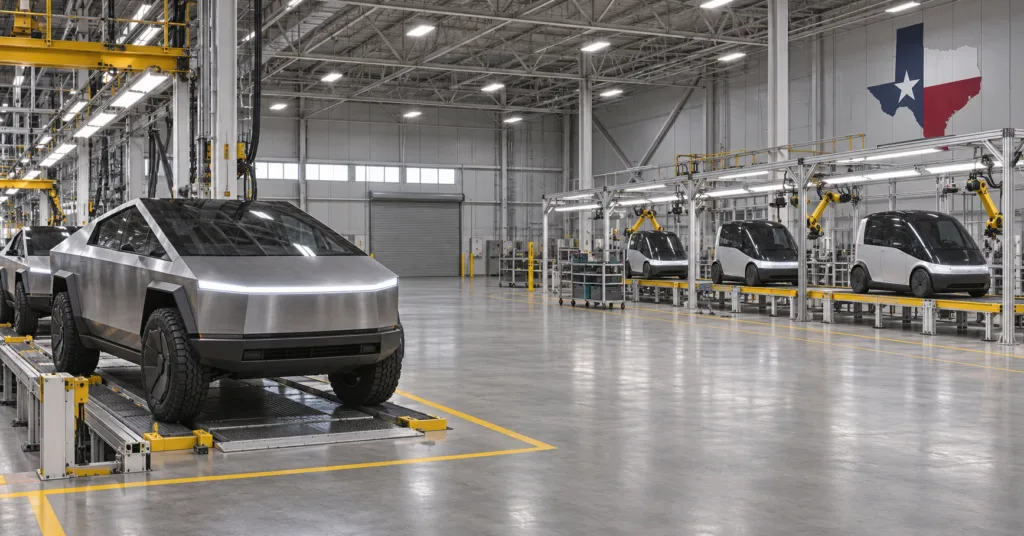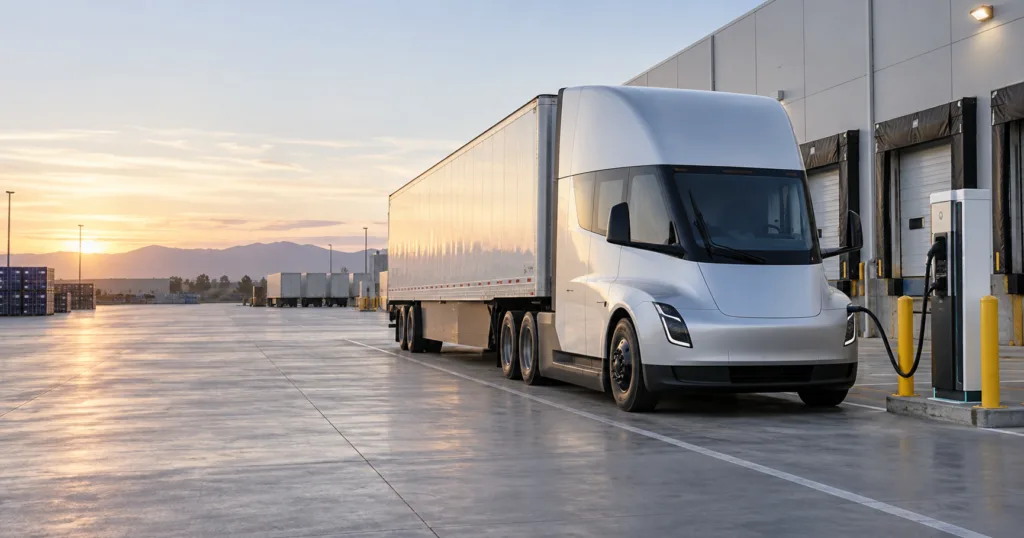
Tesla says it has begun volume production of the Tesla Semi at a facility beside Gigafactory Nevada and started delivering trucks built there to customers. Those production and delivery claims have not been independently verified. For fleet operators, the announcement raises a practical question: whether Tesla’s electric truck can fit their routes, charging schedules and budgets.
Tesla’s stated ambition for the Sparks factory is eventual output of 50,000 trucks annually, roughly 1,000 a week. That remains an unverified capacity target. The company has named PepsiCo, US Foods, DHL, WattEV, ABF Freight, Einride, IMC Logistics and OK Produce among its customers.
Two range options, with purchase costs still essential
Tesla describes two Semi configurations: Standard Range and Long Range. Its range claims use an 82,000-pound gross combination weight, covering the truck, trailer and cargo together. These mileage figures have not been independently verified.
| Version | Tesla’s claimed range at 82,000 pounds combined weight |
|---|---|
| Standard Range | 325 miles |
| Long Range | 500 miles |
The distinction matters for fleets deciding how much driving they need between charging stops. If those ranges hold up under an operator’s working conditions, the Standard Range model could cover shorter assignments, while the Long Range version would offer more room for longer routes. Neither figure should be treated as a guaranteed result for every job.
A purchase decision also needs a firm vehicle quote and the cost of installing suitable charging equipment. Until those numbers are established, a promise of lower running costs is only part of the business case. The useful comparison is what a truck would cost to buy and operate on the routes it would actually serve.
Tesla’s hardware changes target efficiency and maintenance
Tesla describes substantial changes to the Semi’s battery, drivetrain, steering and temperature control. These specifications and claimed improvements have not been independently verified, so they remain manufacturer claims rather than demonstrated fleet benefits.
The company describes a move from the 2170 battery cells used in earlier vehicles to its 4680 cells, and cites an 822-kWh battery pack. It also claims fully loaded energy consumption of about 1,700 watt-hours per mile, compared with its original 2,000-Wh-per-mile target. If achieved, better efficiency could reduce the battery capacity and weight needed to cover a given distance.
Tesla also describes a redesigned drive system using a steel-caged rotor and bar-wound stator. Its lubrication arrangement would eliminate oil from the hub and give the motor and gearbox a shared oil supply. The company’s claimed oil life of more than 250,000 miles remains unverified; operators would still need confirmed maintenance requirements for their service planning.
For steering, Tesla describes a redundant electric system replacing hydraulics, with a tighter wheel cut intended to improve maneuverability. That could be useful around loading docks and crowded yards, although the claimed handling improvements would need to hold up in everyday work.
The company also describes an indirect thermal-management system using pumps, compressors and heat exchangers to manage temperatures across the cab, battery and drive unit. Tesla says this arrangement would reduce refrigerant plumbing and move heat where needed. The practical efficiency and maintenance benefits remain unverified.
Charging infrastructure will shape where the Semi fits
Tesla is developing Megacharger stations with a claimed maximum output of 1.2 megawatts per stall. At its factory event, the company showed a truck charging from 3% to 60% in about 30 minutes. That demonstration offers a useful indication of the charging approach, but fleets would need to establish whether it fits their own turnaround schedules.
The company’s charging roadmap calls for more than 30 Semi locations and over 200 megawatt-capable charging posts by the end of 2026. Those are planned additions, and an operator’s route assessment needs to account for which locations are available when its trucks enter service.
Tesla also expects fleet operators to install overnight charging at their facilities. Depot access therefore becomes a central part of evaluating electric truck charging: the vehicle and the infrastructure have to work together.
The operating-cost pitch needs to survive daily service
Tesla’s fleet offering includes remote diagnostics, mobile service, over-the-air updates and driver profiles that can move between trucks. The company claims more than 98% uptime across its Semi fleet. Buyers would need to assess how that company-reported figure translates to their workloads and service arrangements.
There are sizable customer commitments behind the commercial push. Einride announced a 500-truck deal, while IMC Logistics outlined plans to buy 50 Semis for California drayage operations. Those commitments indicate interest; they do not establish the economics for every operator.
Tesla argues that reduced maintenance and more predictable electricity costs can make the Semi cheaper to operate than diesel trucks. For prospective buyers, the test is specific: a confirmed purchase price, charging that fits the schedule, and enough dependable working time to make the investment worthwhile.