

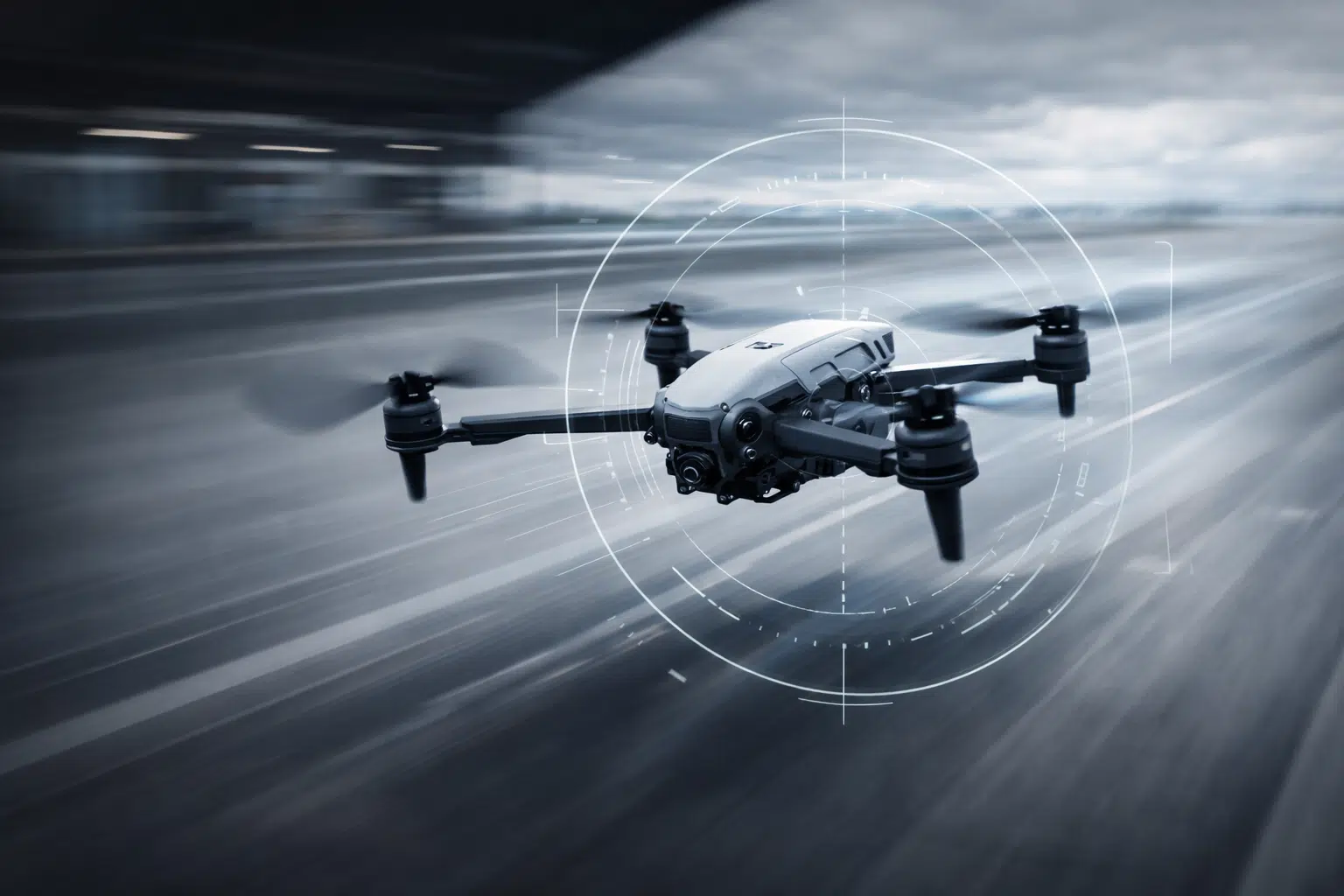

A Ukrainian interceptor drone designed to chase down other aerial threats has reportedly hit 400 km/h (248.5 mph) in testing, according to Mykhailo Fedorov, Ukraine’s minister of digital transformation.
In a social media post on Tuesday, Fedorov said the speed was achieved by an interceptor drone powered by a motor from Motor-G, which he described as part of Brave1, Ukraine’s defense innovation platform. The claim has not been independently verified with published telemetry, but it underscores the pace at which Ukraine is pushing low-cost air-defense tech forward.
Faster than an F1 speed trap — and in the same conversation as high-speed rail tests
At 248.5 mph, the drone’s reported top speed would exceed the fastest recorded Formula 1 speed-trap figure often cited for Valtteri Bottas in 2016 (231.46 mph), though “records” in motorsport depend on the metric and session.
It also puts the drone in the broader conversation of extreme speeds typically associated with transportation systems rather than propeller-driven aircraft. For context, China’s CR450 high-speed train program has been reported to reach roughly 281 mph (453 km/h) in testing, while Shanghai’s Maglev is commercially operated at 186 mph (300 km/h).
Why a prop-driven interceptor matters
What makes the claim notable isn’t just the number — it’s the concept. These interceptors are meant to be cheap and produced in volume, built to destroy enemy drones without burning through expensive missiles. Reporting around Ukraine’s interceptor ecosystem has frequently placed pricing in the low-thousands of dollars, often up to around $6,000, depending on the configuration.
Fedorov’s post also highlighted manufacturing progress, with a video saying domestic drone-motor production once “seemed impossible” and claiming Motor-G is now producing 100,000+ motors per month — another figure that hasn’t been independently audited but signals Ukraine’s push to scale local supply chains.
The Shahed problem driving the sprint for speed
Speed has become a priority as Russia continues to use — and adapt — the Shahed family of long-range attack drones. Shahed-136-type loitering munitions are commonly cited at around ~115 mph, and Ukraine has had to develop affordable ways to counter large waves launched to strain air defenses.
Meanwhile, reporting has also pointed to experimentation with faster variants, including jet-powered designs that some accounts suggest could reach around ~230 mph. Even if those figures vary by model and source, the direction is clear: faster threats demand faster interceptors.
A fast-moving battlefield tech race
Ukraine has repeatedly framed its domestic drones and air-defense innovations as “combat-tested,” and officials have increasingly talked about ambitions to export Ukrainian defense technology in the future.
If the 400 km/h interceptor performance holds up beyond a headline claim, it would be another sign that the drone war is rapidly compressing the timeline from prototype to battlefield capability — and that relatively simple, mass-producible systems are being pushed to extreme performance levels at surprising speed.