


Nvidia CEO Jensen Huang says the company’s position in China’s AI accelerator market has effectively disappeared, arguing that U.S. export controls have pushed one of the world’s largest AI hardware markets away from American suppliers.
“In China, we have now dropped to zero,” Huang said in an interview with the Special Competitive Studies Project, a bipartisan group focused on long-term U.S. competitiveness. He argued that conceding a market the size of China “probably does not make a lot of strategic sense” and said the policy has “already largely backfired.”
The comment is striking because Nvidia was dominant in China’s AI accelerator market only a few years ago. Huang’s framing appears to refer to Nvidia’s direct ability to sell AI accelerators into China under current restrictions, rather than every possible route by which Nvidia hardware might still exist inside the country.
Why Nvidia’s China Position Matters
For buyers, cloud providers, and AI infrastructure planners, the issue is bigger than one company’s regional sales number. Nvidia’s GPUs and CUDA software ecosystem have shaped how many AI workloads are built, trained, optimized, and deployed. Losing direct access to China means Nvidia loses not only revenue, but also influence over a major developer and infrastructure market.
Huang’s argument is that American companies operating in China help extend the reach of the U.S. AI technology stack. If those companies are blocked or squeezed out, Chinese developers have more reason to standardize around local hardware and software instead.
That shift is already visible. Chinese companies including Huawei, Cambricon, Moore Threads, and MetaX are pushing their own accelerator platforms. These alternatives still face challenges, especially around software maturity, compatibility, and manufacturing constraints, but the market pressure is clear: customers that cannot reliably buy Nvidia hardware have to build around something else.

NVIDIA RTX 6000 Ada Workstation GPU
A professional RTX workstation GPU fits teams that need local CUDA-compatible development, visualization, or model experimentation before moving workloads to larger infrastructure.
As an Amazon Associate I earn from qualifying purchases.
Export Controls May Be Changing The Competitive Map
Earlier analyst estimates from Bernstein suggested Nvidia’s share of China’s AI GPU market could fall from 66% in 2024 to around 8% in the coming years. Huang’s latest statement is more severe, though it should be read as a claim about Nvidia’s current direct market access rather than a full audit of all installed or diverted hardware.
The policy goal behind export controls is to limit China’s access to the most advanced AI chips. Huang’s counterargument is that the same policy may accelerate China’s self-sufficiency by handing domestic suppliers a captive market. Once large customers redesign systems around local chips, winning those customers back may be much harder, even if restrictions change later.
China also remains a serious AI competitor without direct access to Nvidia’s newest accelerators. Huang pointed to the country’s talent base, lower-cost energy in some regions, and large pool of science, math, and AI researchers as advantages that can keep frontier AI development moving.
The CUDA Moat Is Still Central
Hardware is only part of the contest. Nvidia’s strongest advantage has long been its software ecosystem, especially CUDA. That software layer is difficult for rivals to match because it is tied to years of developer habits, optimized libraries, tooling, and production AI workflows.
For organizations comparing AI infrastructure options, that matters. A domestic accelerator may be available and politically safer for a Chinese buyer, but the cost of moving models, training pipelines, and engineering teams away from Nvidia-compatible tools can be substantial.
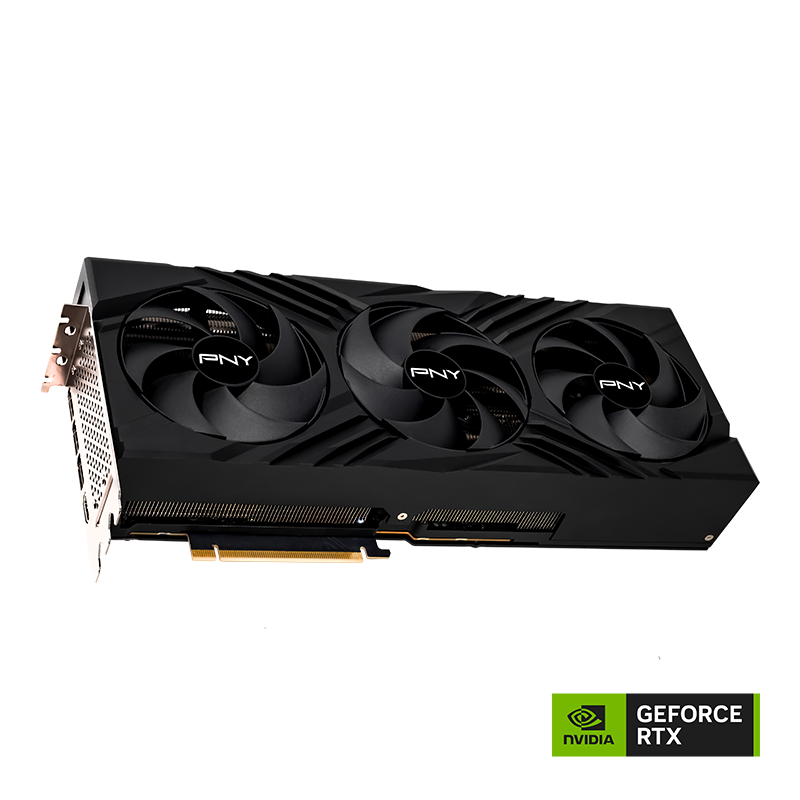
PNY GeForce RTX 4090 24GB GPU
A high-end GeForce RTX card can be useful for local model testing and CUDA development where workstation certification is not the main requirement.
As an Amazon Associate I earn from qualifying purchases.
Huang’s broader point is that U.S. leadership in AI depends on adoption, not just restriction. If American platforms are absent from a major market, competing ecosystems get room to mature. That could make export controls strategically counterproductive if the long-term result is a stronger non-U.S. AI hardware and software stack.
For now, the practical takeaway is simple: Nvidia’s China business is no longer just a sales story. It has become a test case for how trade policy, AI infrastructure buying decisions, and national technology strategy can reshape the accelerator market faster than product roadmaps alone.