


Intel’s Arc Pro B70 32GB has started showing up in gaming tests, giving PC buyers an unusual look at what a larger Battlemage gaming card might have delivered. The card was not built primarily for gaming, but its hardware makes it interesting: it uses Intel’s bigger Battlemage silicon, carries a large 32GB frame buffer, and now has driver support that allows it to run modern games more cleanly.
The short version is simple. In the reported tests, Arc Pro B70 appears meaningfully faster than Arc B580, and in some workloads it is close enough to NVIDIA’s RTX 5060 Ti 16GB to make the comparison worth discussing. At the same time, this is still a professional card with a professional price, so the results are more useful as a window into Intel’s GPU roadmap than as a straightforward buying recommendation.
Why Arc Pro B70 Matters To Gamers
Intel’s Arc Pro B70 sits in an awkward but interesting place. It is part of the Arc Pro lineup rather than the consumer Arc gaming family, yet it is based on the larger Battlemage GPU that many enthusiasts had hoped would eventually appear in a gaming-focused product.
That is why the card attracts attention beyond workstation users. Arc B580 gave Intel a credible midrange gaming product, especially for buyers watching price-to-performance closely. A larger Battlemage gaming card, often discussed around the idea of an Arc B770, could have shown how far Intel could stretch that architecture in the desktop GPU market.
Intel instead aimed the larger configuration at professional and AI-adjacent workloads. The Arc Pro B70’s 32GB of GDDR6 memory is the clearest sign of that target market. A memory capacity that large is useful for workstation tasks, local AI testing, content creation, and datasets that can push well beyond typical gaming VRAM needs. For most gamers, though, 32GB is far beyond what makes sense at this tier.
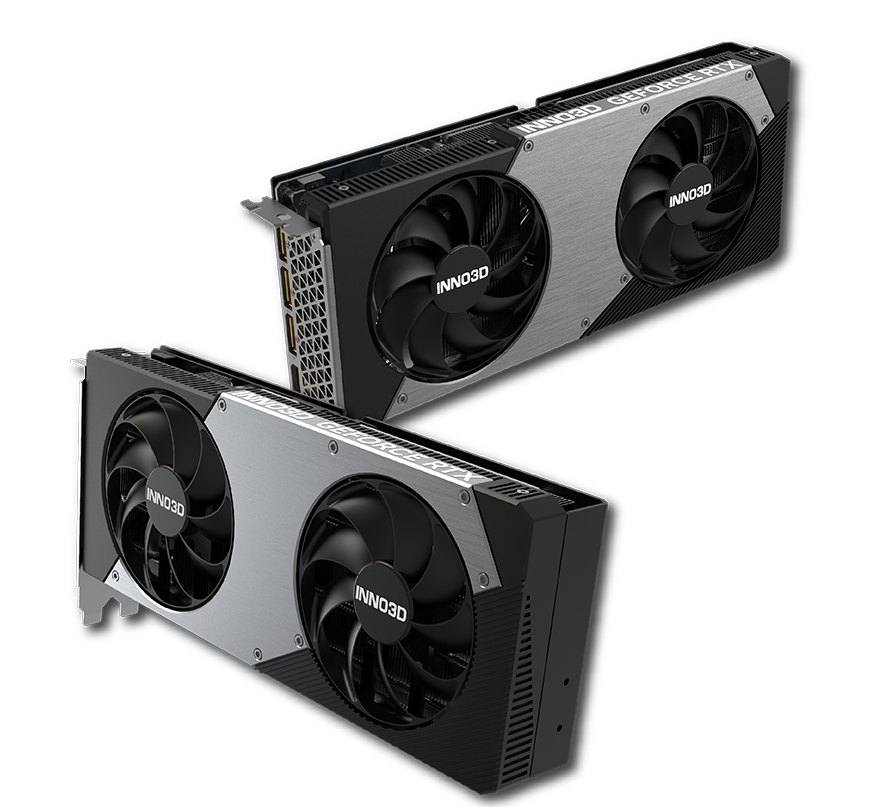
GeForce RTX 5060 Ti 16GB
Use RTX 5060 Ti 16GB listings as the main consumer-GPU reference when judging whether Arc Pro B70’s reported gaming numbers matter for real buyers.
The card’s gaming tests are therefore best read as a proxy for what a trimmed, gamer-tuned version could have looked like. They do not automatically make Arc Pro B70 a sensible gaming purchase, but they do suggest Intel had more Battlemage performance available than the consumer lineup ultimately showed.
Reported Gaming Performance Against Arc B580 And RTX 5060 Ti
The reported benchmarks compare Arc Pro B70 with Intel’s Arc B580 and NVIDIA’s RTX 5060 Ti 16GB across a mix of rasterized and ray-traced games. Because these numbers come from a specific test setup and have not been independently verified here, they should be treated as directional rather than final buyer guidance.
In Cyberpunk 2077 at 1440p raster settings, the reported result puts Arc Pro B70 at 90.27 FPS, compared with 79.06 FPS for the RTX 5060 Ti 16GB and 66.02 FPS for Arc B580. On paper, that would place the Arc Pro B70 well ahead of Arc B580 in that test and slightly ahead of the 5060 Ti. Again, the exact figures should be handled cautiously unless reproduced across additional reviews.
The same test set reportedly includes games such as Black Myth: Wukong, Marvel Rivals, Monster Hunter Wilds, and Assassin’s Creed Shadows. In those titles, Arc Pro B70 is described as substantially faster than Arc B580, while the RTX 5060 Ti 16GB often holds the stronger overall position. That pattern is more important than any single frame-rate number: the larger Battlemage GPU seems to scale well over Arc B580, but NVIDIA remains competitive depending on the game and rendering path.
For buyers, that makes the Arc Pro B70 a complicated product. If you are only looking for gaming performance, a professional GPU priced around workstation needs is difficult to justify. But if you wanted evidence that a larger Arc gaming card could have competed in the upper-midrange segment, these results make that argument easier to understand.
Ray Tracing Results Look More Competitive In Select Games
Ray tracing is where the Arc Pro B70 becomes more interesting. The reported RT test list includes F1 25, Doom: The Dark Ages, Cyberpunk 2077, Monster Hunter Wilds, and Assassin’s Creed Shadows. Those specific benchmark claims have not been independently verified here, so they should be viewed as reported results rather than confirmed standings.
Within that reported set, Arc Pro B70 is said to perform especially well in the first few ray-traced tests, including cases where it edges past the RTX 5060 Ti 16GB. Other games reportedly swing back toward NVIDIA. That kind of split result is believable for modern GPUs because ray tracing performance can vary sharply by engine, driver maturity, upscaling path, and how heavily a game leans on vendor-specific optimization.
Compared with Arc B580, the reported uplift is the clearer story. The larger GPU appears to deliver a sizable step up in ray-traced workloads, which is exactly what would be expected from more execution resources and more ray tracing hardware. The precise percentage gains should not be treated as confirmed across all games, but the overall direction is consistent: Arc Pro B70 looks like a much stronger Battlemage implementation than Arc B580.

Intel Arc B580 12GB
Arc B580 is the practical Intel gaming card readers can actually compare against Arc Pro B70’s reported results before paying workstation-card money.
That matters because ray tracing has become one of the clearest separators in the midrange GPU market. Raster performance still drives most buying decisions, but buyers spending several hundred dollars increasingly expect a card to handle RT effects without falling apart. A consumer Big Battlemage card with sensible pricing could have been a more serious alternative than Intel’s current two-card gaming stack suggests.
The 32GB VRAM Advantage Is Not Mainly For Games
Arc Pro B70’s 32GB of memory is eye-catching, but it should not be overread for gaming. Very few games need anywhere close to that amount of VRAM in practical settings, even at high resolutions. For games, memory bandwidth, driver behavior, shader performance, cache design, and upscaling quality often matter more than simply having a huge frame buffer.
The larger memory pool makes far more sense in professional and AI workloads. The reported review also discusses AI-oriented tests, including MLPerf Client and Windows ML runs where Arc Pro B70 is described as doing well in token throughput and time-to-first-token measurements. Those AI benchmark claims have not been independently verified here, so they are better framed as part of the card’s intended workstation story rather than as settled proof of leadership.
Intel’s broader software support also matters here. Arc Pro buyers are not only buying raw silicon; they are buying into Intel’s driver stack, pro application support, and compute tooling. That is a different decision from buying a gaming GPU for a Steam library.
This is where the card’s buyer profile becomes clearer. A creator, developer, or small AI workstation user may see real value in a 32GB card if the software stack fits their workflow. A gamer probably should not pay workstation pricing just to get extra VRAM that most games will leave untouched.
What A Gaming-Focused Big Battlemage Could Have Offered
The most frustrating part of the Arc Pro B70 story is not the card itself. It is the gap it exposes in Intel’s consumer GPU lineup. Arc B580 proved Intel could build a credible value-oriented gaming card. Arc Pro B70 suggests there was room above it for a larger product, but that product did not arrive as a normal gaming SKU.
It is reasonable to say that a 16GB gaming variant based on similar larger Battlemage hardware could have been compelling if priced aggressively. The reported performance points toward a card that may have challenged the RTX 5060 Ti 16GB in some scenarios and beaten Arc B580 by a wide margin. But that remains a hypothetical product, not a confirmed retail GPU.
Price would have decided everything. Arc Pro B70’s workstation positioning and 32GB memory push it into a very different bracket from normal gaming cards. A gaming model with less VRAM, tuned drivers, and a lower street price would have been judged against midrange GeForce and Radeon options. Without that version on shelves, buyers are left comparing a professional Intel card against gaming products it was never really meant to replace.
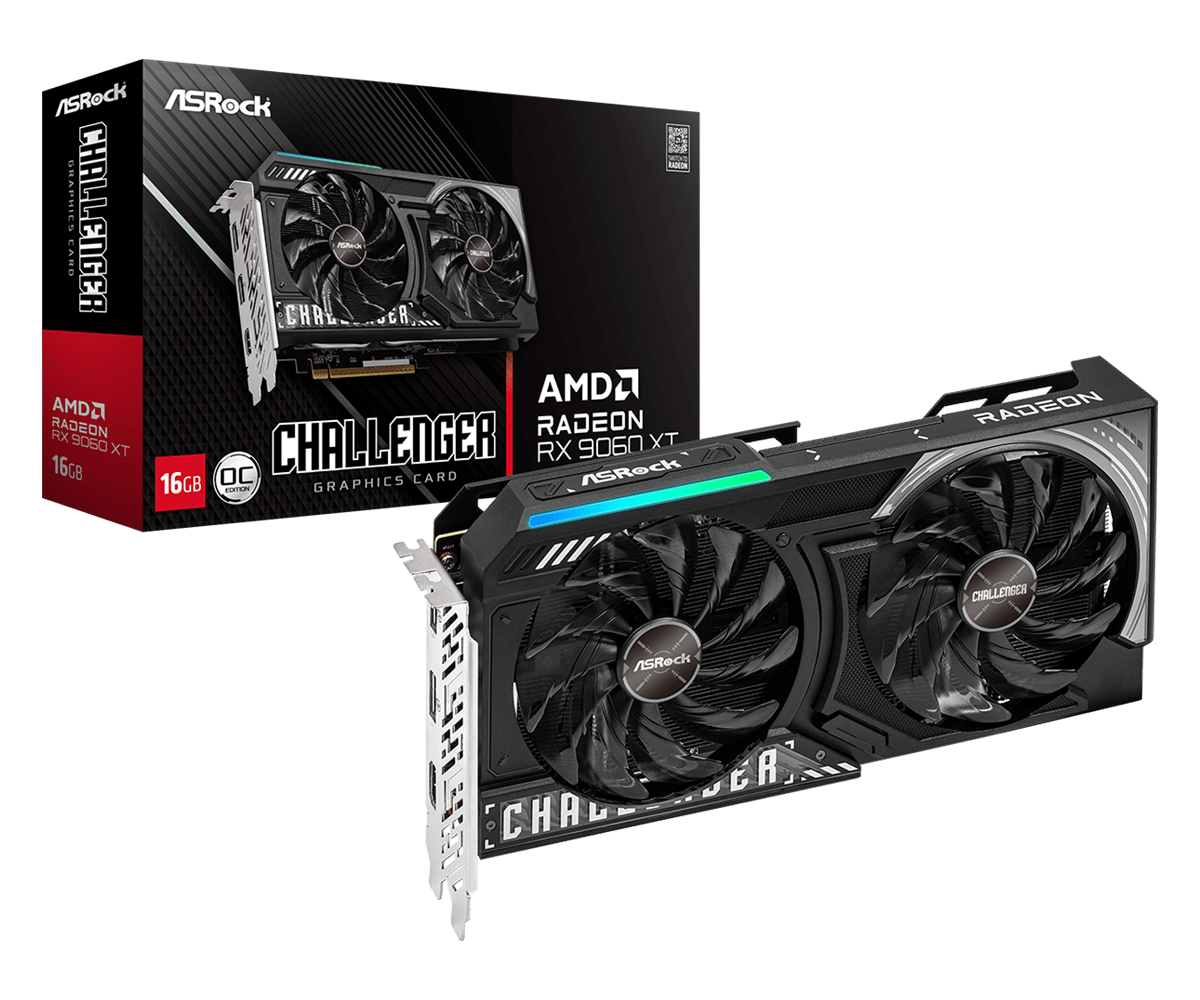
Radeon RX 9060 XT 16GB
A Radeon RX 9060 XT 16GB gives readers another consumer GPU to check when the Arc Pro B70’s workstation pricing does not make sense for a gaming build.
There is also a strategic question around Intel’s discrete GPU future. The company continues to develop graphics technology across integrated GPUs, professional cards, and AI-focused products, but its consumer desktop gaming roadmap has looked less aggressive than many Arc followers hoped. If larger discrete chips are directed mainly toward Pro and AI markets, gamers may see Intel’s strongest graphics silicon only indirectly.
Buyer Takeaway
Arc Pro B70 is not suddenly the obvious graphics card for gamers. It is expensive for that role, its 32GB memory configuration is aimed well beyond gaming, and its value depends heavily on professional software support. Anyone building a gaming PC should still compare it against regular consumer GPUs by real street price, game performance, power behavior, driver stability, and feature support.
What the card does provide is a useful performance signal. The reported gaming tests suggest Intel’s larger Battlemage GPU has enough muscle to make a consumer version genuinely interesting. In rasterized games, it appears well ahead of Arc B580 in several cases. In ray tracing, it seems capable of trading results with the RTX 5060 Ti 16GB depending on the title. Those are promising signs, even if the exact benchmark figures need more independent confirmation.
For workstation buyers who also game, Arc Pro B70 may be worth watching if the software fit is right. For pure gamers, it is better understood as a missed glimpse of what Intel could have launched: a more powerful Battlemage gaming card with sane VRAM, sharper pricing, and a clearer fight against the upper-midrange GPU market.