


Andrej Karpathy has joined Anthropic, giving the Claude maker one of the most recognizable technical names in artificial intelligence at a moment when frontier AI companies are competing for talent, enterprise customers, and developer mindshare.
Karpathy, a founding member of OpenAI and a former director of AI at Tesla, announced the move on Tuesday, May 19, 2026. Anthropic said he is joining its pretraining group, the part of the company focused on the large-scale model training work behind Claude.
For Anthropic, the hire is more than a resume win. Karpathy is one of the rare AI researchers with credibility across research labs, developer education, autonomous driving, and the wider software community. His public writing and lectures have shaped how many engineers think about neural networks, large language models, and the changing role of programmers in an AI-assisted workflow.
For buyers comparing Claude with OpenAI, Google, Meta, and other AI systems, the move is not a reason to change vendors overnight. But it is a useful signal. Anthropic is continuing to invest in the model layer, not only in chat interfaces, coding tools, and enterprise packaging. That matters because model quality, reliability, context handling, coding performance, safety behavior, and long-term product direction all depend on the underlying research engine.
The Short Verdict for AI Buyers
Karpathy joining Anthropic should be treated as a strategic signal, not a product guarantee.
If your company is already evaluating Claude, the hire strengthens the case that Anthropic is serious about long-term frontier model development. It also adds weight to Claude’s position among developers and technical teams, especially those using AI for coding, research, documentation, and internal workflow automation.
If your company is locked into OpenAI, Google, or another provider, this does not automatically mean Claude is now the better choice. The practical question remains the same: which model performs best on your own tasks, with your data, risk tolerance, budget, and integration needs?
For most teams, the right takeaway is to keep Claude in the evaluation set, especially for software engineering, knowledge work, document-heavy workflows, and research-heavy use cases. Karpathy’s role in pretraining suggests Anthropic wants to improve the foundation of Claude itself, not merely compete through interface design or sales execution.
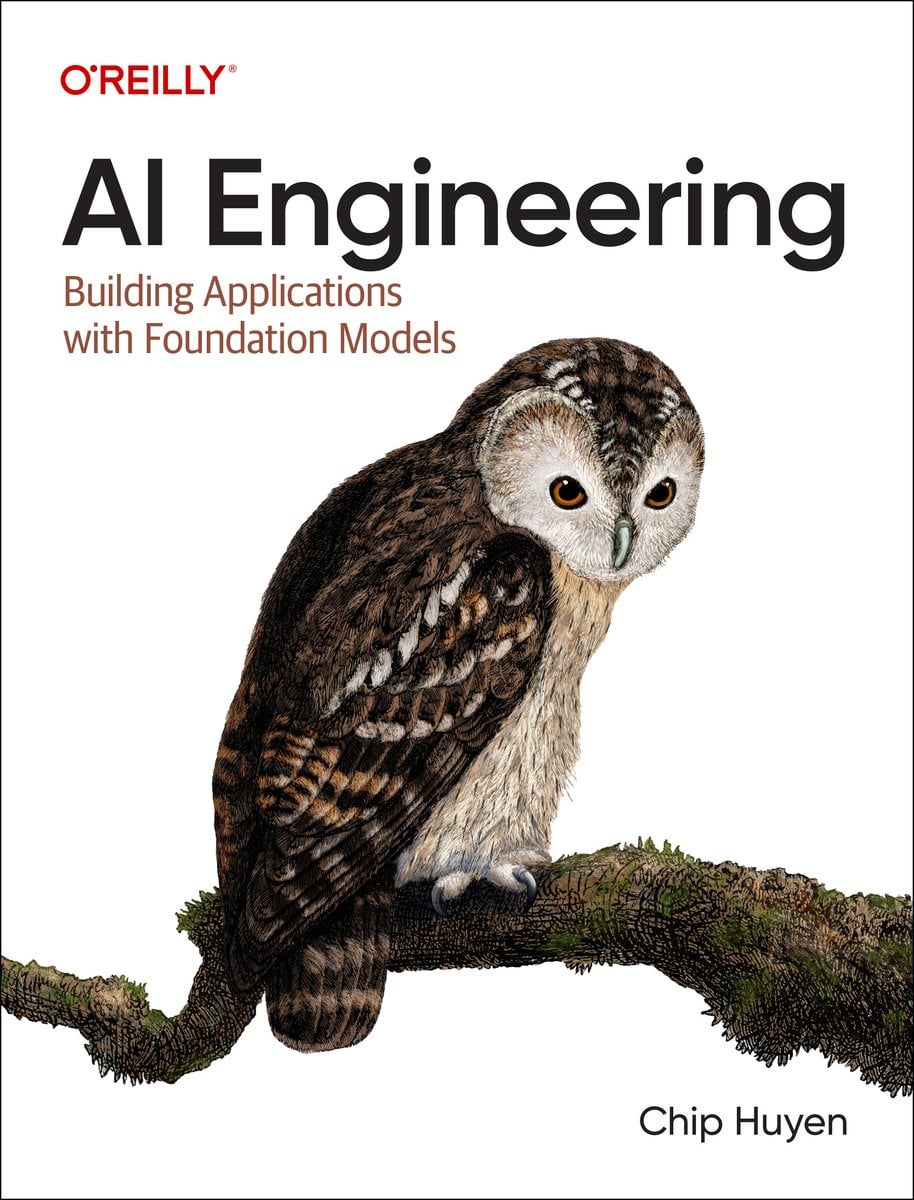
AI Engineering by Chip Huyen
Chip Huyen’s AI Engineering is a practical companion for teams moving from model comparison to real application design. It covers evaluation, RAG, agents, deployment constraints, and the tradeoffs that matter when Claude, OpenAI, or other foundation models become part of production workflows.
As an Amazon Associate I earn from qualifying purchases.
What Karpathy Is Expected to Work On at Anthropic
Anthropic has described Karpathy’s role as part of its pretraining team. In large language model development, pretraining is the expensive and technically demanding stage where a model learns broad patterns from large-scale data before later tuning, alignment, evaluation, and product-specific work shape how it behaves for users.
That does not mean Karpathy will personally determine the next Claude model. Frontier AI labs are large, complex organizations, and modern model development depends on teams working across data, infrastructure, evaluations, safety, post-training, product feedback, and deployment.
Still, pretraining is close to the core of the business. Better pretraining can influence model reasoning, coding ability, factual recall, tool use, multilingual behavior, and the general quality of responses across many product surfaces.
Anthropic’s pretraining work is especially important because Claude is now used in several buyer-facing contexts:
- General workplace assistants for writing, analysis, summarization, and research
- Developer tools such as Claude Code and AI-assisted engineering workflows
- Enterprise deployments where companies care about security, governance, and reliability
- Agent-style tools that can operate across files, documents, apps, and business processes
- API integrations where model behavior affects customer-facing products
Karpathy has also been associated with the idea that AI systems can help accelerate AI research itself. Nicholas Joseph, Anthropic’s head of pretraining, said Karpathy would be involved in work using Claude to speed up pretraining research. The broader idea is straightforward: if AI tools can help researchers write code, inspect experiments, summarize findings, generate tests, and reason through model behavior, they may shorten the loop between research question and usable result.
That idea should not be confused with fully automated AI research. The safer reading is that Anthropic wants to use Claude as a serious internal research assistant while also improving the model family customers eventually use.
Why This Hire Carries Unusual Weight
Many AI hires matter inside the industry but barely register with customers. Karpathy is different because his work and public communication have crossed several audiences.
At OpenAI, he was part of the early group that helped establish the organization as a central AI lab. At Tesla, he led AI work tied to computer vision and Autopilot, placing him in one of the highest-profile applied AI environments in the world. After leaving Tesla, he returned to OpenAI in 2023, then left again in 2024. He later focused on education through Eureka Labs and continued publishing widely followed technical material.
His influence is not only institutional. Many developers know Karpathy through his lectures, notebooks, explanations, and long-form posts. He has a reputation for making complex machine learning ideas more understandable without flattening the technical substance.
That matters to Anthropic because AI competition is no longer only about who has the largest model or the biggest funding round. The strongest labs need researchers who can improve models, attract other technical people, and build trust with developers who choose tools through daily use rather than press releases.
Karpathy is also closely linked to the phrase “vibe coding,” which became a shorthand for a style of programming where a person relies heavily on AI coding assistants to generate, revise, and debug software. The term caught on because it described a real behavioral shift: more people are building software by steering AI systems in natural language, reviewing outputs, and iterating quickly.
That shift is commercially important for Anthropic. Claude has become a serious option for developers using AI to write code, reason about repositories, generate tests, and work through unfamiliar systems. Having Karpathy inside the company gives Anthropic a prominent technical voice associated with the very developer behavior that products such as Claude Code are trying to serve.
What It Means for Claude Versus OpenAI
Karpathy’s move naturally draws comparisons between Anthropic and OpenAI. He has history with OpenAI, and Anthropic is one of OpenAI’s most direct rivals in frontier AI.
The more useful comparison for buyers is not personality-driven. It is product-driven. Companies choosing between Claude, OpenAI, Gemini, Llama-based systems, and other AI tools need to evaluate how each provider performs in the workflows that matter to them.
| Buyer question | Why Karpathy’s move matters | What still needs testing |
|---|---|---|
| Will Claude improve for coding? | Karpathy’s background and Anthropic’s pretraining focus suggest continued investment in model quality for technical work. | Repository-level performance, test generation, debugging accuracy, and integration with existing developer tools. |
| Is Anthropic a long-term frontier model provider? | Hiring a high-profile researcher supports the view that Anthropic is investing deeply in core model development. | Release cadence, pricing, uptime, model governance, and enterprise support. |
| Should teams switch from OpenAI? | The hire makes Claude harder to ignore in evaluations. | Task-specific benchmark results, data controls, compliance needs, and total cost. |
| Does this change AI agent adoption? | Better base models can improve agent reliability over time. | Tool-use safety, permissions, audit logs, human review, and failure recovery. |
The central point: talent movement can foreshadow product momentum, but it is not a substitute for evaluation. A company buying AI software should still run controlled tests using its own prompts, codebases, documents, policies, and user workflows.
How This Affects Developer Teams
For developer teams, the most immediate relevance is Claude’s position in coding workflows.
Karpathy’s public discussion of AI-assisted programming helped normalize the idea that software development is becoming more conversational, iterative, and model-mediated. That does not make traditional engineering discipline obsolete. In practice, teams still need tests, code review, architecture judgment, security checks, and maintainable systems.
But the workflow is changing. Developers increasingly ask AI tools to explain unfamiliar code, draft implementations, write tests, refactor modules, diagnose errors, and compare approaches. Non-developers also use AI coding tools to prototype internal tools or automate repetitive tasks.
Anthropic has an obvious commercial interest in that market. Claude Code and related developer products compete for teams that want models capable of handling large code contexts and multi-step changes. If Karpathy’s work contributes to stronger base models, the effects could show up indirectly in better coding performance, more reliable reasoning, and improved assistance on complex tasks.
Still, buyers should separate promise from proof. The best way to assess an AI coding product is to test it on real repositories with realistic constraints:
- Can it understand the existing architecture before making changes?
- Does it preserve behavior while refactoring?
- Can it generate useful tests instead of shallow coverage?
- Does it recover when a tool call, build, or test fails?
- Can it explain tradeoffs clearly enough for senior engineers to trust the path?
- Does it respect security boundaries and avoid exposing sensitive code or data?

Build a Large Language Model (From Scratch)
Sebastian Raschka’s book is useful for engineers who want to understand what sits underneath AI coding assistants and frontier models. It walks through building a GPT-style model, including attention, pretraining, fine-tuning, and instruction-following concepts.
As an Amazon Associate I earn from qualifying purchases.
Why Pretraining Matters to Enterprise Customers
Enterprise buyers often focus on visible product features: dashboards, admin controls, pricing tiers, integrations, and security documentation. Those details matter. But the underlying model still determines much of the value.
A stronger model can reduce the amount of prompt engineering needed. It can handle longer, messier context. It can follow instructions with fewer corrections. It can write code that is closer to usable on the first pass. It can summarize dense documents without dropping critical details. It can reason across conflicting inputs and ask for clarification instead of guessing.
Pretraining is not the only ingredient behind those capabilities. Post-training, reinforcement learning, tool design, system prompts, retrieval systems, and product constraints all shape the user experience. But pretraining is foundational enough that serious investment there is relevant to any company betting on a model provider.
Karpathy’s move therefore lands as a confidence signal for Anthropic’s technical roadmap. It suggests the company is still strengthening the research side while also expanding buyer-facing products.
For procurement and technical leadership, that has a practical implication: Anthropic should be evaluated not only as a chatbot vendor, but as a model platform. That means looking at API quality, developer tooling, data policies, deployment options, usage limits, observability, and how quickly the company can improve models without breaking workflows.
What Not to Overread
The hire is significant, but it should not be inflated into certainty about Anthropic’s future.
One researcher, even a widely respected one, does not single-handedly decide the outcome of the AI race. Frontier AI depends on compute access, training infrastructure, data quality, evaluation discipline, safety practices, product judgment, distribution, enterprise sales, and the ability to ship reliable systems at scale.
It is also too early to say what concrete product improvements will come from Karpathy’s work at Anthropic. Pretraining research can take time, and the effects may appear gradually across model releases rather than as a single obvious feature.
Buyers should also be careful with social-media-driven narratives. AI industry competition often gets framed around defections, rivalries, and dramatic claims. Those stories can be useful signals, but they are not enough to justify platform decisions.
The better approach is to treat this as one input among several:
- Anthropic has added a high-profile technical leader with deep AI experience.
- The role is tied to pretraining, which is central to Claude’s long-term quality.
- The move strengthens Anthropic’s position in developer and research credibility.
- The business impact still depends on future model performance and product execution.
Who Should Pay Closest Attention
The move matters most for three groups.
First, AI infrastructure and platform teams should keep Anthropic on their shortlist when evaluating frontier model providers. Karpathy’s hire reinforces the view that Anthropic is competing at the research layer, not only through packaged products.
Second, software engineering leaders should watch whether Claude’s coding tools improve in ways that affect real development work: deeper repository understanding, better test-aware changes, stronger debugging, and safer multi-file edits.
Third, executives buying AI for knowledge work should view the hire as a reminder that the model market remains fluid. A vendor that looks second-best on one workflow today may become stronger after a model release, and a vendor that leads today may not lead on every future task.
For smaller teams and individual developers, the practical advice is simpler: try Claude, OpenAI, and other leading tools side by side on the work you actually do. The differences show up fastest when the task is specific.
The Bottom Line
Andrej Karpathy joining Anthropic is a meaningful win for the company in the AI talent market. It gives Anthropic a researcher with rare name recognition, strong technical credibility, and a direct connection to the developer culture reshaped by AI coding tools.
For Claude users and potential enterprise buyers, the move should increase confidence that Anthropic is investing in the deep model work behind its products. It should not be treated as proof that Claude will outperform every rival in every category.
The real test will come in future model releases, developer tooling improvements, and enterprise deployments. For now, the hire makes one thing clear: Anthropic is still trying to compete at the center of the AI stack, where talent, training, and product direction all meet.