

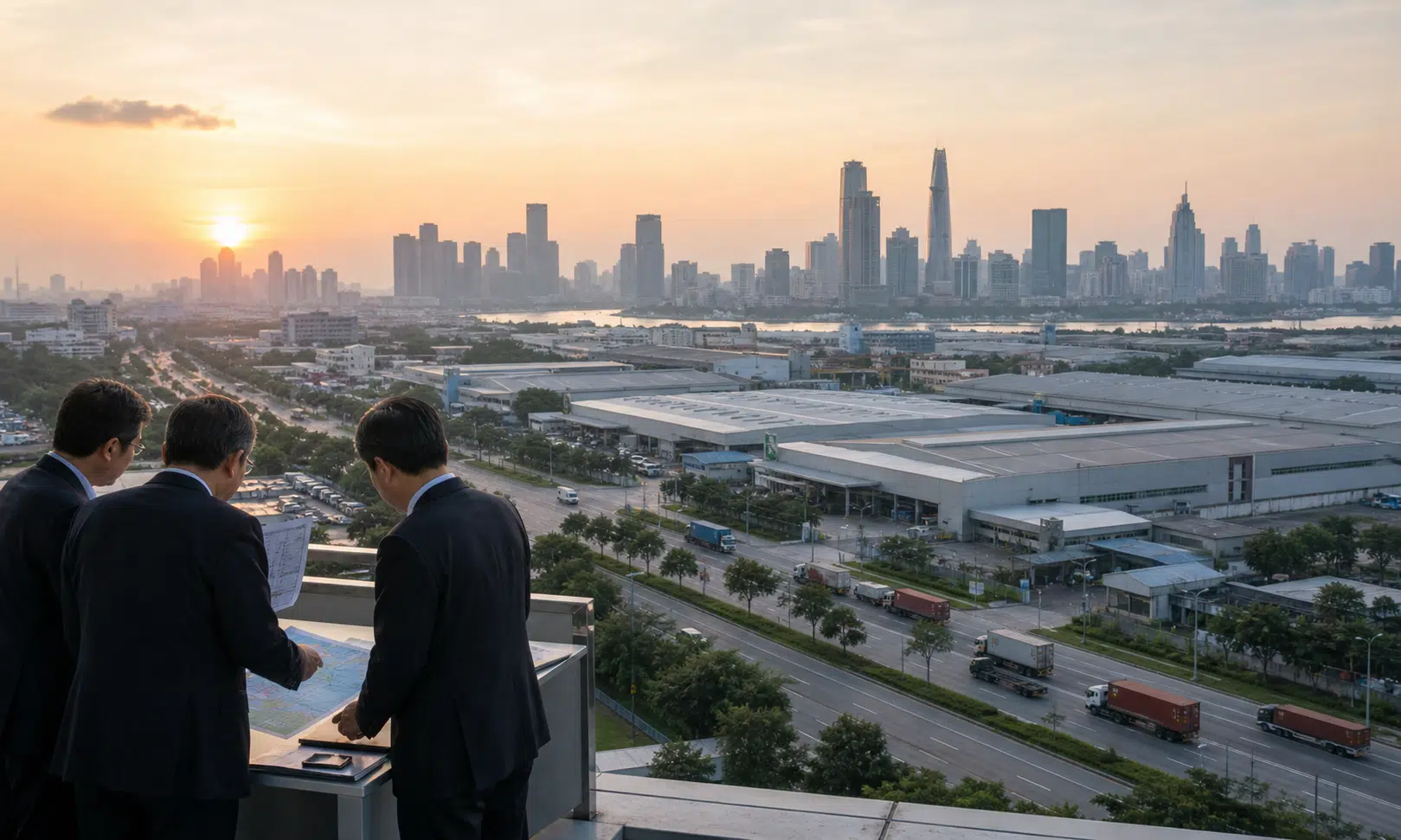

Japanese mid-sized companies are reportedly looking more closely at South-east Asia as domestic growth becomes harder to rely on.
For years, many of these firms built their operations around Japan’s home market. That model is coming under pressure as the country deals with an ageing population, a tight labour market and slower domestic expansion. In that setting, overseas growth is increasingly being framed by advisers not as an optional move, but as a practical next step.
One M&A adviser cited in the original report said South-east Asian markets are drawing more attention from Japanese companies considering overseas deals and investment. The region offers a mix of production bases, consumer markets and regional supply-chain links, though the exact strategy varies by country and sector.
Vietnam was highlighted visually in the source report, reflecting how some Japanese companies view the market as a manufacturing and production hub. Other South-east Asian economies may also appeal to firms looking for access to labour, demand growth or a wider regional footprint.
The report also referred to a Japan External Trade Organization survey released last year, saying 43.8 per cent of Japanese-affiliated companies already operating in Asia and Oceania planned further expansion. Because the underlying survey details were not independently reviewed here, that figure is best treated as a reported data point rather than a fresh verification.
The broader direction is still clear from the way the issue is being discussed: for many mid-sized Japanese firms, the question is shifting from whether to look abroad to where expansion can be managed with the least risk. South-east Asia is becoming part of that calculation because it sits close to Japan, has established manufacturing links and continues to attract regional investment interest.