

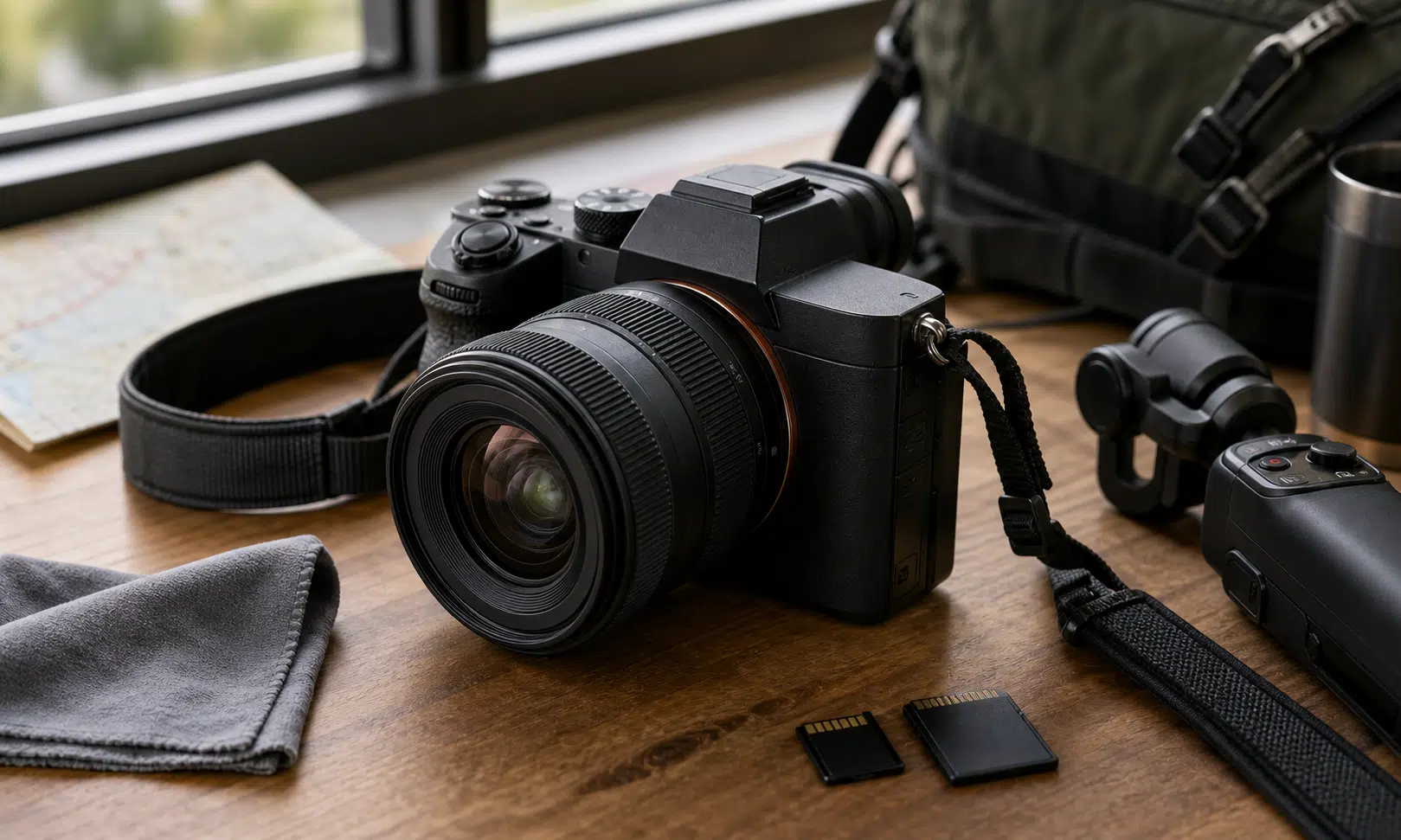

The Thypoch Voyager 24-50mm f/2.8 arrives in an interesting spot. It is a compact full-frame autofocus zoom for Sony E-mount, listed at about $649 at launch, and it comes from a company better known for stylish manual-focus lenses than mainstream AF zooms.
That makes it worth paying attention to, but also worth judging carefully. A lower price only matters if the lens is useful in real shooting, and the 24-50mm range is narrow enough that buyers need to know exactly what they are gaining and giving up.
The short version: the Voyager looks like a good value for Sony shooters who want a small constant-aperture travel, street, or video lens. It is less convincing for fast action, macro-style close-ups, or buyers who expect the polish of Sony’s own 24-50mm f/2.8 G.
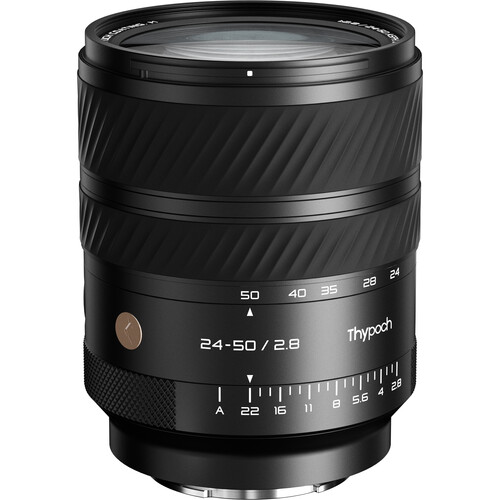
Thypoch Voyager 24-50mm f/2.8 for Sony E
This compact Sony E-mount zoom is the lens under review, with a constant f/2.8 aperture, internal zoom design, 67mm filter thread, and travel-friendly build. It is most relevant for readers weighing a lower-cost everyday zoom for stills and video.
As an Amazon Associate I earn from qualifying purchases.
Design and Handling
The Voyager makes a strong first impression as a compact, tidy lens. Its design uses several textured surfaces, which may look a little busy depending on your taste, but those textures also make the control rings easy to find by feel. The gold badge gives it a distinctive accent without making the lens look overly flashy.
The lens uses a 67mm front filter thread and weighs about 15.8 ounces, or 450 grams. For a full-frame f/2.8 zoom, that keeps it in travel-friendly territory. It is not a 24-70mm replacement in reach, but the shorter zoom range helps keep the size under control.
The physical controls are a major part of the appeal. The review sample had a manual focus ring and aperture ring with reassuring resistance, and the aperture ring felt neatly indexed. There is also a customizable button, an AF/MF switch, and a USB-C port built into the lens mount area.
Thypoch describes the lens as having dust- and splash-resistant construction, and the internal zoom design is another practical advantage. Because the barrel does not extend while zooming, the lens is easier to balance and less likely to act like a pump for dust and debris.
Key Specs at a Glance
| Feature | Thypoch Voyager 24-50mm f/2.8 |
|---|---|
| Mount | Sony E-mount |
| Format | Full-frame |
| Focal range | 24-50mm |
| Maximum aperture | Constant f/2.8 |
| Filter size | 67mm |
| Weight | About 450g / 15.8 oz |
| Minimum focus distance | About 0.3m |
| Maximum magnification | About 1:5 |
| Launch price | About $649 |
Autofocus and Close-Up Performance
Autofocus is one of the biggest questions here because Thypoch is still building its reputation in this area. In use, the Voyager’s focusing was described as smooth and quiet, which is exactly what you want for casual stills and video work. It does not appear to be tuned for top-end speed, though.
That matters for the kind of photographer considering this lens. For travel, landscapes, street photography, casual portraits, and vlogging, the autofocus behavior should be workable. For sports, quick wildlife, or erratic subjects, this is probably not the first lens to reach for.
The close-focus performance is also only modest. With a minimum focusing distance of about 0.3 meters and roughly 1:5 magnification, the Voyager can handle simple detail shots, food photos, and everyday close-ups. It should not be mistaken for a semi-macro zoom. Sony’s 24-50mm f/2.8 G is the more attractive option if close-up flexibility is a major part of the buying decision.
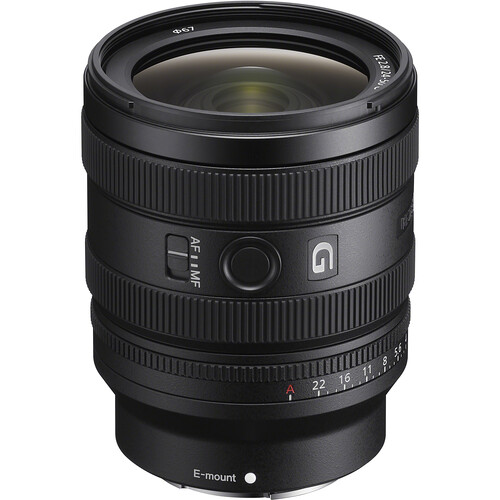
Sony FE 24-50mm f/2.8 G
Sony’s FE 24-50mm f/2.8 G is the obvious step-up alternative for buyers who prioritize autofocus speed, closer focusing, and more polished optical performance. It costs more, but it is the cleaner fit for readers who want first-party refinement.
As an Amazon Associate I earn from qualifying purchases.
Image Quality
The Voyager’s optical performance is strongest when expectations are set properly. This is a compact, relatively affordable standard zoom, not a premium lens trying to dominate every test chart at every focal length.
At 24mm, the center sharpness is a highlight. Wide open at f/2.8, the lens shows strong detail in the middle of the frame, though contrast improves when stopped down. The corners are usable at f/2.8, with some smearing toward the edges. By f/5.6, contrast improves and the weaker areas are pushed farther into the extremes of the frame.
At 50mm, the center remains good at f/2.8, but the lens benefits more obviously from stopping down. At f/5.6, detail and contrast look much stronger. The corners are the bigger compromise at the long end, where f/2.8 can show noticeable smearing and reduced detail. Buyers who plan to shoot landscapes, architecture, flat artwork, or other edge-sensitive subjects at 50mm should expect to stop down for the best results.
Flare and ghosting are handled reasonably well based on the review sample. Bright light can reduce contrast slightly, and ghosting may become more visible at smaller apertures, but the behavior does not sound severe enough to be a deal-breaker for general use.
Bokeh is more subjective. The lens can create shallow depth of field, and the specular highlights did not show obvious onion-ring patterns or harsh halos in the reviewer’s sample. Even so, the out-of-focus rendering was not always especially graceful. If smooth background blur is high on your list, this is one area where the Sony alternative may still justify its higher price.
Video Use May Be Its Strongest Case
The Voyager may be more compelling for hybrid shooters than its spec sheet first suggests. The compact weight makes it easier to use on a gimbal, and the internal zoom design helps preserve balance while changing focal lengths. That is a real advantage for solo creators who do not want to keep rebalancing between shots.
The review sample also showed very little focus breathing, so the field of view did not shift dramatically during focus pulls. That makes it more useful for video than many stills-first zooms in this price range.
There is one important limitation: the aperture ring cannot be declicked. That makes smooth exposure pulls less practical, especially for video shooters who like to adjust aperture during a take. For many vloggers and travel creators, that will not matter. For more deliberate video work, it is worth noting before buying.
Thypoch Voyager vs. Sony 24-50mm f/2.8 G
The obvious comparison is Sony’s FE 24-50mm f/2.8 G. Sony’s lens costs considerably more, but it also brings the advantages buyers usually expect from a first-party G-series lens: faster autofocus, stronger optical consistency, and more refined rendering.
The Thypoch’s argument is different. It offers the same basic focal range and constant f/2.8 aperture at a much lower price. It also brings compact handling, internal zooming, and enough image quality to make sense for many everyday shooters.
| Buyer Priority | Better Fit |
|---|---|
| Lowest price for a compact f/2.8 zoom | Thypoch Voyager |
| Fastest autofocus | Sony 24-50mm f/2.8 G |
| Best corner sharpness wide open | Sony 24-50mm f/2.8 G |
| Gimbal-friendly internal zoom | Thypoch Voyager |
| More polished bokeh | Sony 24-50mm f/2.8 G |
| Best value for travel and casual video | Thypoch Voyager |
Who Should Buy It?
The Thypoch Voyager 24-50mm f/2.8 is best suited to Sony E-mount shooters who want a compact everyday lens with a bright constant aperture and a lower price than Sony’s own option. It makes the most sense for travel, street photography, casual portraits, landscapes, and lightweight video kits.
It is not the strongest choice for action, serious close-up work, or buyers who need crisp corners at f/2.8 across the full zoom range. It also may not satisfy photographers who care deeply about the smoothest possible bokeh.
For the money, though, the Voyager looks like a credible first autofocus zoom from Thypoch. It has a sensible feature set, good handling, useful video traits, and enough optical strength to make the tradeoffs feel fair. If the 24-50mm range fits your style, this lens deserves a spot on the shortlist.