

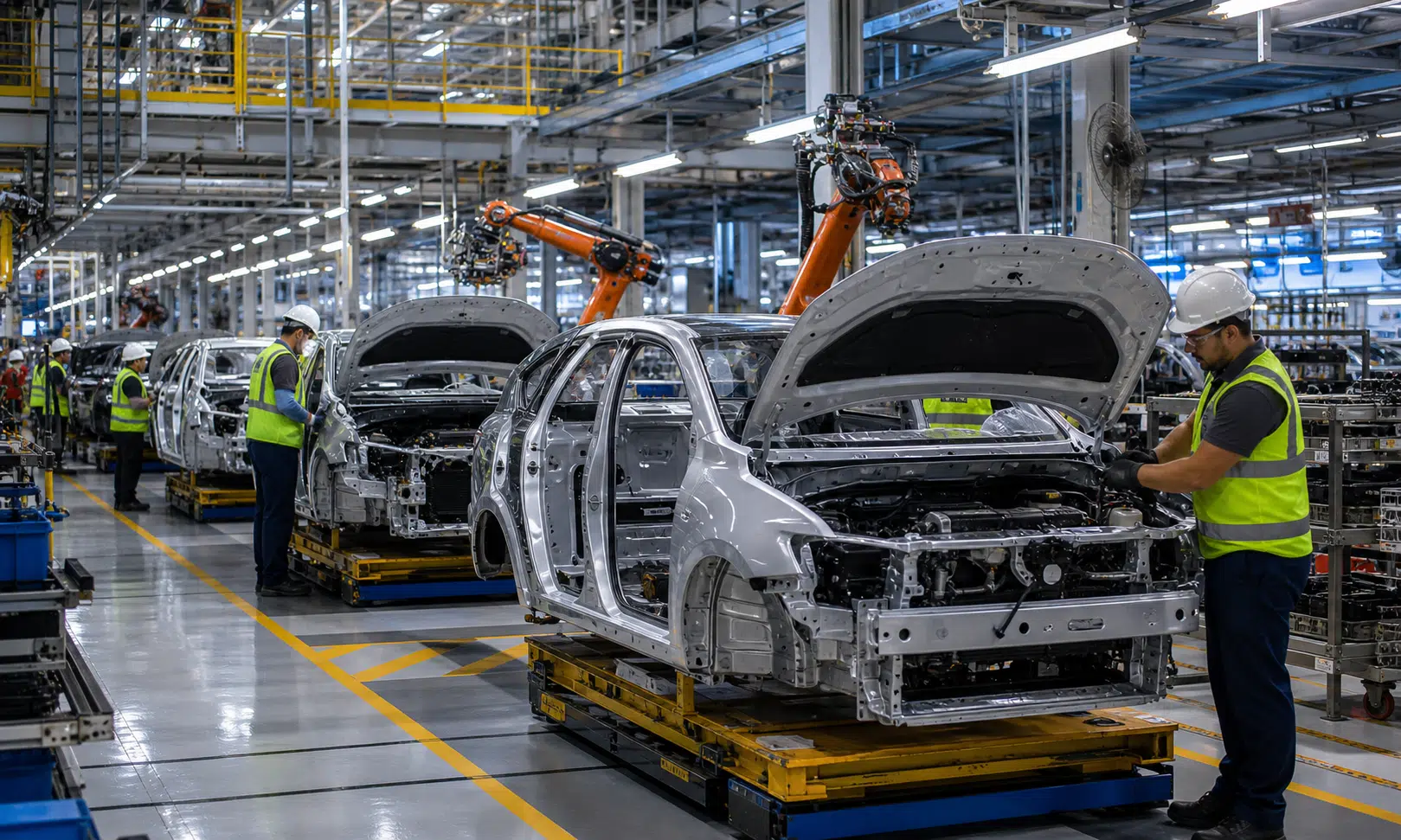

Toyota’s reported plan to wind down activity at its Indaiatuba factory has raised a practical question: is this a retreat from Brazil, or a reshuffling of production inside the country?
Based on the source report, the answer is closer to an industrial reorganization than an exit. The article describes a planned move of Corolla Sedan production from Indaiatuba to Sorocaba, both in the state of São Paulo, alongside a broader investment plan tied to Sorocaba and Porto Feliz. However, several details in the original report have not been independently verified, including the exact shutdown date, the total number of vehicles produced at Indaiatuba, the number of direct jobs attached to the unit, and some labor-agreement terms.
That matters because the story affects different readers in different ways. Workers want to know what happens to jobs and transfers. Local suppliers want to understand where production demand may move. Car buyers and Toyota owners want reassurance that Corolla production and service support are not being disrupted. Investors and industry watchers are looking at what the shift says about hybrid flex technology and Brazil’s role in Toyota’s manufacturing strategy.
What the reported factory change means
The source report says Toyota plans to end activities at the Indaiatuba factory in the interior of São Paulo, with June 30, 2026 cited as the target date. That specific date has not been independently verified, so it should be treated as a reported timeline rather than a confirmed deadline.
The same report describes the Indaiatuba unit as a long-running Toyota production site inaugurated in 1998 and closely associated with Corolla Sedan production in Brazil. It also says the plant has produced more than 1 million vehicles and is connected to about 1,500 direct jobs. Those figures have not been independently verified, so they should not be treated as final audited totals.
The practical point is still clear: the reported move would shift a historically important part of Toyota’s Brazilian production footprint away from Indaiatuba and toward Sorocaba. The company’s broader plan, as described in the source, centers on concentrating more production activity in Sorocaba while keeping related engine and hybrid work connected to Porto Feliz.
Indaiatuba vs. Sorocaba: what is changing
The source frames the move as a transfer of Corolla Sedan production rather than a shutdown of Toyota’s Brazilian operations. It says the Corolla Sedan line is expected to move to Sorocaba, with no reported indication from Toyota that Corolla production in Brazil would be interrupted. That continuity claim has not been independently verified, so the safer reading is that the report presents the move as a production transfer, not as an end to the model’s local manufacturing.
For readers comparing the two sites, the useful distinction is not which factory is “better,” but what role each appears to play in the reported reorganization.
| Area | Indaiatuba | Sorocaba |
|---|---|---|
| Reported role | Long-running Toyota vehicle production site associated with Corolla Sedan manufacturing | Expanding production complex expected to receive more Toyota manufacturing activity |
| Status in the report | Activities are reported to be ending, with the exact timeline not independently verified | Described as the focus of future expansion and production consolidation |
| Reader impact | Most relevant to workers, local suppliers, and the Campinas region | Most relevant to future production capacity, jobs, suppliers, and hybrid flex plans |
| Key uncertainty | Final shutdown timing, worker transfers, and local economic effects | Expansion schedule, hiring impact, and timing of new production structures |
The comparison shows why this is not simply a closure story. It is also a production-location story. The biggest known change is not that Toyota disappears from Brazil, but that the reported center of gravity moves further toward Sorocaba.
The R$ 11 billion investment plan
The source report says Toyota is maintaining an investment plan of R$ 11 billion in Brazil through 2030, aimed at expanding operations in Sorocaba and Porto Feliz, with a focus on new models and hybrid flex technologies. That investment figure and its schedule have not been independently verified in this rewrite, so they should be read as reported figures from the source.
According to the report, the investment would be split into stages, with R$ 5 billion planned until 2026 and another R$ 6 billion scheduled until 2030. A firm timeline has not been publicly confirmed in the material provided, so the staged breakdown should be treated cautiously.
The article also says Toyota laid the cornerstone for a second factory in Sorocaba in October 2024, linking the project to two new hybrid flex models. That claim has not been independently verified, but it fits the source’s broader theme: Toyota is described as moving production capacity toward sites tied to electrification and hybrid flex components rather than reducing its Brazilian footprint outright.
What this could mean for workers
The most sensitive part of the reported reorganization is labor. The source says the Indaiatuba change led to strikes in 2024 and negotiations between Toyota and the Metalworkers’ Union of Campinas and Region. That sequence has not been independently verified here, so it should be described as reported labor activity rather than confirmed fact.
The report says an agreement offered employees alternatives, including a voluntary redundancy program or transfer to Sorocaba under negotiated conditions. It also says the redundancy package included payment of 45 salaries for workers who chose to leave, plus stability and benefit rules. Those terms have not been independently verified, so they should not be repeated as guaranteed benefits for any individual worker.
For workers and families trying to understand the situation, the key decision points would be practical rather than symbolic:
- Whether a transfer to Sorocaba is available for a specific role.
- Whether relocation, commuting, or job reassignment would be required.
- What compensation or redundancy terms apply to each employee category.
- Which protections are documented in signed labor agreements.
- How union monitoring affects the transition period.
Because the original article does not provide verified individual guidance, affected employees should rely on direct company communication, union documentation, and formal employment paperwork before making financial or relocation decisions.
Supplier and regional effects
The source report says union representatives are monitoring the effects of Toyota’s Sorocaba expansion, including possible movement among suppliers, logistics companies, service providers, and workers tied to automotive production. That monitoring claim has not been independently verified, but the concern is reasonable within the boundaries of the report: when a major automaker moves production, nearby businesses often reassess staffing, transport, contracts, and inventory planning.
For the Campinas region, the main risk is local activity tied to Indaiatuba losing momentum as production winds down. For Sorocaba, the possible upside is a larger production cluster, with more demand for parts, services, maintenance, logistics, and industrial support. The report also says Toyota associated the expansion plan with direct job creation, while local groups projected indirect effects. Those job claims have not been independently verified and should be treated as projections, not guaranteed employment outcomes.
The better way to read the situation is as a shift in industrial geography. Indaiatuba may lose a long-standing manufacturing role, while Sorocaba may gain a larger share of Toyota’s production system. Porto Feliz remains relevant in the report because of its connection to hybrid engine activity.
Does this mean Toyota is leaving Brazil?
The source report says Toyota has not announced an exit from Brazil or a broad reduction of its industrial presence in the country. That claim has not been independently verified here, but it is consistent with the article’s central framing: the reported Indaiatuba closure is paired with continued investment in Sorocaba and Porto Feliz.
That distinction is important for readers. A factory closure can sound like a market withdrawal, especially when headlines focus on the number of workers or the end of a historic plant. In this case, the source material points to a redistribution of production inside São Paulo state rather than a departure from Brazil.
For Corolla buyers, the main issue is whether production continuity, parts availability, and service support remain stable. The source does not provide enough verified detail to make firm promises on those points. For the industry, the bigger signal is Toyota’s apparent emphasis on hybrid flex technology and consolidated manufacturing capacity.
Bottom line
Toyota’s reported Brazil factory shift should be understood as a complex industrial move, not as a simple closure headline. The source describes the end of activity at Indaiatuba, the transfer of Corolla Sedan production toward Sorocaba, and an R$ 11 billion investment plan tied to new production capacity and hybrid flex technology.
Several important details remain unverified in the material provided, including the exact shutdown date, worker totals, production totals, labor-package terms, and the staged investment schedule. For that reason, the careful conclusion is this: the report points to a major reorganization of Toyota’s manufacturing footprint in São Paulo, with Indaiatuba losing its production role and Sorocaba becoming more central to the company’s Brazil strategy.
For workers, suppliers, and local communities, the practical questions are still about timing, transfer terms, job guarantees, and regional economic impact. For car buyers and industry watchers, the story is less about Toyota leaving Brazil and more about where the company appears to be placing its next phase of production.