

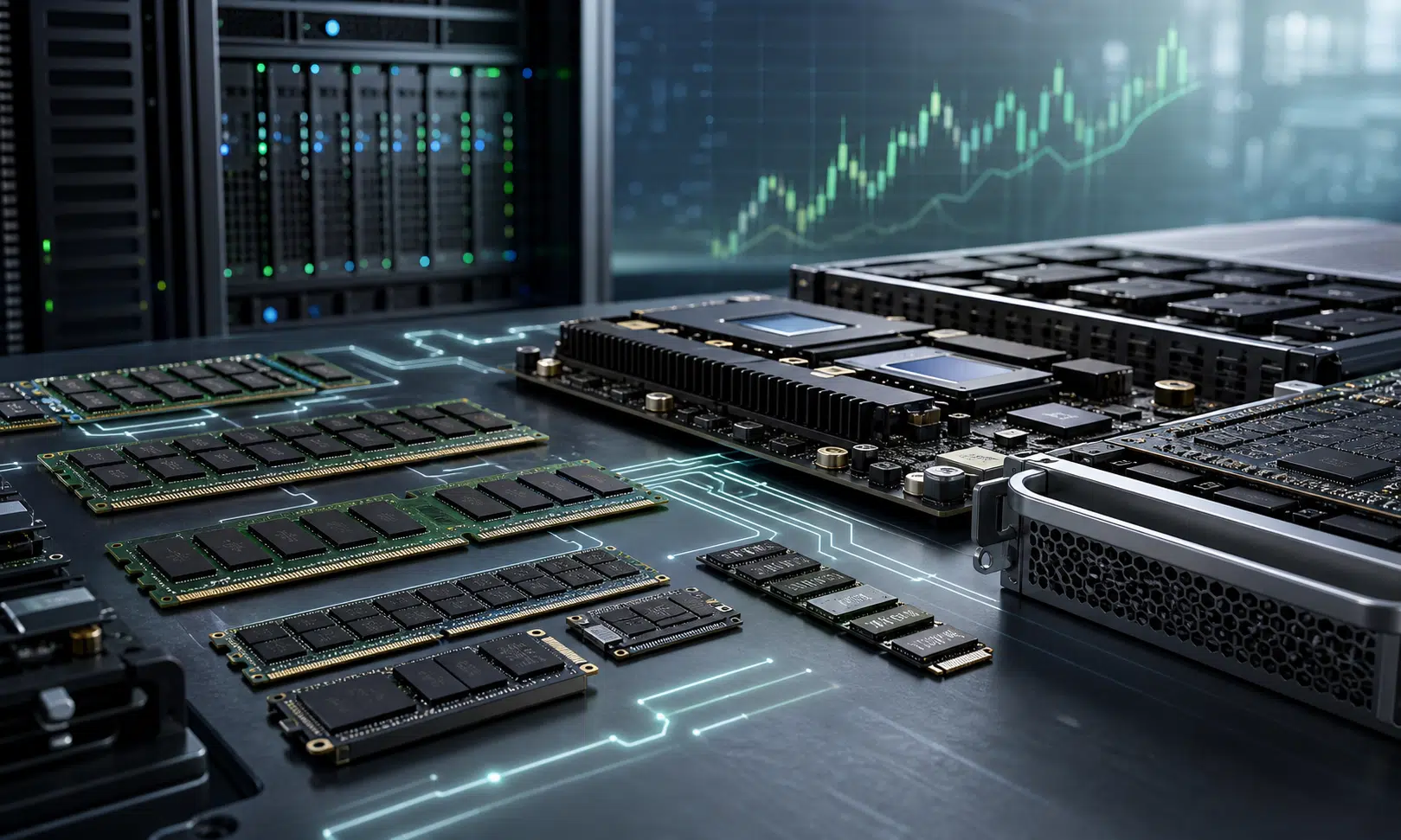

Micron Technology became one of the clearest examples this week of how quickly investor attention has shifted toward memory chips in the artificial intelligence supply chain.
The report described Micron as rising nearly 38% for the week and posting its strongest weekly move since the financial crisis period in 2008, though those market-performance figures have not been independently verified here. It also said the stock had gained more than 80% over the past month and placed the company’s market value above $840 billion.
The broader point is easier to verify at the industry level: memory is no longer a background component in the AI buildout. As companies race to expand data centers, the chips that move, store, and feed information to processors are becoming more important to both buyers and investors.
Why Memory Is Getting More Attention
The first wave of the AI infrastructure trade centered heavily on graphics processing units. GPUs remain crucial, but large AI systems also need fast memory, reliable storage, and CPUs that can keep data moving through the system. That is why DRAM and NAND have moved closer to the center of the conversation.
DRAM is typically used where speed matters most. NAND flash storage is slower, but it is durable and widely used for large-scale storage needs. AI servers, cloud infrastructure, and advanced computing systems often depend on both.
Micron, Samsung, and SK Hynix are the dominant names in DRAM production. The source report said multiple equity research notes place their combined share of global DRAM output above 90%, a figure that helps explain why supply concerns can quickly move market sentiment.
For buyers, the issue is not only whether enough chips can be produced. It is also what happens to pricing, delivery schedules, and hardware planning when demand accelerates faster than new capacity can come online.
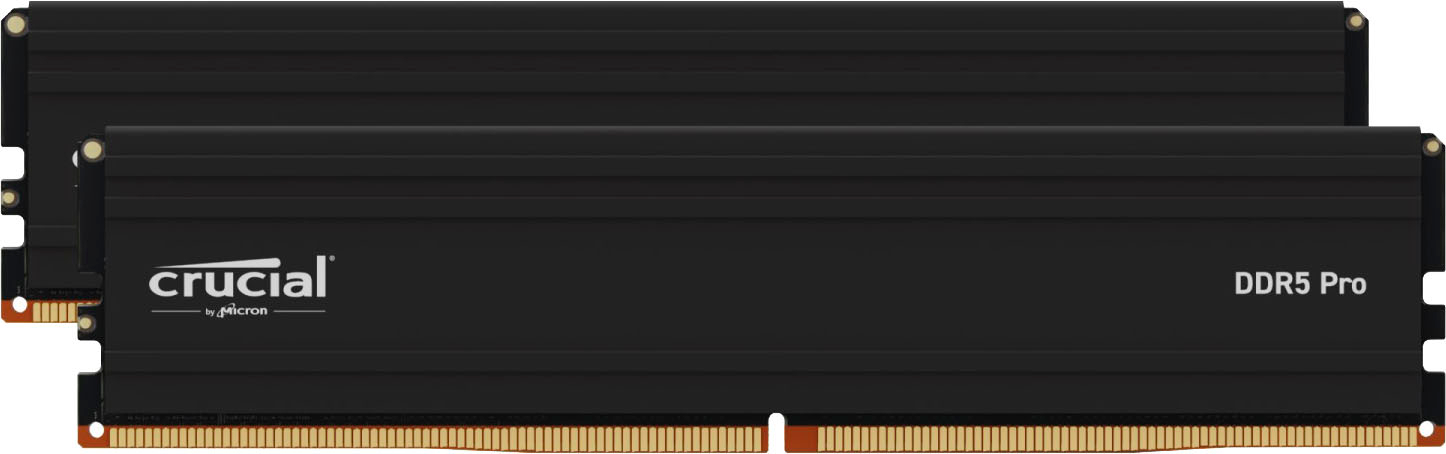
Crucial Pro 64GB DDR5 Desktop Memory Kit
Readers planning local AI, development, or content workloads may want to check whether their desktop platform supports higher-capacity DDR5 kits. Compatibility with the motherboard, CPU, and memory speed profile should come before capacity alone.
As an Amazon Associate I earn from qualifying purchases.
The Rally Is Bigger Than Micron
The same report said AMD rose 26% for the week, touched a new 52-week high, and reached a market value above $740 billion, but those specific figures have not been independently verified here. It also described Intel as jumping 25% for the week and more than doubling over the prior month, another market-performance claim that should be treated as unverified in this rewrite.
Still, the pattern is clear: investors are looking beyond a single chip category. CPUs, memory, storage, and manufacturing capacity are all being pulled into the AI spending cycle.
| Company | Role in the AI Hardware Chain | Reported Market Context |
|---|---|---|
| Micron | DRAM and NAND memory | Reported as one of the week’s strongest semiconductor movers |
| AMD | CPUs, GPUs, and accelerators | Reported as sharply higher for the week |
| Intel | CPUs and manufacturing ambitions | Reported as part of a broader chip rebound |
| Samsung | Memory, foundry, and electronics | Reported as reaching trillion-dollar valuation territory |
| SK Hynix | High-bandwidth and other memory products | Reported as receiving interest tied to new capacity |
What This Means for Chip Buyers
For companies buying AI infrastructure, the memory shortage narrative matters because it can affect total system cost. The source report said memory-chip prices and producer margins have been widening during the shortage, while hyperscalers have complained about higher costs for downstream goods and services. That claim has not been independently verified here, but it matches the practical concern facing buyers: tight supply can make planning harder.
Bank of America and Evercore were cited in the source as estimating that hyperscaler capital spending could surpass $1 trillion by the end of next year. That projection has not been independently verified here, so it should be treated as an analyst estimate rather than a settled outcome.
Reuters was also cited as reporting that SK Hynix had received offers from global technology firms interested in investing in memory-focused production lines, including a possible equipment-financing structure tied to lithography machines. That detail has not been independently verified here, but it reflects the kind of customer involvement that can appear when supply is strategically important.
For retail investors, Micron’s move appears to have drawn unusual attention. The source cited Vanda Research as saying net buying in Micron rose to its highest level in two years in mid-April, even as broader retail stock buying was softer than in some recent periods.
The takeaway is not simply that Micron had a dramatic week. It is that memory chips have become a more visible constraint in the AI economy. When data centers need more capacity, the market starts to care not just about the headline processors, but also about every component that keeps those processors supplied with data.
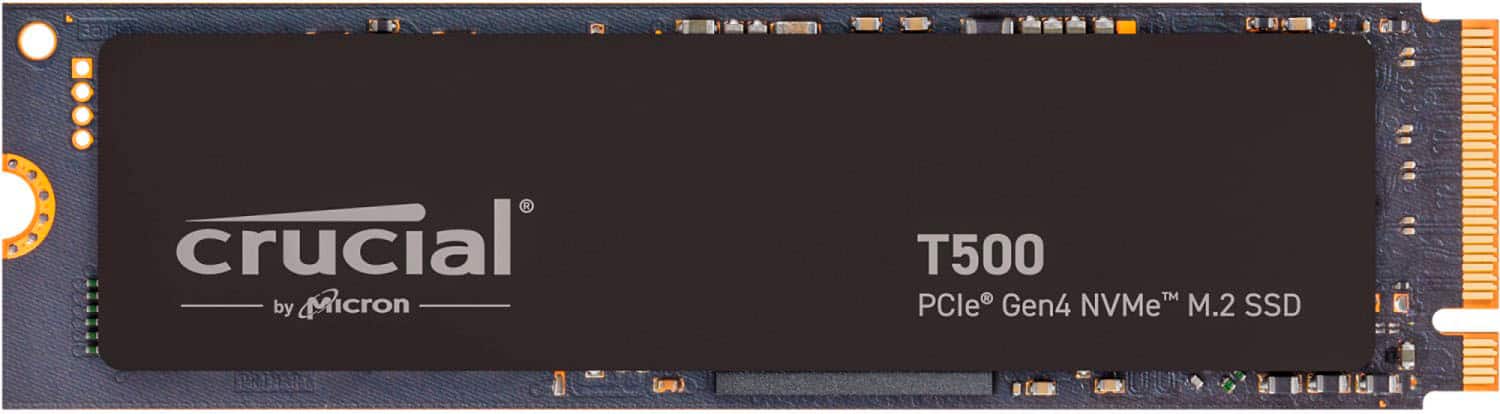
Crucial T500 2TB Gen4 NVMe SSD
A Gen4 NVMe SSD can be a practical upgrade for systems handling large project files, datasets, or scratch storage. Buyers should confirm M.2 slot support and whether their system needs a heatsink version.
As an Amazon Associate I earn from qualifying purchases.