

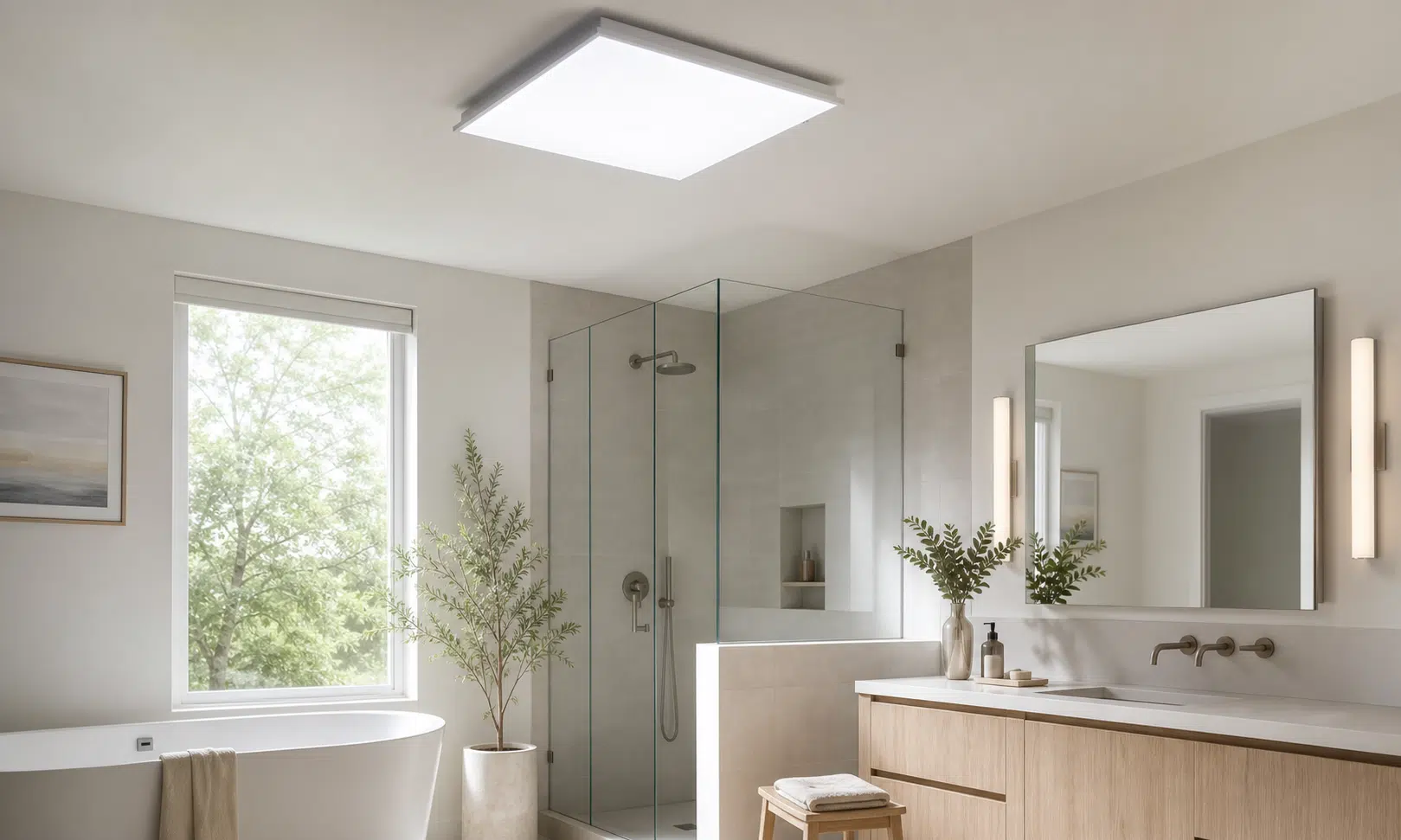

Philips Skylight is being positioned as a ceiling light range for people who want rooms to feel closer to natural daylight, rather than simply brighter. The idea is straightforward: a surface-mounted ceiling fixture that mimics some of the brightness, colour shifts and open-sky effect associated with daylight indoors.
That basic pitch is attractive, especially for darker rooms, home offices and bathrooms where a conventional ceiling light can feel flat. But buyers should treat the more ambitious claims with care. The daylight effect, smart-lighting status and vitamin D support claims have not been independently verified here, so the safest way to read this launch is as a promising lighting concept that still needs pricing, availability and real-world testing before it becomes an easy recommendation.
What Philips Skylight is meant to do
The Skylight range is described as part of the Philips Smart Lighting family, but it does not appear to work like a typical app-connected smart light. Based on the supplied details, control is handled through an included remote rather than a phone app, voice assistant or wider smart home platform.
That distinction matters. If you are looking for a ceiling light that can be added to automations, controlled remotely, grouped with other lights or integrated with a smart home setup, this may not be the right product unless further connectivity details emerge. If you mainly want a daylight-style fixture with simple local controls, the remote-led approach may be enough.
The range is said to include five preset daylight-inspired scenes and an Auto Day Rhythm mode, which is described as adjusting brightness and colour temperature through the day. That could make the Skylight more useful than a fixed-temperature ceiling panel, particularly in spaces used from morning into evening.
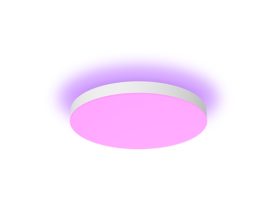
Philips Hue Datura Ceiling Light
Philips Hue Datura is a ceiling-mounted smart light for buyers who care more about app control, voice assistants and scene automation than a skylight-style effect. It is better suited to existing Hue homes than to buyers specifically looking for UV-B or daylight-mimicking claims.
As an Amazon Associate I earn from qualifying purchases.
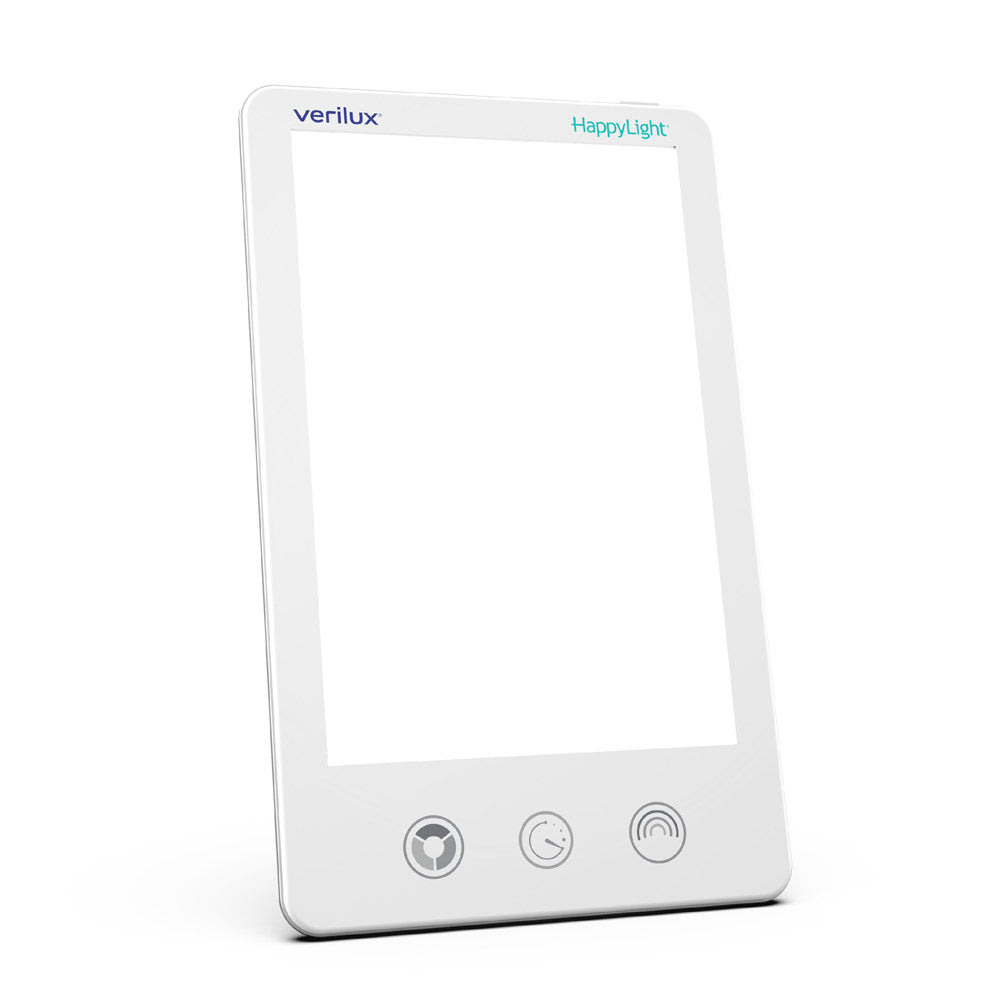
Verilux HappyLight Luxe
Verilux HappyLight Luxe is a compact light therapy lamp for desks, bedside tables or home offices. It is a simpler alternative to a fitted ceiling light if the goal is bright indoor daylight-style exposure rather than whole-room installation.
As an Amazon Associate I earn from qualifying purchases.
The buyer case: daylight effect over app control
The main reason to consider Philips Skylight is not conventional smart-home flexibility. It is the daylight-style lighting experience. The range is described as using Signify NatureConnect technology, which is intended to reproduce aspects of natural daylight, including brightness, colour variation and depth.
In practical terms, the product seems aimed at rooms where a standard light does not create enough visual lift. A convincing ceiling-mounted daylight effect could be useful in windowless bathrooms, internal hallways, basement rooms, utility spaces or home offices that feel gloomy for much of the day.
There is also a comfort angle. The supplied information says Philips BioUp LEDs provide blue-enriched light during daytime hours to support alertness and focus, with warmer, more relaxed tones later in the day. That claim should be read as the product positioning rather than a verified health outcome. Lighting can affect how a room feels, but buyers should be cautious about treating any domestic ceiling light as a health device unless the manufacturer provides clear evidence and regulatory context.
VitaUp models and the vitamin D claim
The more unusual part of the lineup is the Philips Skylight VitaUp variant. These models are described as including an integrated UV-B module intended to support the body’s natural vitamin D production indoors.
That is a significant claim, and it deserves a careful reading. UV-B exposure is the same broad category of light involved in natural vitamin D production, but it is also the part that raises safety questions around exposure time, skin sensitivity and correct use. The source material says VitaUp includes safety measures, including an automatic shut-off after eight hours and manual control through the remote. Those details have not been independently verified here.
Anyone considering the VitaUp version should look for the official safety documentation before buying, especially if the light will be used in a bathroom, bedroom, child’s room or shared household space. It would also be sensible to check whether the UV-B feature can be disabled, how exposure is controlled, and what guidance Philips gives for different users.
Models and features mentioned
The supplied lineup includes four versions:
- Philips Skylight Medium
- Philips Skylight Large
- Philips Skylight VitaUp Medium
- Philips Skylight VitaUp Large
Every model is described as having a slim surface-mounted design, an included remote control, five lighting scenes, Auto Day Rhythm functionality and an IP44 rating. The IP44 detail, if confirmed, would make the range relevant for bathrooms and other damp areas, though installation rules still matter and should be checked before fitting.
| Model type | Main difference | Best fit |
|---|---|---|
| Skylight Medium / Large | Daylight-style ceiling lighting without the stated UV-B module | Rooms where brightness, tone and a natural-light effect matter most |
| Skylight VitaUp Medium / Large | Adds the stated UV-B module for vitamin D support | Buyers specifically interested in the UV-B feature and willing to check safety guidance first |
What is still missing
The biggest practical gaps are price, confirmed availability and independent performance evidence. The range is expected for selected European markets, but a firm timeline has not been publicly confirmed in the supplied material. Wider availability is also unclear.
That makes it difficult to judge value. A daylight-style ceiling fixture could be compelling if the effect is convincing and pricing lands close to premium ceiling panels. It becomes harder to recommend if it costs closer to specialist wellness lighting while lacking app control, third-party integrations or clear evidence for the more health-adjacent claims.
Before buying, the key questions are simple:
- Is the daylight effect strong enough to justify choosing this over a normal ceiling light?
- Does remote-only control fit your smart home expectations?
- Are the VitaUp UV-B safety controls and usage guidance clear enough?
- Is the IP44 rating confirmed for the exact model and room where it will be installed?
- How does the final price compare with SAD lamps, daylight lamps and connected ceiling lights?
Early verdict
Philips Skylight is an interesting idea for buyers who want a ceiling light that does more than brighten a room. The strongest use case is likely to be darker spaces where the impression of daylight would make a daily difference: bathrooms, home offices, internal rooms and areas without much natural light.
It is less convincing as a smart-home product, at least from the details available. Remote control, preset scenes and day-rhythm lighting may be enough for many people, but the lack of confirmed app or ecosystem support is a real limitation for anyone already invested in connected lighting.
The VitaUp version is the part to treat most cautiously. The vitamin D angle may attract attention, but buyers should wait for official safety guidance, final specifications and ideally independent testing before treating it as a reason to buy.
For now, Philips Skylight looks like a potentially useful daylight-style ceiling light range rather than a product to pre-judge as a must-buy. The concept is strong, but the buying decision depends on price, confirmed market availability, installation requirements and how convincing the daylight effect is in real homes.