

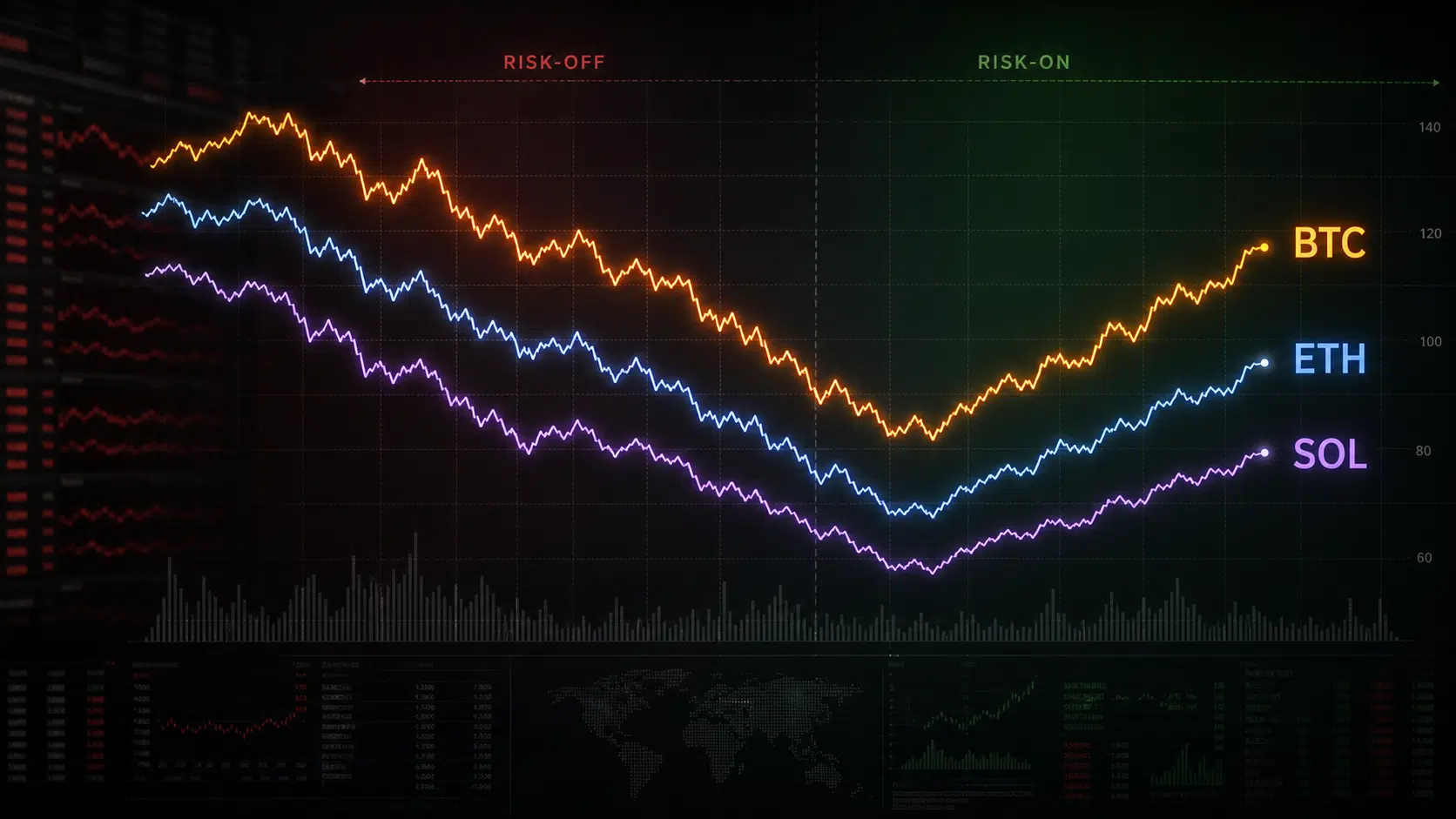

Bitcoin’s latest rebound looks cleaner on the surface than it feels underneath.
The source report described a sharp move in which bitcoin traded from near $73,000 to below $60,000 before recovering to roughly $63,500. Those price levels and the interpretation that bitcoin briefly entered a valuation zone often associated with bear-market bottoms have not been independently verified here, so they are best treated as reported market context rather than settled evidence of a bottom.
That distinction matters for anyone comparing BTC, ETH and SOL exposure. A rebound after a forced-feeling selloff can help restore risk appetite, but it does not automatically tell investors that the market has cleared weak hands or that fresh demand has returned.
What Drove The Bitcoin Price Rebound
The reported setup was a classic risk-asset squeeze. Bitcoin had been trading poorly as geopolitical risk, oil prices and interest-rate concerns weighed on broader markets. The source framed bitcoin less as a stand-alone store-of-value trade and more as a high-beta expression of the same risk appetite that moves large technology stocks.
Macro relief then gave the market room to breathe. The source tied the recovery to easing fears around Iran, lower oil prices and stronger equity-market sentiment. It also pointed to SpaceX’s Nasdaq debut, which reportedly closed near $161 after a $135 offer price, as one more reason risk traders became more willing to buy. That SpaceX trading detail has not been independently verified here, so it should be read as part of the source’s explanation for market mood rather than as a confirmed trading record.
The practical takeaway is narrower than a simple bullish headline. Bitcoin bounced, but the source’s own framing does not show a full capitulation event. In market terms, that leaves investors with an awkward middle ground: prices looked stressed, but the washout may not have been deep enough to prove that sellers were exhausted.
Why Strategy’s Small BTC Sale Got So Much Attention
A small bitcoin sale by Strategy was treated as a large signal in the source article. The report said the company disclosed on June 1 that it sold 32 BTC for about $2.5 million between May 26 and May 31 to fund dividends on its STRC preferred shares. It also said Strategy held roughly 845,000 BTC, about 4% of total bitcoin supply. Those figures have not been independently verified here, so they should not be treated as confirmed balance-sheet data in isolation.
The reason the sale mattered was not its size. It was the contrast with Michael Saylor’s long association with a “never sell bitcoin” message. The source argued that traders read the sale less as a routine financing decision and more as a possible change in behavior. That market reaction is also difficult to verify from the source text alone, but the concern is understandable: when a company’s identity is built around holding BTC, even a small sale can draw attention.
The report also said Strategy sold about 800,000 shares for $128 million through its at-the-market program during the same period. That detail has not been independently verified here. Still, it shaped the source’s main question: if the BTC sale was financially immaterial, why do it at all?
One possible explanation raised by the source was index eligibility. It said Strategy met technical requirements for S&P 500 inclusion in September 2025 but was passed over, and that some market commentators have argued the company may need to show bitcoin can function as an active treasury asset rather than only a permanent holding. Those claims are not independently verified here, so the safer reading is that Strategy’s sale became a debate about corporate positioning, not proof of a changed bitcoin strategy.
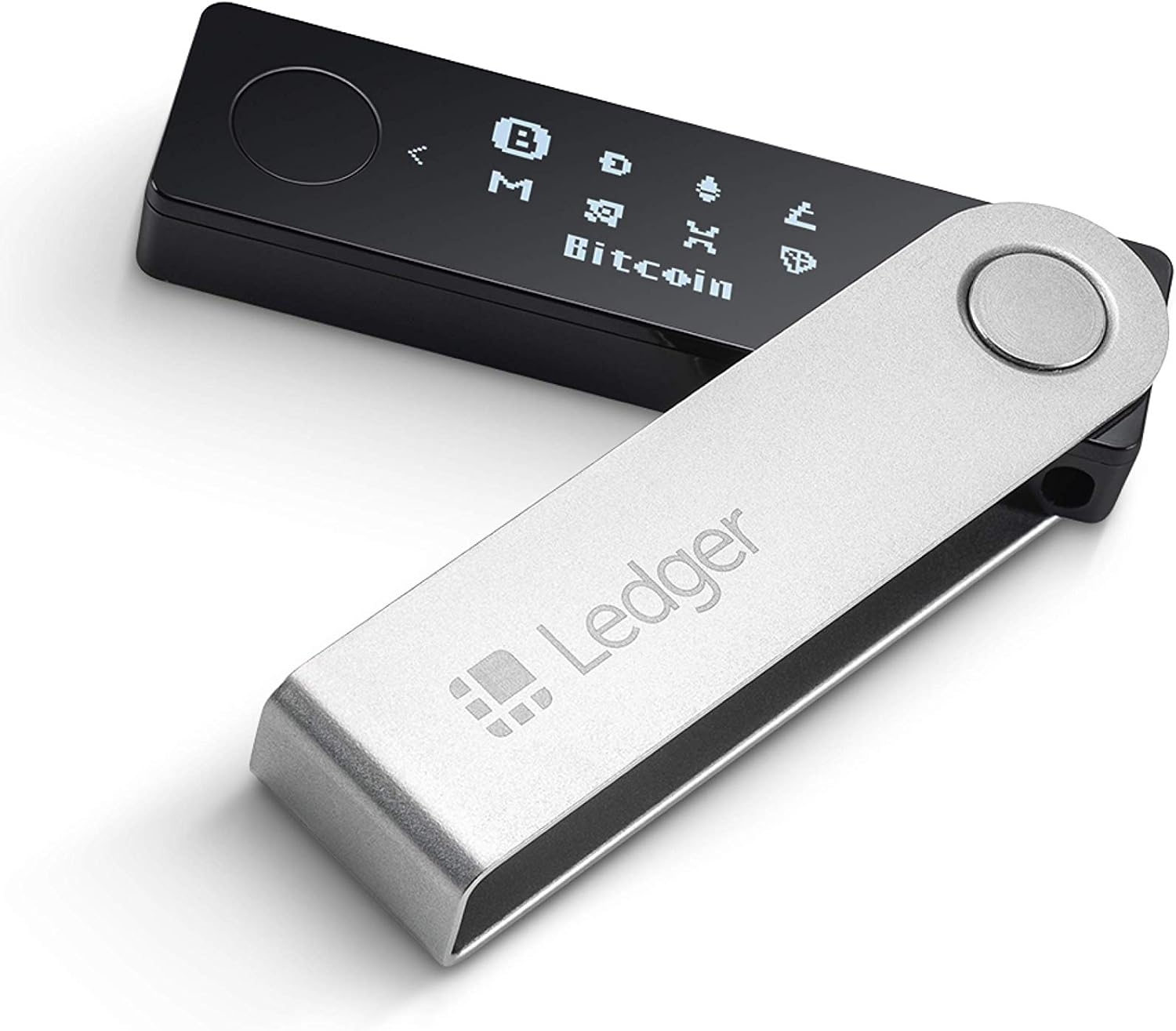
Ledger Nano X Hardware Wallet
A hardware wallet can help investors store private keys offline after moving BTC, ETH or SOL away from an exchange. It is most relevant for readers who already understand custody basics and plan to hold assets rather than trade frequently.
As an Amazon Associate I earn from qualifying purchases.
BTC vs ETH vs SOL: What The Reported Moves Suggest
The source described a broader crypto rebound, not just a bitcoin move. Ether was reported up 6.4% to $1,663, while Solana was reported up 9.5% to nearly $67. It also listed gains for BNB, dogecoin and XRP, though those figures have not been independently verified here.
For a buyer comparing major crypto exposure, the cleaner comparison is between the role each asset played in the reported recovery.
| Asset | Reported move | What it suggests for buyers |
|---|---|---|
| Bitcoin | Recovered to about $63,500 after a drop below $60,000 | Best read as the market’s main risk barometer; still needs stronger demand confirmation |
| Ether | Reported weekly gain of 6.4% | Showed participation in the rebound, but the source did not give enough detail to separate ETH-specific demand from broader risk appetite |
| Solana | Reported weekly gain of 9.5% | Outperformed in the source’s snapshot, which may appeal to risk-tolerant traders but also implies higher volatility |
That comparison argues against treating the rebound as a blanket “buy crypto” signal. BTC offered the clearest macro read-through. ETH looked more like a broad-market participant. SOL showed the strongest reported percentage move among the three, but the source did not provide enough evidence to say whether that came from Solana-specific catalysts or simple beta.
What Needs To Happen Next
The source’s most useful point is also its least dramatic: a durable turn still needs demand.
ETF flows need to stabilize. Large buyers need to reappear. Loss-taking needs to be heavy enough to suggest that sellers who had to exit have already done so. Without those pieces, a rebound can remain a macro relief rally rather than the start of a stronger trend.
For buyers, that creates three practical decision filters:
- Use bitcoin as the first read on whether crypto risk appetite is actually improving.
- Treat ETH and SOL strength as confirmation only if it comes with sustained volume and broader demand, not just a one-session bounce.
- Be careful with narratives built around a single corporate action, especially when the sale size is small and the strategic motive is uncertain.
Bottom Line
Bitcoin’s reported recovery above the low-$60,000 area helped calm a market that had been close to breaking down. Ether and Solana joined the rebound, and the broader risk backdrop improved as oil pressure eased and equities firmed.
But the source does not prove that crypto has already reset. The better read is more cautious: BTC, ETH and SOL avoided a worse break, yet buyers still need confirmation from ETF demand, large-wallet activity and cleaner evidence that forced selling has passed.