

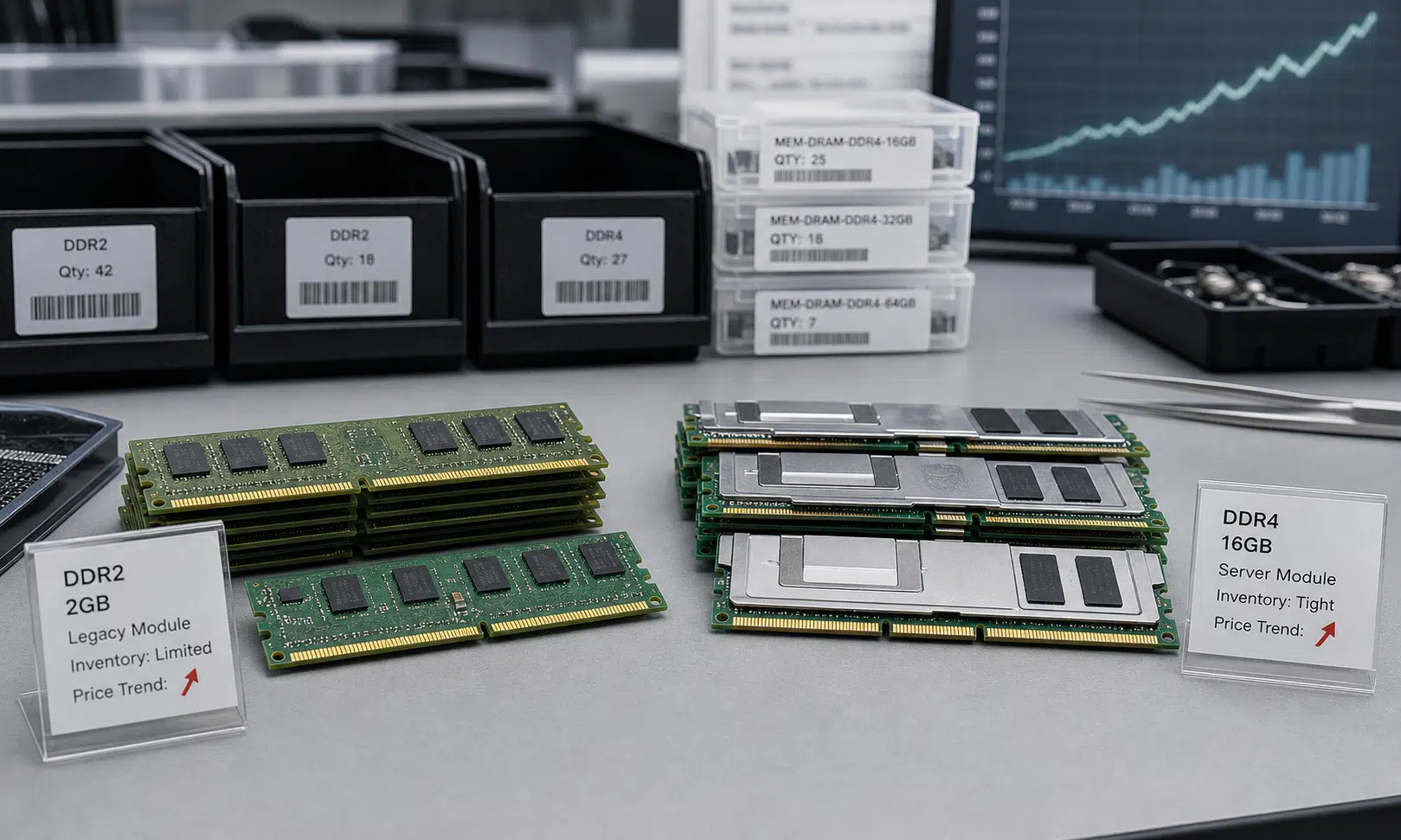

DDR2 prices are being pulled into the wider DRAM squeeze, a sign that the AI memory boom is no longer just a problem for data center buyers or PC builders hunting for DDR5. TrendForce has estimated that DDR2 contract prices rose 55% to 60% in the second quarter and could climb another 35% to 40% in the third quarter, as demand shifts toward older memory generations that are still used in long-lived hardware.
That does not mean modern desktop PCs are suddenly going back to DDR2. The standard first appeared in the early 2000s and has been obsolete for mainstream consumer systems for years. The pressure is landing in places where hardware lifecycles are much longer: embedded systems, networking gear, industrial controllers, automotive electronics, and products that were designed around old memory generations because reliability, qualification, and continuity matter more than peak bandwidth.
For buyers in those markets, the problem is not just that DDR2 is old. It is that the whole memory stack is being rearranged around AI demand, and the effects are cascading downward.
Why an old memory standard is getting expensive again
The core issue is supply priority. Major DRAM producers have been focusing more attention on high-bandwidth memory and server DRAM, where AI infrastructure spending has made capacity more valuable. That shift has put pressure on mature-node memory parts, including DDR4, and the squeeze appears to be moving down through older generations.
When DDR4 gets harder or more expensive to source, some device makers look at DDR3. When DDR3 supply tightens, some designs that can tolerate the downgrade may be reworked around DDR2. That kind of redesign is not ideal, but for manufacturers trying to keep products shipping, using an older memory generation can be more practical than waiting for preferred parts or requalifying an entire platform around newer memory.
The result is an unusual market where age does not necessarily mean cheap. DDR4 has already shown signs of price pressure despite being older and slower than DDR5, and DDR2 is now being affected by the same supply-chain logic. This is less about nostalgia hardware and more about manufacturers competing for whatever memory generation can still meet their product requirements.
The reported DDR2 price moves
The numbers being discussed are sharp enough to matter for anyone building or maintaining equipment around legacy DRAM. TrendForce’s estimates point to a steep second-quarter increase and another large projected rise in the third quarter.
| Memory segment | Reported or projected move | What it means for buyers |
|---|---|---|
| DDR2 contract pricing | Estimated 55% to 60% rise in Q2 | Legacy device makers face higher component costs and tighter sourcing options. |
| DDR2 contract pricing | Projected 35% to 40% rise in Q3 | Buyers may need to plan around further increases rather than a quick reset. |
| DDR3 and DDR2 pricing | Earlier market data pointed to 20% to 40% monthly increases | Pressure has been moving into older DRAM generations, not staying confined to newer PC memory. |
These figures should be treated as market estimates, not a guarantee of what every buyer will pay. Contract pricing depends on volume, supplier relationships, part availability, and exact specification. Still, the direction is hard to ignore: older DRAM is no longer insulated from the AI-driven scramble for memory capacity.
Suppliers are not all responding the same way
DDR2 supply is limited because most of the industry moved on years ago. Winbond and ESMT are described as two of the key remaining sources for DDR2 components, but they appear to be taking different approaches to the market.
Winbond is said to be reducing DDR2 output as it shifts capacity toward higher-margin memory such as DDR3, DDR4, and LPDDR4. ESMT, by contrast, is described as concentrating more of its wafer allocation at foundry partner PSMC on DDR2 to serve demand that other suppliers are leaving behind.
That split matters because legacy memory capacity cannot be added instantly. Even when a supplier wants to chase demand, wafer allocation, process migration, and qualification timelines limit how quickly supply can expand. If one supplier pulls back faster than another can scale up, buyers can still face shortages and rising prices even when there is visible demand on the table.
Nanya and other Taiwanese suppliers are also part of the mature DRAM picture, but the bigger takeaway is simpler: the remaining supply base for DDR2 is narrow, and narrow markets can move quickly when demand shifts.
Who actually feels the DDR2 squeeze?
This is not a mainstream PC upgrade story. If you are building a new gaming PC or workstation, DDR2 is irrelevant. Modern consumer systems use DDR4 or DDR5, depending on platform, and the practical buying decision there is about whether to pay elevated prices, wait, or buy bundled parts when they offer better value.
DDR2 matters most to companies that still ship or maintain products designed around it. In those environments, switching memory generations is rarely a casual substitution. A change can require board redesign, firmware validation, thermal testing, regulatory checks, customer approval, and long qualification cycles.
That makes the buyer calculus more complicated than simply choosing the cheapest RAM available. A manufacturer using DDR2 may have to compare several uncomfortable options:
- Pay higher contract prices to keep an existing product shipping.
- Redesign around DDR3, DDR4, or another memory type and absorb the engineering and qualification cost.
- Build larger inventory buffers, tying up cash to reduce future supply risk.
- Limit production or prioritize higher-margin customers if supply becomes constrained.
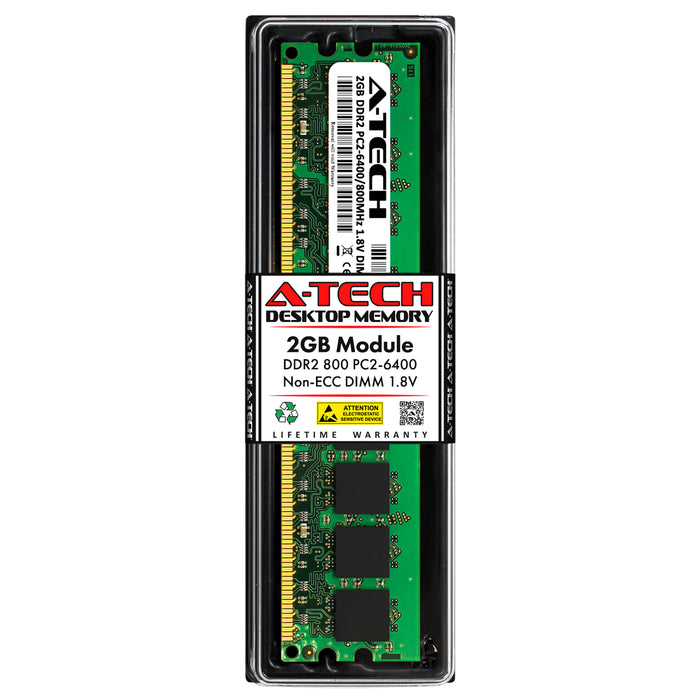
A-Tech 2GB DDR2-800 Desktop Memory Module
A 2GB DDR2-800 PC2-6400 desktop DIMM can be useful when maintaining systems that still require 240-pin DDR2 memory. Check the motherboard manual, voltage, ECC requirement, and approved module type before ordering.
As an Amazon Associate I earn from qualifying purchases.
For repair shops, industrial operators, and companies maintaining older systems, the same logic applies at a smaller scale. Buying extra legacy memory can make sense when downtime is expensive, but speculative hoarding is risky in a market where exact module compatibility matters.
What buyers should do next
The practical move is to treat legacy DRAM as a sourcing risk, not a commodity line item. Anyone responsible for equipment that depends on DDR2 should verify part numbers, approved vendor lists, and lifecycle status before pricing becomes the only discussion.
For embedded and industrial buyers, the first step is to separate true DDR2 dependency from habit. Some products may be locked to a specific memory configuration because of board design or qualification. Others may have room for a redesign, especially if they are already due for a hardware refresh. The economics change quickly when a legacy component starts rising by double-digit percentages in consecutive quarters.
For PC buyers, the lesson is broader. The same AI demand that has pushed attention toward HBM and server memory is also shaping the consumer memory market, including DDR4 and DDR5 pricing. That does not make every sale urgent or every forecast certain, but it does mean memory prices are tied to a much larger capacity fight than the usual PC upgrade cycle.
The bottom line
DDR2 price increases are a useful warning signal because they show how far the DRAM shortage can travel. A standard that has been out of the mainstream PC conversation for years is still important to equipment that stays in service for a decade or more, and those buyers now have to compete in a memory market being reshaped by AI infrastructure demand.
The near-term decision is straightforward but not pleasant: if a product or system genuinely depends on DDR2, waiting for an easy price correction may be risky. The smarter move is to confirm supply, review redesign options, and decide whether higher component costs are still cheaper than requalifying the hardware around a newer memory generation.