

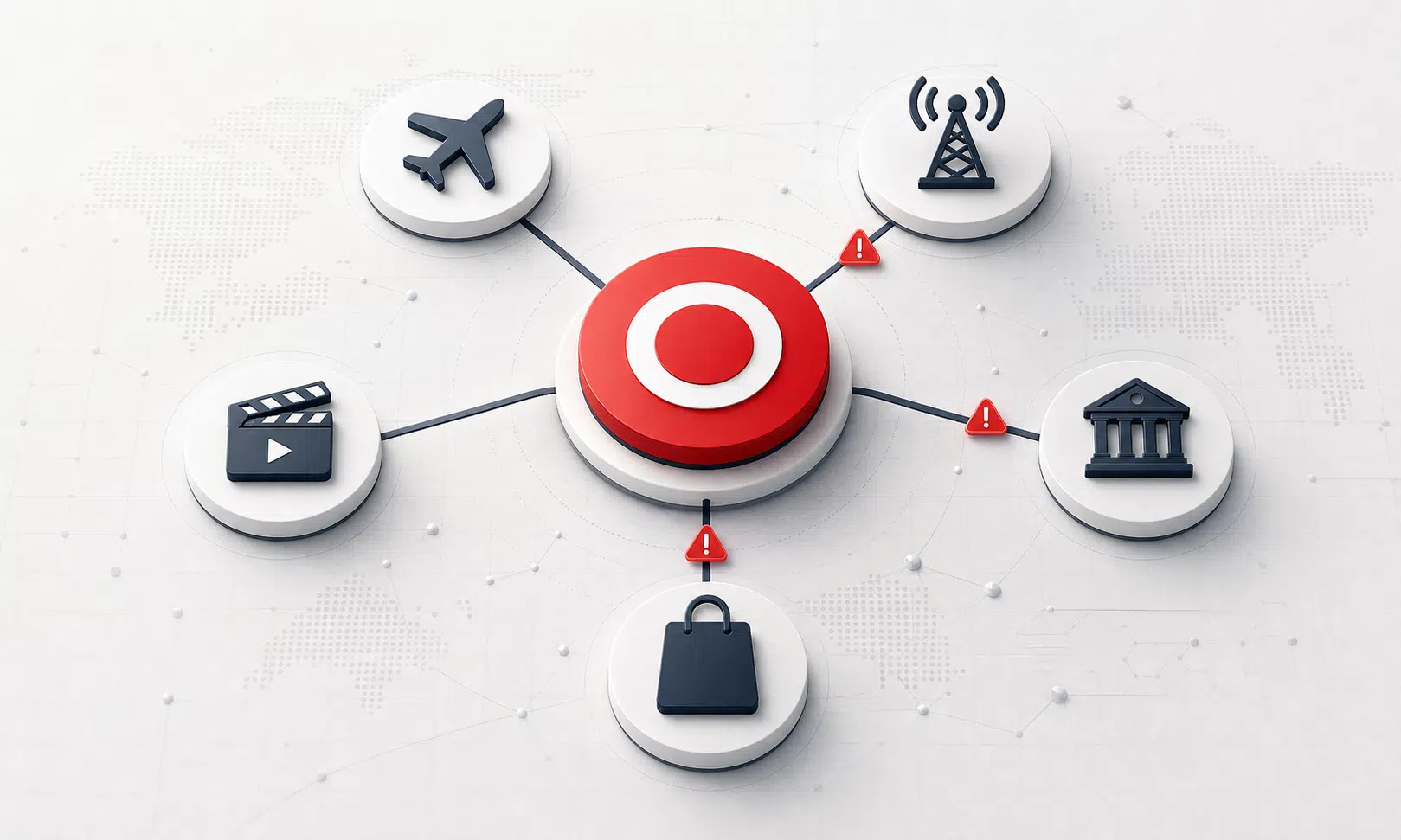

Virgin’s story is usually packaged as a founder myth: a young Richard Branson starts with records, builds momentum through music, moves into airlines, and eventually turns one brand name into a sprawling set of businesses. It is an appealing version of entrepreneurship because it makes risk look almost elegant.
The more useful reading is less romantic. Virgin’s playbook is about brand transfer: taking a name associated with a certain customer promise and testing whether that promise can survive in new markets. That approach can create openings against larger incumbents, but it also makes every new launch a referendum on the broader brand.
For founders, operators, and anyone evaluating a brand-led expansion strategy, Virgin is a case study in both the upside and the strain. The company’s reputation has long leaned on energy, challenger positioning, and a willingness to enter markets that looked closed off to newcomers. But the same ambition that makes the brand memorable can also create complexity, distractions, and expensive failures.
The Core Bet: A Brand Can Travel
Virgin’s expansion has often been described through a simple pattern: find a category where customers are frustrated, enter with a more consumer-friendly story, and use the Virgin name to make the offer feel less like another corporate product. That idea has shown up across travel, telecom, financial services, media, and other consumer-facing sectors.
The important point is not that every Virgin-branded business followed the same formula perfectly. They did not. The point is that the company treated brand as an operating asset, not just a logo. In markets where customers felt locked in, ignored, overcharged, or bored, Virgin’s identity gave the company a way to say: this can feel different.
That is a powerful strategy when the customer pain point is obvious. It is much weaker when the brand promise is vague, the category is low-trust, or the company cannot back up the positioning with execution. A challenger brand still has to deliver the basics: price, service, reliability, distribution, and support.
Where the Virgin Playbook Works
The Virgin approach is most convincing in categories where buyers are choosing between large incumbents and feel that the existing options are interchangeable. In that environment, personality can matter. A brand that feels more direct, more human, or more willing to challenge norms can get attention before it has the scale of its competitors.
That is why the playbook is especially relevant for founders looking at mature markets. If the technical product is not enough to stand out, the customer experience may be the opening. That does not mean adding attitude on top of an average product. It means finding a specific frustration and building the company’s offer around it.
A practical version of the Virgin-style strategy looks like this:
- Pick a market with visible customer frustration. The opportunity has to be clearer than simply “the incumbents are big.”
- Make the brand promise operational. If the promise is better service, the support model, pricing, onboarding, and policies need to prove it.
- Use the founder story carefully. A visible founder can create trust and attention, but the company cannot depend on personality alone.
- Assume every extension has brand risk. A weak product does not fail in isolation when it carries the same name as the rest of the group.
The Tradeoff: Expansion Creates Complexity
The risk in a Virgin-style model is that a flexible brand can start to look too flexible. When a company moves across unrelated categories, customers may understand the attitude but not the expertise. That is where brand stretch becomes a real problem.
Virgin’s history includes celebrated launches and less successful experiments. The lesson for buyers and founders is not that failure is harmless. It is that a company with a broad portfolio needs a clear filter for what belongs under the brand and what does not.
| Decision area | Why it matters | What to watch |
|---|---|---|
| Customer pain point | The brand needs a real problem to solve | Weak launches often rely on attitude without enough product difference |
| Category fit | Trust does not transfer equally across industries | A playful brand may not work in every high-stakes market |
| Execution burden | New sectors bring new regulations, costs, and service expectations | Brand recognition cannot replace operational depth |
| Founder visibility | A public founder can make the story memorable | The business still needs durable systems beyond one personality |
For a startup, this is the cautionary part of the comparison. Brand can accelerate entry, but it can also encourage a company to overestimate how much permission customers are willing to give it. A name can open the door. It cannot keep the product from being judged on its own merits.
What Founders Should Actually Take From It
The strongest takeaway from Virgin’s model is not “take bigger risks.” That is too broad to be useful. The better lesson is to connect risk to a customer insight. Entering a tough market makes sense only if the company has a sharper read on what buyers want and a credible way to deliver it.
That applies to startups as much as established brands. A founder does not need a global conglomerate to use the same discipline. The useful questions are smaller and more concrete: What are customers tolerating because they have no better option? Which parts of the experience feel unnecessarily painful? Where are incumbents protecting margin at the expense of loyalty?
Virgin’s playbook also shows the value of storytelling, but only when the story keeps pointing back to the product. Branson’s public persona has often been treated as part of the company’s marketing engine. That can be effective, but it is not a substitute for clarity. The story has to help customers understand why the company exists in a given category.
The Verdict
Virgin remains a useful comparison point for founders considering brand-led expansion, especially in consumer markets where incumbents feel slow, expensive, or indifferent. The upside is obvious: a strong identity can make a new entrant feel bigger, sharper, and more familiar than it really is.
The downside is just as important. The more categories a brand enters, the harder it becomes to prove that each move is grounded in expertise rather than momentum. For buyers, that means judging each Virgin-branded offer on its own terms. For founders, it means treating brand as a multiplier, not a replacement for product-market fit.
The practical lesson is simple: challenge the market only where the customer problem is real, the offer is credible, and the brand makes the decision easier rather than louder.