


Kellogg’s brand history is usually told as a story about cereal, but the more useful way to read it is as a story about consumer behavior. A simple breakfast product became powerful because it fit into a routine, looked dependable on a shelf, and made the morning feel easier.
That matters because many consumer products are not won on novelty alone. They are won on repeat use. Breakfast cereal is a particularly blunt example: it sits in the kitchen, gets handled by adults and children, and has to justify its place over and over again. For a brand like Kellogg’s, the box was never just a container. It was the storefront, the reminder, and the promise.
The Product Solved a Practical Problem
The early appeal of ready-to-eat cereal was straightforward: it made breakfast simpler. Before packaged cereal became a normal part of the pantry, breakfast could be more labor-intensive. A boxed cereal offered a different proposition: open, pour, add milk, and move on.
That kind of convenience can be easy to underrate because it looks ordinary once a category matures. But in consumer markets, ordinary is often the goal. A product becomes valuable when it removes friction from a repetitive task. Kellogg’s did not need to make breakfast exciting every morning. It needed to make breakfast dependable.
That is still the core lesson for companies selling household goods, subscriptions, apps, or workplace software. The product has to meet users at the moment they actually need it. If it saves time, reduces effort, or removes a small daily annoyance, the pitch becomes much easier to understand.
Packaging Became Part of the Trust System
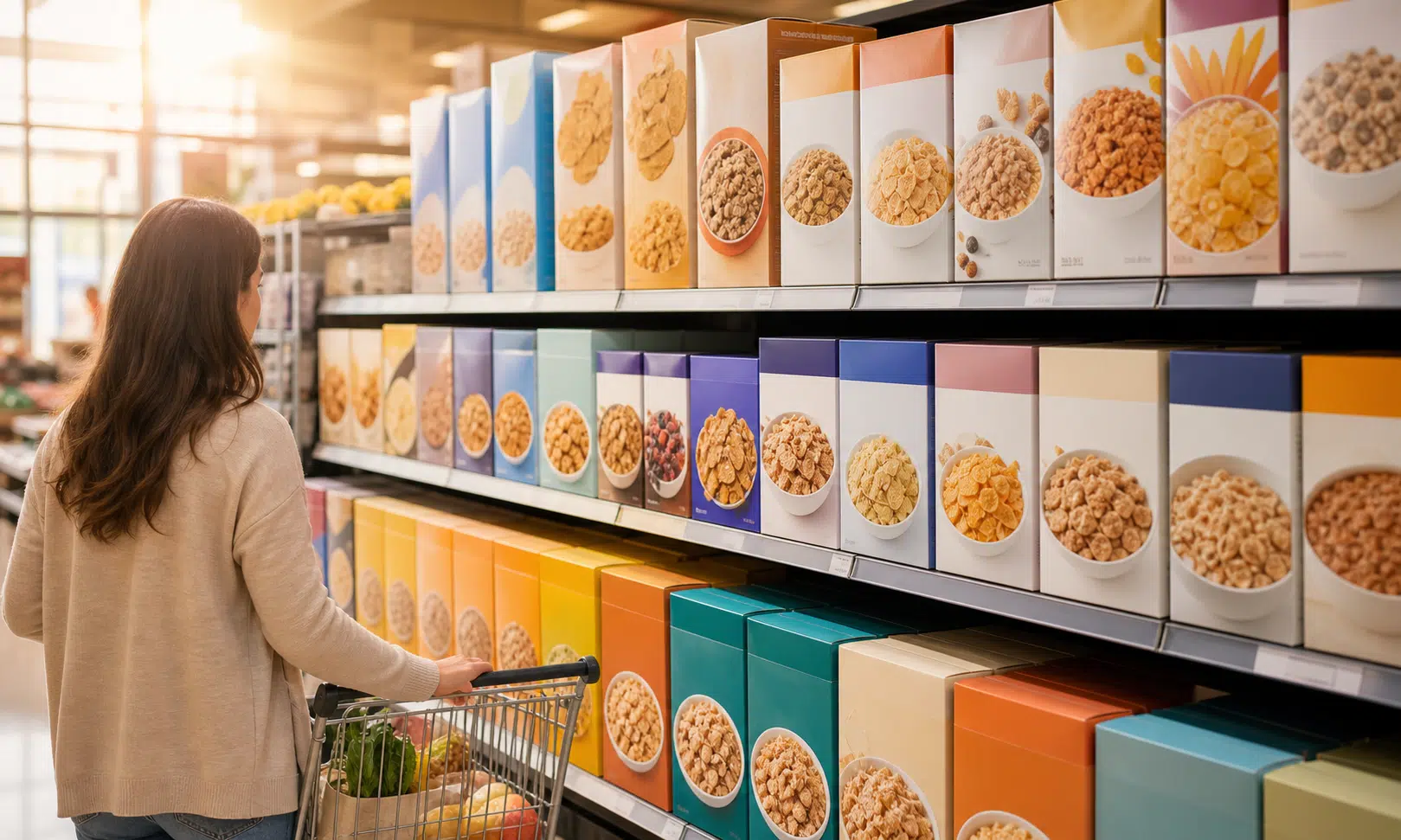
Kellogg’s also shows how packaging can do more than identify a product. In a crowded category, a recognizable package becomes a trust signal. The name, design, and repeated shelf presence help buyers feel that they know what they are getting.
That does not happen automatically. It comes from consistency. A cereal box has to communicate quickly from several feet away. It has to work in a grocery aisle, in a pantry, and in a rushed shopping trip. A buyer may not study the package for long, but the brand still has to register.
This is where the Kellogg’s story remains useful for modern companies. A brand is not just a logo or a slogan. It is the set of expectations a customer carries into the next purchase. Strong packaging reinforces those expectations before a person reads the fine print.
Marketing Worked Because the Product Was Repeatable
The familiar business lesson attached to Kellogg’s is that advertising can help a company push through difficult markets. The safer, more durable point is narrower: marketing works best when it amplifies a product people can understand and use again.
Cereal had that advantage. It was visible, easy to explain, and tied to a daily habit. That made the advertising more efficient. Consumers did not need a complex education campaign to understand what the box was for. The brand mainly had to make itself memorable and trustworthy enough to earn a place in the cart.
That distinction matters. Advertising cannot rescue a confusing product forever. But it can accelerate a simple one when the value is clear. Kellogg’s strength was not just that it promoted cereal. It was that cereal was already built for repeat purchase.
The Modern Challenge Is Different
The harder part for legacy food brands is that consumer expectations keep moving. Shoppers pay closer attention to sugar, ingredients, price, convenience, and dietary preferences. The old promise of a quick breakfast is still useful, but it is no longer enough on its own.
That puts brands like Kellogg’s in a familiar bind. They have enormous recognition, but recognition can become a constraint if buyers associate the brand too tightly with older habits. The company has to protect what people already know while adapting to what they now want.
For any business, that is the more relevant lesson. Early success often comes from a sharp product-market fit. Long-term survival depends on whether the brand can keep that fit from going stale.
The Real Takeaway
Kellogg’s is not just a nostalgia story about breakfast cereal. It is a case study in how a plain product can become a durable consumer habit when convenience, packaging, trust, and repetition line up.
The strongest brands often make themselves feel obvious. They do not ask customers to think too hard. They show up in the right place, solve a real problem, and make the next purchase feel low-risk. That is a simple formula, but it is not an easy one to execute for decades.